
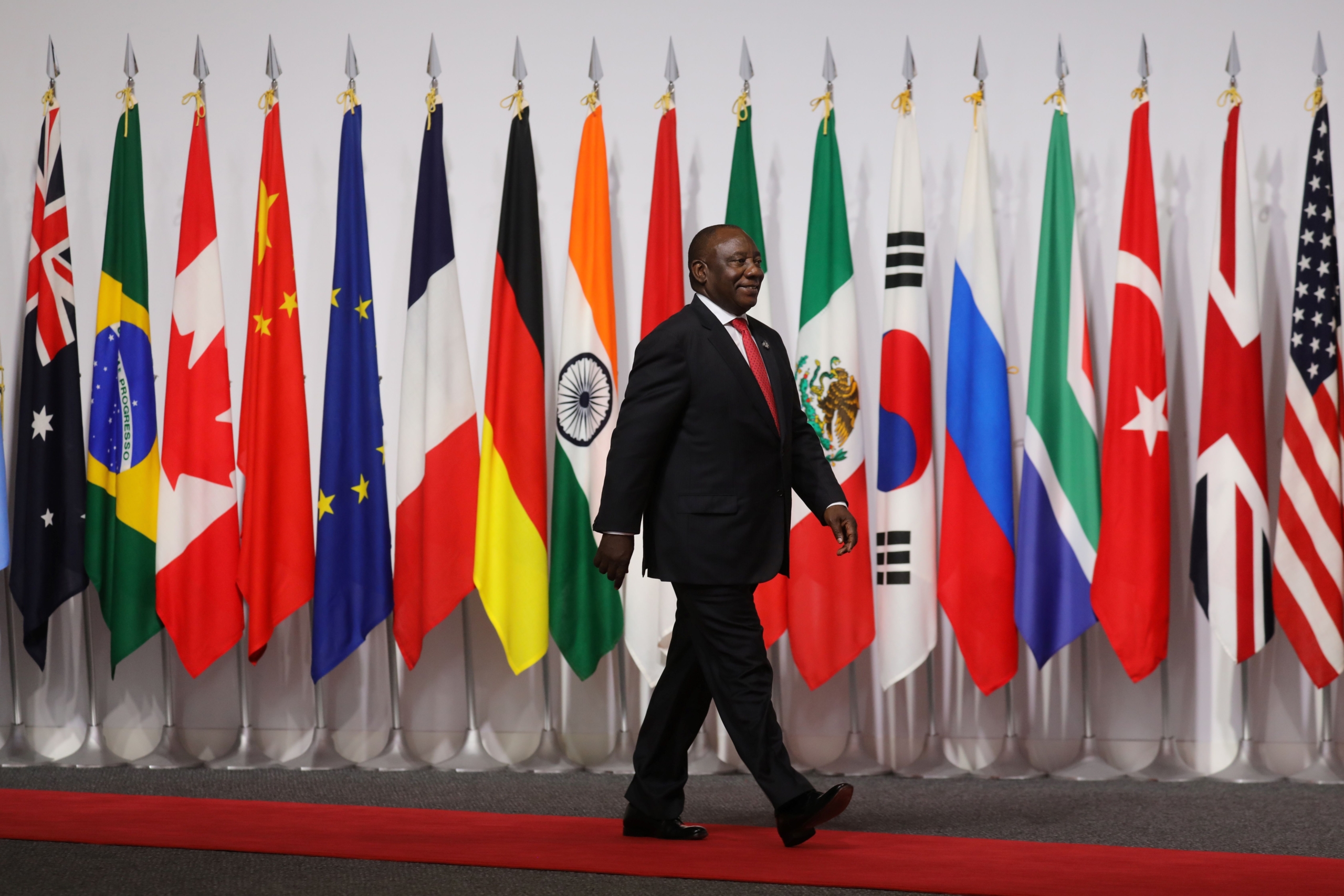
Britain announces £2.75 million initiative to advance responsible AI innovation across the continent
CAPE TOWN – The United Kingdom has unveiled significant new investments in artificial intelligence projects across Africa, answering the call of the G20’s ‘AI for Africa Initiative’ with partnerships designed to ensure the continent plays a leading role in shaping the future of AI technology.
Speaking at the G20 summit in Cape Town, UK AI Minister Kanishka Narayan announced two flagship initiatives aimed at accelerating development outcomes, strengthening democratic resilience, and ensuring AI technologies are deployed safely and equitably across African nations.
Evidence-Based Approach to AI Deployment
At the heart of the announcement is the AI Evidence Alliance for Social Impact (AEASI), a £2.75 million collaboration between the UK’s Foreign, Commonwealth & Development Office, Canada’s International Development Research Centre, and Community Jameel, a prominent philanthropic science funder. The initiative forms part of a broader $7.5 million partnership with Google.org focused on AI impact evaluations.
The UK government’s £1 million contribution will support implementation by the Abdul Latif Jameel Poverty Action Lab and IDInsight, two leading organizations in the field of development evaluation. The partnership aims to move beyond theoretical promises and identify which AI tools actually deliver measurable impact in African and Asian contexts.
“AI has the power to fuel growth, build trust and transform lives – and every country should share in that,” said Minister Narayan. “That’s why we’re backing African-led innovation that puts people first, tackles real-world challenges, and builds global resilience.”
The alliance will fund experimental evaluations to determine which AI applications produce genuine benefits, strengthen local research capacity, and provide actionable guidance for policymakers and practitioners across the continent.
New Safety Hub at University of Cape Town
In a parallel development, the UK announced the establishment of the African Hub for AI Safety, Security and Peace at the University of Cape Town. The facility will become the twelfth multidisciplinary global AI lab and the second in South Africa, supported through the UK-Canada AI for Development programme.
The new hub addresses a critical gap in the global AI governance landscape by ensuring African contexts and perspectives are represented in discussions about AI safety and security. It will focus on understanding and mitigating risks associated with AI deployment in African settings, developing governance frameworks tailored to local contexts, and building capacity among researchers, policymakers, and communities.
Notably, the hub will develop risk detection tools capable of operating in multiple African languages and facilitate community engagement to ensure solutions reflect local priorities rather than being imposed from outside.
Bridging the Global AI Divide
The initiatives come as concerns grow about a widening gap between AI-rich and AI-poor nations. While artificial intelligence promises transformative benefits across healthcare, education, agriculture, and governance, many developing countries lack the infrastructure, expertise, and resources to harness these technologies effectively or safely.
Maggie Gorman Velez, Vice-President of Strategy at the International Development Research Centre, emphasized that AI’s potential “only exists if the tools, knowledge and power to shape it are accessible to all.”
“That includes contextually grounded research and evidence on what works and what does not,” she added.
George Richards, Director of Community Jameel, stressed the importance of evidence-based approaches: “AI has the potential to help tackle some of the world’s most pressing challenges, but we need evidence of which AI solutions work effectively, safely and fairly in order to maximize its impact.”
Aligning with Continental Priorities
The UK announcements align closely with South Africa’s G20 presidency priorities and the broader AI for Africa initiative, which seeks to position the continent as an active participant rather than a passive recipient in the global AI revolution.
The African Union has been developing its own continental strategy on artificial intelligence, recognizing that without African involvement in shaping AI governance frameworks, the technology could exacerbate existing inequalities or introduce new risks inappropriate to local contexts.
Alex Diaz, Head of AI for Social Good at Google.org, highlighted the urgency of the work: “AI has great potential to benefit all people but we urgently need to study what works, what doesn’t, and why if we are to realize this potential.”
Looking Ahead
The projects represent a shift toward more collaborative and evidence-driven approaches to AI deployment in developing regions. By prioritizing African leadership, local research capacity, and rigorous evaluation, the initiatives aim to ensure that artificial intelligence serves as a tool for equitable development rather than a new form of technological dependency.
As AI continues its rapid evolution, with computing power used in frontier models increasing ten-thousandfold between 2019 and 2024, the race is on to ensure that regulatory frameworks, safety measures, and development applications keep pace with innovation while remaining inclusive of diverse global perspectives.
The success of these initiatives could provide a model for responsible AI development in other regions, demonstrating that technology transfer coupled with local capacity building and rigorous evaluation can create sustainable pathways to beneficial AI adoption.
This article is based on official announcements made at the G20 summit in Cape Town this week.

Your article helped me a lot, is there any more related content? Thanks! https://accounts.binance.com/register-person?ref=IXBIAFVY