Nation Links AI Strategy to Economic Development Goals as Francophone West Africa Hosts Continental Tech Forum for First Time
In a symbolic convergence of natural resources and digital ambition, Guinea opened the doors to Africa’s premier technology summit just 24 hours after launching iron ore production at the massive Simandou mining project. The timing was deliberate, sending a clear message: this is a nation determined to transform mineral wealth into digital dividends.
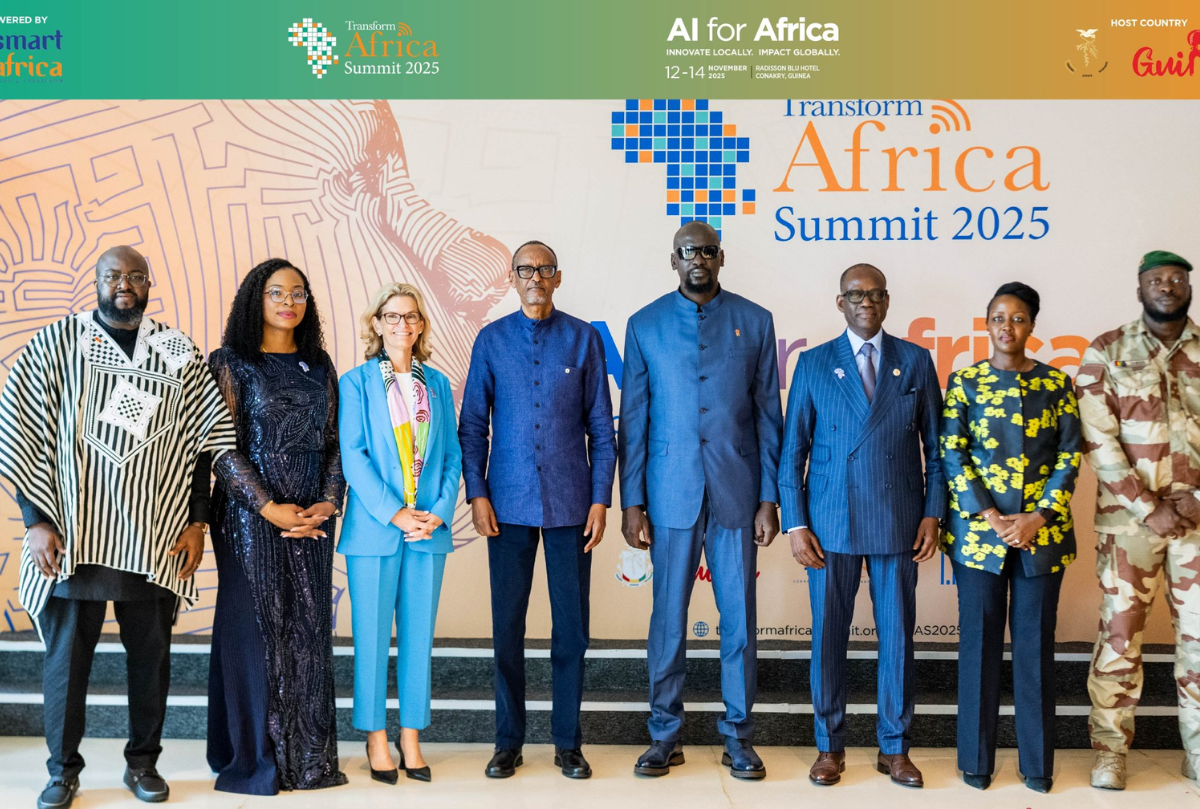
The 7th edition of the Transform Africa Summit kicked off November 12 at the Radisson Blu Hotel in Conakry, marking the first time the prestigious event has been hosted in Francophone West Africa. Under the theme “AI for Africa: Innovate Locally, Impact Globally,” the three-day gathering has positioned Guinea’s capital as the continent’s digital epicenter, drawing over 3,000 participants from more than 40 countries.
“Yesterday, Guinea launched Africa’s biggest mining project. Today, it welcomes the continent’s biggest digital summit. Two events, two symbols, one message: our nation is entering a new era,” declared Rose Pola Pricemou, Guinea’s Minister of Posts, Telecommunications, and the Digital Economy, during the opening ceremony.
A Strategic Pivot
For President Mamadi Doumbouya, who attended the opening alongside Rwandan President Paul Kagame, Chairman of the Smart Africa Board, the summit represents more than a diplomatic coup. It embodies a fundamental economic pivot linking the country’s Simandou 2040 development vision with a digital transformation strategy that could redefine Guinea’s position in Africa’s knowledge economy.
“We are honored to host this 7th edition of the Transform Africa Summit, perfectly aligned with my vision for sustainable and responsible socio-economic development for the next fifteen years,” Doumbouya said. “Welcome to the African land of Guinea — our paradise, a land of wealth and innovation.”
The symbolism was reinforced by Pricemou, who described the parallel launches as representing “a deliberate transition — from mining to digital.” She emphasized that Guinea’s wealth is “no longer limited to what lies underground, but now lies in talent, ideas, and connections.”
Building the Infrastructure
Guinea has backed its digital ambitions with concrete infrastructure investments. The government showcased achievements that include the deployment of over 12,000 kilometers of fiber optic cable across the country, establishment of a Tier III national data center representing technological independence, and connection of more than 500 schools through the Giga project in partnership with the International Telecommunication Union and UNICEF.
Regional integration features prominently in the strategy. Guinea has established active fiber optic interconnections with Mali, Sierra Leone, and Côte d’Ivoire, with connections to Senegal planned and advanced discussions underway with Liberia and Guinea-Bissau. The country is also working to connect to a second submarine fiber optic cable to expand capacity beyond the current ACE system.
During the summit’s opening, Guinea launched the Telemo platform for digitalization of public procurement — a solution developed through partnership with Rwanda, demonstrating the pan-African cooperation that Smart Africa champions.
The Continental Context
Smart Africa’s Director General Lacina Koné emphasized that the summit arrives at a pivotal moment for the continent. The alliance now encompasses 42 member states representing over 1.2 billion people, and has evolved from what Koné described as a “consultation platform into an operational institution.”
“We have moved from mere conversation to coordination and from ambition to action concerning AI,” Koné told delegates. “Artificial intelligence is not just a technology; it is an opportunity to rethink our development based on our realities and our talents.”
The summit has drawn high-level participation from global institutions including the ITU, UNESCO, UNDP, and World Bank, alongside technology giants such as Meta, Microsoft, and Huawei. More than ten African ministers responsible for digital economy and innovation are attending, underscoring the event’s status as a premier decision-making platform.
The AI Imperative
Central to this year’s summit is the question of how Africa positions itself in the global artificial intelligence value chain. Guinea’s emerging national AI strategy, shaped through a UNDP-supported workshop in October 2025, reflects broader continental efforts to ensure AI development serves African interests.
“We need AI that reflects our needs, our cultures, and our realities,” Pricemou stressed, articulating a vision of technological sovereignty that resonates across participating nations. “The call from Guinea’s leadership is clear: Africa must not submit to the technological revolution but must drive it.”
The summit features high-level panels, workshops, training sessions, and an innovation-driven exhibition exploring how AI can transform governance, education, health, finance, and entrepreneurship while ensuring inclusivity and ethical practices. A Transform Hub serves as a collaborative space for regional policy dialogues on interoperability and data exchange, with technical working sessions on policy harmonization in digital public services.
The Skills Challenge
Infrastructure alone cannot deliver digital transformation. Pricemou identified training young people in digital skills as “a national emergency,” with the goal of building a pool of developers, data scientists, designers, and cybersecurity specialists capable of supporting Guinea’s digital future.
This focus on human capital development aligns with Smart Africa’s broader initiatives, including the Smart Africa Digital Academy and partnerships with institutions like Draper University to strengthen startup and innovation ecosystems.
Economic Aspirations
By hosting the Transform Africa Summit, Guinea signals its ambition to join the ranks of African nations exporting digital solutions. Egypt, for example, generated $4.8 billion in digital sector revenue in 2025 — a benchmark that Guinean officials view as achievable through strategic investments in applications, payment solutions, cybersecurity services, data analysis platforms, and digital content production.
However, several conditions will influence success: establishing a stable regulatory framework, transparent management of mining revenues, effective investment in announced projects, and commitments in connected sectors essential for digital transformation, particularly the energy infrastructure required to operate data centers and digital facilities.
Koné emphasized the economic imperative: “AI represents Africa’s opportunity to innovate locally and impact globally. The Transform Africa Summit is where Africa will showcase its digital leadership to the world.”
A Cultural Celebration
The opening ceremony blended technology with cultural pride. Following the national anthem performed by Jellyaba Bintou, the Baoba Circus offered what organizers described as a “digital journey between artificial intelligence and creativity.” The atmosphere reached a crescendo with a surprise performance by Black M, the Guinean artist who electrified the audience, underscoring the summit’s celebration of African innovation and cultural identity.
Looking Forward
As the summit continues through November 14, participants will define Africa’s strategic priorities in artificial intelligence, identify partnerships and policy frameworks supporting innovation, and empower youth, women, and startups in the continent’s digital ecosystem.
For Guinea, the stakes extend beyond hosting a successful conference. The nation is attempting to write a new chapter — converting its “red gold” from Simandou into a digital dividend that could elevate Guinea into the ranks of Africa’s developed economies within fifteen years.
“Digital Africa is on the move — and Guinea is moving with it,” Pricemou declared, capturing the optimism that infused the summit’s opening day.
Whether that ambition translates into sustainable digital transformation will depend on maintaining momentum beyond the summit’s spotlight. For now, Conakry has claimed its moment as Africa’s digital capital, demonstrating that the continent’s technological future is being actively shaped by African nations, on African soil, for African citizens.
The Transform Africa Summit continues through November 14, 2025, at the Radisson Blu Hotel in Conakry, Guinea.