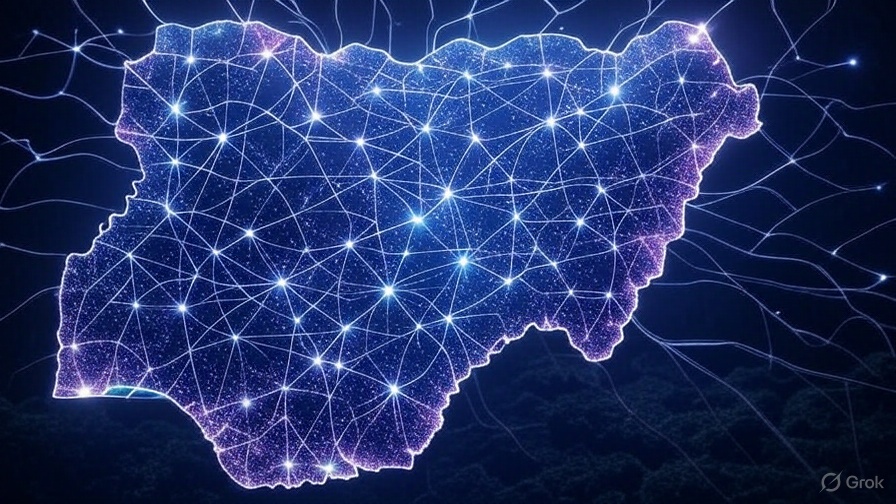

In a bold move to harness the transformative power of artificial intelligence, the Smart Africa Board has unveiled the inaugural Africa Artificial Intelligence Council, positioning the continent as a global leader in ethical and inclusive AI innovation.
The announcement, made during the ongoing Transform Africa Summit 2025 here in Guinea’s capital, marks a pivotal moment for Africa’s digital agenda. The council, comprising 15 distinguished experts and leaders from across the continent, will serve as the strategic nerve center for AI governance, ensuring that AI technologies are developed “by Africa, for Africa” – addressing local challenges while safeguarding digital sovereignty.
“This is more than a council; it’s a commitment to Africa’s ingenuity,” said Lacina Koné, Director General and CEO of Smart Africa, during the unveiling ceremony. “These 15 exceptional leaders bring the expertise, vision, and commitment needed to ensure that Africa becomes a creator, not merely a consumer, of AI technologies. With the establishment of the Africa AI Council, we take a decisive step toward shaping an AI-driven future rooted in African values, responsive to African challenges, and designed to unlock African potential.” Smart Africa, a pan-African alliance of 42 member states chaired by Rwandan President Paul Kagame, has long championed a unified digital market for over a billion people. The council’s formation follows months of consultations with governments, private sector players, and international partners, building on the African Union’s 2024 Continental AI Strategy and UNESCO’s ethics framework. It was formally endorsed at the organization’s 20th Steering Committee meeting earlier this month in Kigali, Rwanda, with operational plans now set to roll out at this week’s summit.
At the heart of the council’s mandate are actionable recommendations across key pillars: AI computing infrastructure, data development, talent skilling, market use cases, and robust governance policies. This holistic approach aims to bridge Africa’s “AI readiness gap,” where only 3% of global AI talent hails from the continent, and foreign-owned data poses risks to sovereignty. Experts predict the initiative could unlock up to $30 billion in economic value for Sub-Saharan Africa by 2030, fueling growth in sectors like agriculture, healthcare, and education.
The council’s diverse membership reflects Africa’s rich tapestry of innovation. Key appointees include:
Tatenda Mavetera, Zimbabwe’s Minister of Information Communication Technology, bringing expertise in digital policy.
Sid Ali Zerrouki, Algeria’s AI pioneer and tech entrepreneur.
Dr. Bosun Tijani, Nigeria’s Minister of Communications, Innovation & Digital Economy, a vocal advocate for AI ethics.
Hon. Adama Bogo, Burkina Faso’s Minister of Digital Economy.
Paula Musoni, Rwanda’s Ambassador to the EU and former ICT Minister. China Lawson, Togo’s Minister of Digital Economy and Transformation.
Khadija Beguir, Tunisia’s AI ethics and innovation leader.
Vukosi Marivate, South Africa’s data science expert and academic.
Patrick Basinga, representing Burundi’s digital transformation efforts.
Additional members from Kenya, Egypt, and beyond round out the group, ensuring regional balance. “This council isn’t just about policy it’s about people,” noted Zerrouki in a pre-launch statement. “We’ll prioritize African languages, datasets, and solutions that empower underserved communities.”
The launch coincides with Guinea’s alignment to Smart Africa’s vision, including pledges for broadband expansion and sovereign data centers linked to its Simandou mining strategy. Summit attendees, including ministers from over 40 countries and reps from Microsoft, Google, and the ITU, hailed the move as a “game-changer” amid global AI races dominated by the U.S. and China.
Yet, challenges loom large. With internet penetration at just 37% continent-wide and regulatory fragmentation hindering progress, the council faces an uphill battle. “Africa must shift from consumption to production,” Koné emphasized, echoing calls for increased investments in local talent and infrastructure to avoid dependency traps.
As the Transform Africa Summit continues through November 20 under the theme “AI for Africa: Innovate Locally, Impact Globally,” eyes are on the council’s first deliverables expected by mid-2026. For innovators and policymakers alike, the message is clear: Africa’s AI era has begun, and it’s one of self-determination.
Smart Africa, a non-profit initiative, drives the continent’s digital transformation toward a single digital market.