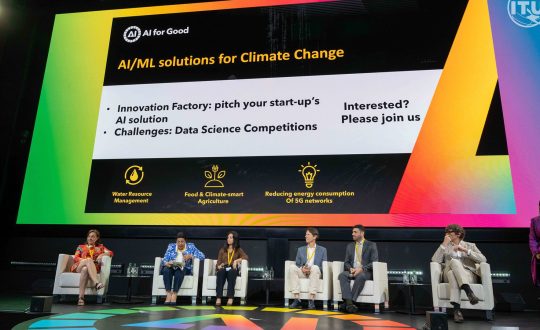

As nations worldwide race to modernize public institutions, Artificial Intelligence (AI) is rapidly emerging as one of the most transformative tools in government, reshaping decision-making, public service delivery and the fight against corruption. Across Africa and other developing regions, policymakers say AI could help close long-standing governance gaps if deployed responsibly.
Experts note that the shift comes as governments face mounting pressure to deliver services faster, manage public resources more effectively, and curb fraud in highly vulnerable sectors such as procurement, taxation and social welfare.
In several countries, ministries are already turning to AI-powered systems to analyze large datasets, detect irregularities in spending, and improve service delivery. Rwanda, Kenya, South Africa and Ghana are among the early adopters experimenting with AI-driven public platforms, digital identity systems and automated service workflows.
“AI gives governments real-time visibility into transactions and operations that were previously opaque,” said Dr. Lindiwe Nakana, a governance technology researcher based in Pretoria. “This has the potential to dramatically reduce corruption and increase citizens’ trust in public institutions.”
AI tools are also being integrated into public health systems, where predictive models help track disease outbreaks, optimize hospital allocations and support medical diagnostics. In agriculture, governments are testing machine-learning algorithms that forecast yields, monitor climate risks
and advise farmers. Education ministries are experimenting with AI tutors and systems that analyze student performance to guide interventions.
However, the rapid adoption comes with warnings. Experts say poorly regulated AI could increase surveillance abuses, reinforce algorithmic bias and expose citizens to privacy violations. Civil society groups are calling for clear national AI policies, transparent data-governance rules and independent oversight mechanisms.
“AI is a powerful tool, but without strong safeguards it can easily become an instrument of oppression,” cautioned Abuja-based digital rights advocate Femi Adekoya. “Governments must balance innovation with accountability.”
Regional bodies and continental institutions are also paying attention. The African Union has been working on a continent-wide framework to guide responsible AI development, while international organizations are encouraging countries to adopt ethical and inclusive AI standards.
Despite the challenges, analysts say AI is poised to play a central role in the future of governance. They argue that governments able to integrate AI effectively could significantly improve public-sector performance and citizen engagement over the next decade.
“Whether it’s detecting fraud, simplifying services or enabling smarter policymaking, AI is no longer optional,” said Nakana. “It is becoming fundamental to building modern, transparent, and responsive governments.”
As adoption widens, all eyes will be on how governments balance innovation with public trust an equation that could determine the next phase of democratic governance in Africa and beyond.