
Africa’s AI startup ecosystem is experiencing a cautious yet promising rebound in 2025, with venture capital flowing into practical, revenue-generating applications rather than speculative moonshots. After a sharp funding winter in 2023 and 2024 that saw investments plummet by
nearly 40% year-over-year, the continent’s tech sector has clawed back momentum, raising $2.65 billion across startups from January to October, a 56% surge from the same period in 2024.
AI, once a darling of global hype, is carving out a more grounded niche, capturing just 0.03% of worldwide AI funding in Q3 but signaling a pivot toward sectors like fintech infrastructure, climate tech, and B2B SaaS that promise measurable impact.
The October upswing alone injected $442 million into African startups, the second-highest monthly total of the year, with AI and deep tech playing a starring role alongside logistics and payments platforms. This “utility-first” shift marks a maturation of the ecosystem, where investors scarred by global corrections are prioritizing startups with strong unit economics, FX resilience, and real-world traction over rapid scaling at any cost. As Kola Aina, founding partner at Ventures Platform, put it in a recent interview, 2025 represents “a year of cautious recovery; one marked by more disciplined capital deployment and a return to fundamentals.”
From Hype to Horsepower: AI’s Evolving Role:
African AI funding tells a story of resilience amid restraint. Through June 2025, 159 AI startups across the continent had secured $803.2 million in total external capital, a figure that peaked at $167.7 million in 2022 before stabilizing post-correction. Early 2025 saw a 78% year-on-year jump in overall tech funding, with AI firms benefiting disproportionately eight early-stage companies alone that raised over $40 million in the first half, including multimillion-dollar rounds for healthtech and agritech innovators.
Yet, the rebound isn’t uniform. Q3 brought a sobering $14 million for AI startups, down from Q1’s $62.4 billion global boom, highlighting Africa’s outsized challenges: infrastructure gaps, talent concentration in urban hubs, and a mere 1-1.5% slice of worldwide AI spend. Despite this, the sector’s projected growth from $4.51 billion in 2025 to $16.53 billion by 2030 at a 27.42% CAGR has investors eyeing long-term bets. “We’re optimizing for current market conditions, but building foundational capabilities for competitiveness,” notes a StartupList Africa analysis, warning of risks from funding concentration in top players.
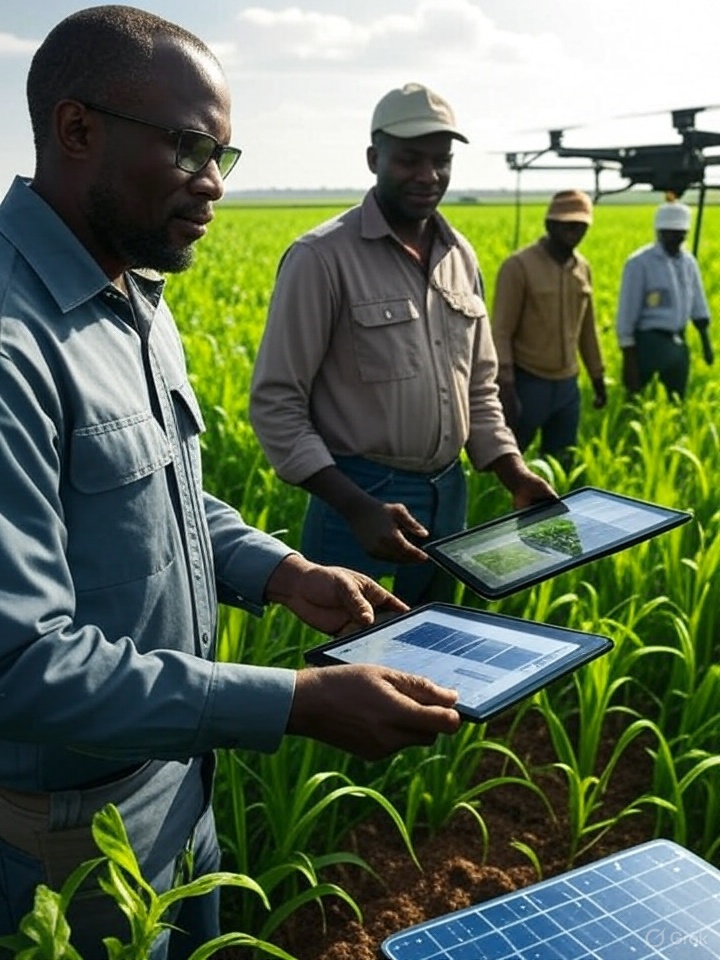
Sectorally, the pivot is stark. Fintech still dominates, but cleantech and AI are eroding its share, with SaaS and data startups pulling in $28 million in September alone, fueled by demand for AI-driven digital identity and analytics tools. Agritech added $22 million that month, blending AI with sustainability to tackle food security. Consumer goods even staged a surprise via South
Africa’s Pura Beverage, which netted $14 million. This diversification echoes Latin America’s post-2020 recovery, where infrastructure and climate plays outpaced pure fintech. Standout deals underscore the trend.
Nigeria’s Cerebrium raised $8.5 million in seed funding from Google and Y Combinator for AI infrastructure, while South Africa’s Aerobotics continues to lead in AI-powered yield predictions across 18 countries. Egypt’s Envisionit Deep AI, focused on pediatric radiology, features on Bloomberg’s 2025 Africa watchlist, and Rwanda’s AFRIKABAL leverages AI-blockchain for farmer trading. These aren’t isolated wins: Over 70% of 2025’s capital targets the “Big Four” markets Nigeria, Kenya, South Africa, and Egypt which snagged 83% of AI funding in Q1.
Regional Powerhouses and Global Tailwinds:
Geographically, the rebound is hyper-concentrated but expanding.
Sub-Saharan Africa claims 60-65% of AI investments, led by South Africa’s $610 million haul in 2023 (with 2025 building on it), Nigeria’s $218 million, and Kenya’s $15 million. North Africa, however, flipped the script in Q2 2025, leading deal flow for the first time in five years Egypt alone drew $330 million by May, 31% of continental totals. International partnerships are accelerating this: Google’s fund supports 100+ startups, Microsoft’s UAE collaboration builds multilingual AI labs (including Swahili models), and a proposed $60 billion Africa AI Fund, unveiled in Kigali, aims to de-risk deep tech via public-private blends.
Investor sentiment is buoyed by macroeconomic stabilizers and institutional backing. Development finance institutions (DFIs) are reshaping priorities, favoring models with commercial viability and impact in jobs, inclusion, or climate. Local and diaspora VCs are gaining visibility, with 225 investors in $100K+ deals this year. Japanese and Middle Eastern players are entering via health and growth stages, while pan-African networks like Katapult and Baobab offer seed capital plus mentorship.
Challenges Ahead:
Spreading the Wealth
For all the optimism, hurdles loom. Extreme funding concentration risks ecosystem fragility, with urban markets overshadowing rural needs in agriculture and health Africa’s economic heavyweights. Compute shortages and low digital literacy persist, and while 26% of surveyed CEOs plan to allocate over 20% of budgets to AI, adoption lags. Experts call for revenue-based finance and preferred equity to preserve local ownership, backing African-led solutions over foreign retrofits.
As Brian Waswani Odhiambo of Novastar Ventures observed at GITEX Nigeria 2025, the focus is now on “strong unit economics from day one.” With $3.2 billion raised over the trailing 12 months a 50% YoY rise Africa’s AI scene is proving it’s not just participating in the global revolution but redefining it for the continent. If the final 2025 months sustain this trajectory, as
Africa: The Big Deal forecasts, the “utility-first” era could unlock trillions in economic value by 2030, turning AI from imported tool to homegrown engine.