A health influencer’s innovative platform is transforming how millions access medical care—one WhatsApp message at a time
For Blessing Nwachukwu, a young mother in Umuahia, southeastern Nigeria, the sudden outbreak of diphtheria in her community sparked panic. With limited access to reliable health information and an overwhelmed local healthcare system, she didn’t know where to turn. That’s when she discovered AwaDoc, an AI-powered healthcare assistant that answered her urgent questions about childhood immunization through the messaging app already on her phone.
“I didn’t know much about immunization,” Nwachukwu recalls. AwaDoc helped her understand the importance of vaccination and guided her to make an informed decision. “I took my child for immunization and I’m happy I did, because I now have peace of mind.”
Her story reflects a quiet revolution unfolding across Africa, where a healthtech startup is leveraging the continent’s most ubiquitous technology—WhatsApp—to bridge one of the world’s most stubborn healthcare gaps.
Breaking Down Barriers
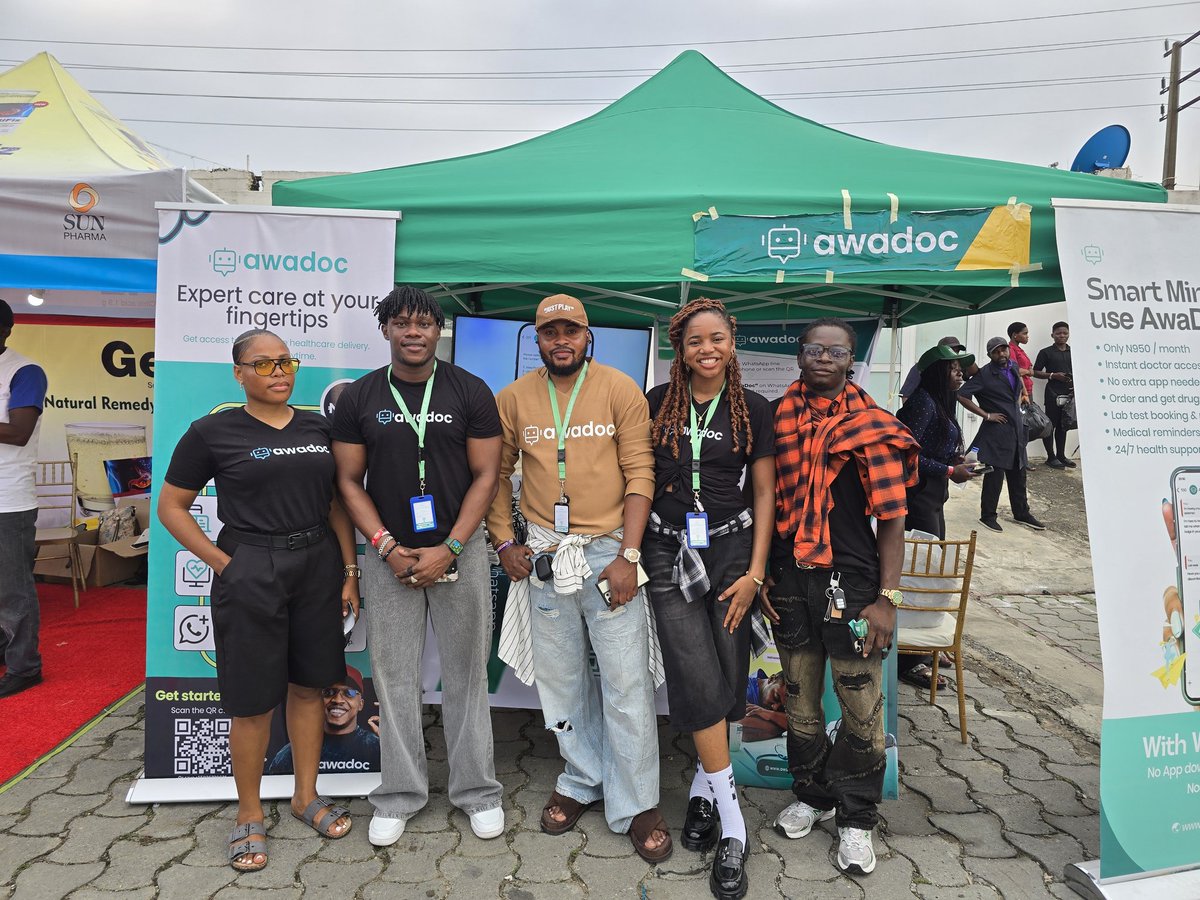
AwaDoc, co-founded by popular Nigerian health influencer Chinonso Egemba (known as “Aproko Doctor”) and entrepreneur Jesse Benedict, officially launched on WhatsApp earlier this year with an ambitious mission: to become the first point of contact for health information for millions of Africans.
The platform’s premise is deceptively simple. Users send a message describing their symptoms in everyday language to the AwaDoc chatbot on WhatsApp. Within seconds, the AI analyzes their concerns, provides preliminary guidance, and helps them understand whether they need professional medical attention—and what kind of specialist to see.
But behind this simplicity lies a profound understanding of Africa’s healthcare crisis. According to the World Health Organization, more than 10,000 patients compete for a single doctor in some African countries, far exceeding the global standard of 1,000 to one. Most African nations allocate less than the WHO’s recommended 15 percent of their national budget to healthcare, creating a system where pregnant women often go without proper care during delivery and doctors work exhausting hours for minimal pay.
In this context, access to quality healthcare remains a privilege rather than a basic right, with millions facing long wait times, crowded hospitals, and a lack of reliable medical information.
The WhatsApp Advantage
What sets AwaDoc apart is its strategic choice of platform. Rather than creating yet another healthcare app that users must download, learn, and remember to use, the startup meets people exactly where they already are. With over 51 million WhatsApp users in Nigeria alone, the messaging service has become the country’s de facto digital town square.
“Enthusiasm doesn’t scale; fatigue does,” Egemba explains. “When you have to create extra steps for people to get something, that extra step might lead to fatigue.”
This “no-friction” approach has proven remarkably effective. By April 2025, approximately 29,893 people had opted into AwaDoc’s childhood immunization program, seeking trusted information from a reliably accurate source. The platform has evolved into more than just a symptom checker—it’s becoming an intelligent healthcare navigator for communities that have historically been underserved.
The technology behind AwaDoc uses advanced AI to provide instant symptom checks, personalized health advice, and critical medical insights. But crucially, the platform was built by Africans, for Africans. As Egemba emphasizes, the system incorporates local insights, contextual relevance, and cultural understanding, including the informal and non-textbook ways Nigerians describe symptoms.
This cultural sensitivity matters enormously. Research comparing AI-generated health messages with traditional campaigns in Kenya and Nigeria found that while AI systems were more creative and attempted to use local metaphors and community-centered language, they could also be error-prone. Homegrown platforms like AwaDoc demonstrate how locally developed AI can better understand cultural context while maintaining medical accuracy.
From Influencer to Innovator
Egemba’s journey to founding AwaDoc began nearly a decade ago during his final year of medical school. He watched a patient die because they failed to follow a doctor’s directions after being informed of their condition’s severity. The tragedy sparked a realization: medical expertise meant nothing if people couldn’t understand or access it.
He began creating content that simplified medical information, using humor and storytelling to break down complex health topics. His “Aproko Doctor” brand eventually amassed nearly seven million followers across X, Instagram, TikTok, and YouTube—a platform that would prove instrumental in building trust for his healthtech venture.
“For AwaDoc, Aproko Doctor is utilizing his storytelling expertise across his various social media channels to communicate and sell the AI-powered service,” notes Emma Okonji in ThisDay. But as co-founder Benedict acknowledges, the startup’s greatest asset could also become its biggest challenge: “To truly scale, the product must eventually outgrow its founder’s persona.”
Beyond Symptom Checking
AwaDoc isn’t positioning itself as a telemedicine platform but rather as a sophisticated triage system—the crucial first step in a patient’s healthcare journey. The platform helps users determine whether their headache requires a neurologist or if their stomach pain needs immediate emergency attention. It clarifies when professional help is necessary and what type of specialist to consult.
For a population where self-diagnosis and self-medication are common due to limited access to clear health information, this guidance is transformative. The platform bridges the information gap, empowering people to make informed decisions about their health while reducing unnecessary hospital visits for minor concerns.
The startup is also mindful of economic realities. Recognizing widespread reluctance among Nigerians to pay out of pocket for healthcare, AwaDoc plans to introduce pay-as-you-go options and health savings incentives to encourage consistent usage.
Looking ahead, the company envisions partnerships with hospitals, clinics, and doctors who might use AwaDoc as a standard reference tool. “We’re building AwaDoc in such a way that it becomes the first point of call for Nigerians to get information about their health,” Benedict says. “We want to partner with hospitals, clinics, and even doctors such that they use AwaDoc as a reference.”
The Bigger Picture
AwaDoc’s emergence reflects a broader wave of AI-driven healthcare innovation across Africa. In Senegal, Kera Health recently raised $10 million for its AI-powered integrated health platform. Egypt’s WideBot AI is developing Arabic language models for healthcare automation across the Middle East and North Africa. Ghana’s Zerone Analytiqs uses AI to help healthcare organizations transform raw data into actionable insights.
These innovations are arriving at a critical moment. AI adoption in African health systems is accelerating rapidly, with surveys indicating that 31.7 percent of AI deployments in sub-Saharan African healthcare focus on telemedicine, 20 percent on sexual and reproductive health, and 16.7 percent on operations.
Success stories are multiplying. Kenya’s AI Consult platform is reducing diagnostic errors. Google’s upgraded Articulate Medical Intelligence Explorer can now diagnose medical conditions by analyzing smartphone photographs of rashes and other symptoms. These tools collectively suggest a future where geographical barriers to healthcare expertise become increasingly irrelevant.
Yet challenges remain. Reliable electricity and broadband internet remain inconsistent across much of the continent. AI models require careful auditing to avoid amplifying existing biases. Clinical oversight and clear escalation paths are essential to ensure AI complements rather than replaces human medical judgment.
Moreover, as research on AI-generated health messaging in Kenya and Nigeria revealed, technology alone isn’t enough. Without careful attention to cultural context and genuine community engagement, even sophisticated AI systems risk repeating old patterns of outsiders creating solutions for communities without truly understanding them.
A Vision for the Future
For now, AwaDoc is focused on perfecting its offering in Nigeria before expanding to the rest of Africa. The startup aims for ubiquity—to become synonymous with health information the way certain brand names become generic terms for entire product categories.
It’s an ambitious goal, but one grounded in a simple truth: healthcare guidance shouldn’t require multiple app downloads, complex interfaces, or privileged access to medical facilities. It should be as simple as sending a text to a friend.
As Egemba puts it: “You can open WhatsApp right now, say how you feel, and get help instantly.”
For millions across Africa who have historically been shut out of quality healthcare, that instant access represents something revolutionary—the democratization of medical knowledge and the promise that geography, economics, and systemic barriers need not determine health outcomes.
In communities like Umuahia, where mothers once faced diphtheria outbreaks with fear and uncertainty, AwaDoc is demonstrating that the future of healthcare might not require building more hospitals or training more doctors—at least not immediately. Sometimes, the solution is meeting people where they already are, speaking their language, understanding their concerns, and empowering them with the information they need to protect their families.
One WhatsApp message at a time, that future is already here.
AwaDoc is currently available on WhatsApp to users across Nigeria. The service provides free AI-powered symptom checks with options to connect with licensed medical professionals for more complex health concerns.