
Artificial Intelligence is reshaping workplaces around the world, and Africa is no exception. While conversations around automation often focus on job losses, the continent stands at a unique crossroads: its fast-growing tech talent, booming startup ecosystems, and youthful workforce offer room for adaptation. As AI enters sectors from agriculture to banking, the real question is not whether jobs will change — but how.
Automation Anxiety Meets a Young Workforce
Africa has the world’s youngest population, with over 60% under the age of 25. This demographic advantage could become an engine for innovation, yet it also magnifies concerns about tech-driven unemployment. Some analysts estimate that tasks in sectors such as data entry, customer service, retail, logistics, and basic administrative work are most vulnerable to automation.
Already, AI-powered customer support tools are being deployed by financial institutions in Nigeria and Kenya, and chatbots now handle routine inquiries for telcos across the continent. The growth of fintech has accelerated automated fraud detection, digital payments, and credit scoring — all functions traditionally handled by human assessors.
Sectors at Risk: What May Be Displaced
Analysts and economists point to the following job categories as likely to face disruption:
1. Customer Support & Call Centers — Voice assistants and chatbots are increasingly replacing Tier-1 support roles.
2. Administrative & Clerical Services — Document processing, invoicing, HR onboarding, and scheduling are becoming automated.
3. Retail & Point-of-Sale Jobs — E-commerce and smart cashier systems reduce the need for physical retail workers.
4. Manufacturing & Logistics — Robotic assembly lines and AI-driven route optimization threaten traditional labor in urban logistics.
5. Content Moderation & Data Labeling — AI models now self-label and self-train more efficiently, reducing reliance on offshore labor markets — including African data-annotation hubs that grew rapidly between 2018 and 2023.
However, displacement is not the entire story.
The Other Side: The Jobs AI Will Create
Rather than eliminating work, AI also generates demand for new categories of labor — and African startups are already capitalizing on this shift. Growing sectors include:
1. AI Data & Annotation Services
While automation is improving, it still relies heavily on humans for edge cases, local language contexts, and cultural nuance. Companies like Sama (Kenya) and Humans in the Loop are expanding operations into ethical data labeling.
2. Software & AI Engineering
Demand for machine learning engineers, data scientists, and software developers across Lagos, Nairobi, and Cape Town continues to surge. Remote hiring from global firms has extended Africa’s participation in the global talent market.
3. AI in Agriculture
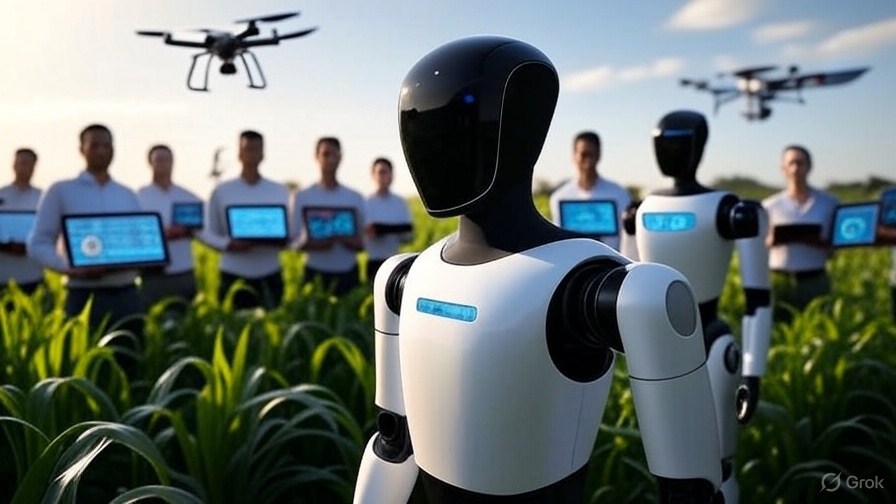
Agri-tech startups deploying predictive analytics, drone monitoring, and soil health assessments are creating new jobs in field data collection, drone operations, and precision advisory services for farmers.
4. Healthcare AI Roles
AI-powered diagnostics require technicians, digital health workers, and trainers to integrate systems into hospitals and clinics.
5. Creative and Generative AI Workflows
Generative AI tools are enabling new forms of education, media, entertainment, and digital marketing. Instead of replacing creatives, they are shifting the nature of content creation toward editing, strategy, and storytelling.
Local Context Matters: Africa’s AI Path Will Not Mirror the West
Unlike Europe or North America — where automation threatens aging workforces — Africa’s challenge is scarcity of jobs rather than surplus. For many industries, AI may expand access to markets and services rather than reduce employment.
For example, in farming — where over 33 million Africans work informally — AI-enabled platforms that improve crop yields or climate forecasting can boost incomes rather than eliminate the farmer. The same dynamic applies to small retail, telemedicine, digital identity, and mobile payments.
Policy and Education: The Deciding Factors
The future of work depends less on AI itself and more on the policies shaping it. Countries like Rwanda, Ghana, Kenya, and Nigeria are drafting national AI strategies aimed at preparing the workforce through digital training, curriculum reforms, and startup incentives.
Universities and bootcamps are filling the skills gap. Programs such as ALX Africa, Decagon, Moringa School, and Andela continue training thousands of young Africans in technical careers that didn’t exist a decade ago.
However, the greatest risk is inequality: workers lacking digital skills may be left behind, widening economic divides. Governments and private sector actors must address retraining and job transition if AI adoption is to be inclusive.
A Continent Prepared for Reinvention
The narrative around AI and work often oscillates between utopian optimism and apocalyptic fear. Africa’s reality may fall somewhere in between — a hybrid future where some roles disappear, many transform, and new industries emerge from scratch.
What is clear is that AI will not wait for policy or public opinion. Momentum is building across startups, financial inclusion, logistics, energy tech, and agriculture. The continent’s advantage is not just its youth but its capacity for leapfrogging — skipping legacy systems and adopting modern ones directly.
The global labor market is being rewritten, and Africa is not just a spectator this time. The question for policymakers, investors, and educational institutions is simple: will the continent shape the future of work, or merely react to it?