When lives and livelihoods depend on the next rainfall, accurate weather prediction isn’t just convenient—it’s critical
By Staff Reporter
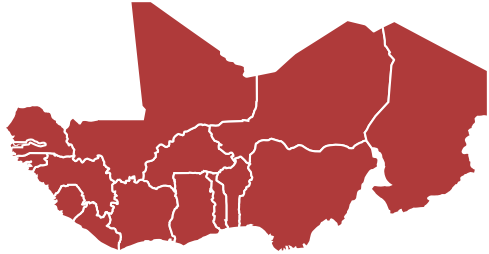
In the farming communities of Ghana and Senegal, a quiet revolution is underway. For the first time, farmers who have long struggled with unreliable weather forecasts are gaining access to cutting-edge artificial intelligence systems that could fundamentally change how they plan their crops, protect their harvests, and secure their futures.
The Perfect Storm of Challenges
West Africa faces a unique convergence of weather forecasting challenges. The region is increasingly vulnerable to climate change, with unpredictable weather patterns directly impacting food security and economic stability. Yet traditional forecasting methods, designed primarily for mid-latitude regions like Europe and North America, often fall short when applied to African conditions.
The problem starts with basic infrastructure. While North America boasts 291 weather radar stations, the entire African continent has just 37. This sparse network of weather stations creates critical gaps in data collection, making accurate predictions difficult.
“Forecasting and agricultural production are deeply interlinked; from planning, crop management and harvesting through to storage, transportation and marketing,” explains Professor Leonard K. Amekudzi from Kwame Nkrumah University of Science and Technology in Ghana. For farmers who must decide when to plant seeds or apply fertilizer, the lack of reliable forecasts forces them to make critical decisions blind.
The challenges run deeper than just missing equipment. African rainfall events can be among the most intense in the world, often developing rapidly over only a few hours, according to Professor Douglas Parker from the University of Leeds. The way Earth’s rotation and solar heating drive the atmosphere means that weather in Africa behaves fundamentally differently from regions where most forecasting methods were developed.
Enter the AI Solution
Multiple initiatives are now deploying artificial intelligence to bridge these gaps, each taking a different approach to the same urgent problem.
Project Cumulus: Building Local Capacity
Launched in January 2026, Project Cumulus represents one of the most ambitious efforts to bring AI-powered weather forecasting to West Africa. Funded by the Gates Foundation and the UK’s Foreign, Commonwealth & Development Office, the project brings together researchers from the Alan Turing Institute, the University of Cambridge, and the University of Leeds with partners in Ghana and Senegal.
What makes Project Cumulus distinctive is its emphasis on co-design and local ownership. Rather than simply deploying foreign technology, the initiative works directly with Kwame Nkrumah University of Science and Technology, University Cheikh Anta Diop of Dakar, and national meteorological agencies in both countries to create systems tailored to African conditions.
“AI is both revolutionising and democratising weather prediction,” says Professor Richard Turner from Cambridge’s Department of Engineering. Tasks that once required supercomputers can now run on laptops, producing accurate forecasts in a fraction of the time and cost.
The project leverages emerging technologies like Aardvark Weather and the Aurora Earth System Foundation Model. Aardvark, unveiled in March 2025, is fully driven by AI and combines satellite imagery, ground observations, and existing forecast data to create a clearer picture of atmospheric conditions. The system is thousands of times faster than traditional forecasting methods and can draw on both remote sensing and local measurements, learning from data-rich regions to improve predictions where data is scarce.
Google’s MetNet: Nowcasting for Daily Decisions
While Project Cumulus focuses on medium-range forecasts, Google Research has deployed MetNet across Africa to address immediate, short-term prediction needs—a process called “nowcasting.”
The technology predicts precipitation with high accuracy within a five-kilometer radius every 15 minutes for up to 12 hours, generating results in less than a minute. By leveraging satellite observations to compensate for missing ground radar data, MetNet provides the kind of hyper-local, immediate forecasts that help people make daily decisions: whether to carry an umbrella to market, when to hang laundry, or the optimal time to plant seeds.
AfriClimate AI: Grassroots Innovation
Founded by researchers Rendani Mbuvha and Amal Nammouchi, AfriClimate AI represents a grassroots approach to the problem. Their Forecast4Africa initiative, launched in August 2025, uses AI tools including Google DeepMind’s NeuralGCM and GenCast to predict extreme weather at speeds 3,500 times faster than traditional methods.
AI-based models bypass the need to explicitly formulate representations by implicitly learning them from vast amounts of weather data, the founders explain. This allows them to avoid the complexity and systematic biases that plague traditional numerical weather prediction models.
Real-World Impact
The human stakes are enormous. Recent floods across West and Central Africa affected an estimated four million people, with hundreds of thousands displaced and homes destroyed. The 2023 Cyclone Freddy, Africa’s deadliest tropical cyclone on record, killed more than 600 people across multiple countries. By 2030, projections suggest up to 118 million extremely poor people will be exposed to drought, floods, and extreme heat across Africa without adequate response measures.
For coastal fishing communities, stable weather conditions mean the difference between a productive day at sea and disaster. For farmers, knowing when heavy rainfall will occur means understanding whether fertilizer will wash away or nourish crops. These aren’t abstract forecasting challenges—they’re matters of economic survival.
Dr. Scott Hosking, Mission Director for Environmental Forecasting at the Alan Turing Institute, emphasizes that generic solutions won’t work. “To protect lives and livelihoods in these regions, we cannot rely on off-the-shelf AI solutions,” he notes. The partnership between the UK, Ghana, and Senegal focuses on developing models specifically designed for West African conditions.
Building for the Future
What distinguishes these initiatives from past development efforts is their focus on sustainability and local ownership. The systems being developed are affordable and adaptable, enabling West African partners to produce their own forecasts, build expertise, and drive local innovation.
Project Cumulus, for instance, will extend forecasts to sub-seasonal timescales of two to six weeks—precisely the range most useful for farmers and the fishing industry in planning major decisions. The agility of AI models allows them to be tuned to local weather patterns in ways that rigid physics-based systems cannot.
Professor Amadou Gaye from University Cheikh Anta Diop in Senegal sees the partnership as transformative. The emerging science of AI weather prediction, paired with local insights into the region’s climate physics and statistics, amplifies benefits already visible in universities and weather services. “This international partnership acts as a catalyst for strengthening climate resilience and food security in the region,” he says.
The Broader Context
These West African initiatives are part of a global movement toward AI-enhanced weather forecasting. At an Extraordinary World Meteorological Congress, the organization endorsed AI and machine learning technologies to accelerate progress toward universal coverage of early warning systems by the end of 2027 through the Early Warnings for All initiative.
An ongoing pilot project between Norway and Malawi’s meteorological services has already shown improvements, serving as a model for other resource-constrained countries. The initiative demonstrates that AI weather prediction, combined with solutions like “Forecasts in a Box,” can be successfully deployed even in challenging circumstances.
Challenges Ahead
Despite the promise, significant challenges remain. Climate scientist Shruti Nath from Oxford Physics notes that while AI can create better forecasts for some problems—such as predicting storm tracks—the technology still has limitations. During Storm Ciaran, for instance, AI models successfully tracked the storm but underestimated wind gusts compared to existing models.
Her team at Oxford Physics takes a hybrid approach, combining the best of physics-based and AI-based models. This creates a more flexible, low-cost framework that respects fundamental laws of physics like conservation of energy and momentum while leveraging AI’s pattern-recognition capabilities.
There’s also the question of data preservation and continuity. A recent effort in Ghana to rescue and digitize historical meteorological records highlights how decades of paper archives have been lost or are deteriorating. Our understanding of past, present, and future climate depends on quality datasets, making data rescue efforts as important as developing new forecasting technologies.
Looking Forward
As these AI systems mature and expand, they represent more than just better weather forecasts. They embody a shift toward climate resilience built on local capacity, international cooperation, and cutting-edge technology adapted to African realities rather than simply imported from elsewhere.
For the farmer in rural Ghana deciding when to plant maize, or the fishing community in Senegal planning the week’s expeditions, these advances mean something profound: the power to make informed decisions, to plan with confidence, and to build resilience against an increasingly unpredictable climate.
The success of these initiatives will be measured not in academic papers or technological breakthroughs, but in harvests secured, lives protected, and communities empowered to face whatever weather comes their way.
Project Cumulus is led by the Alan Turing Institute in partnership with the University of Leeds, University of Cambridge, Kwame Nkrumah University of Science and Technology (KNUST), University Cheikh Anta Diop of Dakar (UCAD), Senegalese meteorological agency ANACIM, and the Ghanaian meteorological agency GMet. The project receives funding from the Gates Foundation and UK International Development from the UK government.