
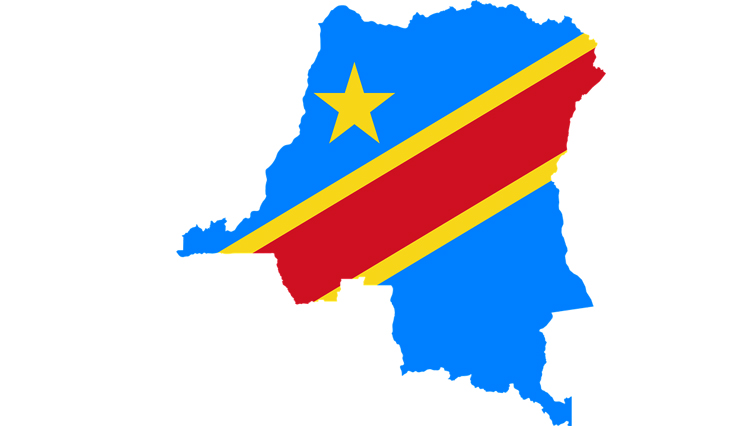
The resource-rich nation unveils an ambitious blueprint to leapfrog into the digital age, but infrastructure gaps and funding challenges loom large
Kinshasa — In a continent where digital transformation promises to reshape economies, the Democratic Republic of Congo is placing an audacious bet: that it can transform itself from one of the world’s least connected nations into a regional technology powerhouse by 2030.
The centerpiece of this vision is the National Digital Plan 2026-2030, a sweeping initiative requiring approximately $8.7 billion that President Félix Tshisekedi unveiled in October 2024. With the government committing $1 billion and seeking an additional $6.2 billion from international partners and private investors, the plan represents one of the most ambitious digital transformation efforts in sub-Saharan Africa.
“Our goal is to harness the benefits of the digital economy and position our country — rich in critical minerals vital to digital and energy transitions — as a catalyst for investment,” declared Digital Economy Minister Augustin Kibassa Maliba during the plan’s October 8 launch in Kinshasa.
The Digital Divide Reality
The scale of the challenge is daunting. The DRC currently ranks 179th out of 193 countries in the United Nations’ e-Government Development Index, with a score of just 0.2715 out of 1 — well below the continental and global averages. While official figures claim 63% mobile penetration, the Global System for Mobile Communications Association estimates that actual mobile internet penetration stands at only 17%.
For a nation of approximately 100 million people spread across a territory the size of Western Europe, bridging this digital divide requires nothing short of revolutionary infrastructure investment.
Four Pillars of Transformation
The National Digital Plan rests on four strategic pillars designed to modernize every aspect of Congo’s digital ecosystem:
Infrastructure and Connectivity: The plan’s most ambitious component aims to bring broadband access to 650 new communities, connecting an estimated 30 million people and 1,000 public institutions. This massive expansion will require extensive fiber-optic network deployment across a country where current connectivity remains concentrated in major urban centers like Kinshasa, Lubumbashi, and Goma.
Digital Public Services: By March 2026, the government plans to launch a comprehensive e-government platform integrating digital identity, online tax portals, customs systems, and a National Interbank Payments Platform. The foundation for this digital government ecosystem is the DRCPass digital ID, already being implemented by Singapore-based firm Trident, which launched in June 2024.
Human Capital Development: Perhaps the plan’s most forward-looking element is the creation of a Congolese Academy of Artificial Intelligence, designed to train the next generation of AI specialists while fostering what Minister Maliba calls an “Afrocentric” approach to artificial intelligence. The academy will support applied research and develop context-driven AI solutions for agriculture, mining, education, and healthcare.
A partnership with Cisco and Cybastion aims to train 250,000 young Congolese in cybersecurity, data science, and programming — a massive workforce development initiative that could help address the country’s critical skills shortage.
Cybersecurity and Digital Trust: Recognizing that digital transformation requires robust protection, the plan prioritizes strengthening resilience and safeguarding citizens’ data and privacy through enhanced cybersecurity frameworks.
The Economic Case
The potential returns on this massive investment are substantial. According to a September 2024 GSMA report, digital transformation could add $4.1 billion to the Congolese economy by 2029 — nearly half the total investment required. The report projects that digitalization could boost agricultural productivity, improve healthcare and education access, enhance public sector transparency, and attract investment in digitally intensive industries.
More immediately, the government estimates that digitalizing citizen-government interactions alone could increase direct tax revenues by 1.2 to 1.3 percentage points of GDP, providing a clear fiscal incentive for investment.
International Support and Private Partnerships
The DRC isn’t going it alone. The World Bank has committed $400 million through its Inclusive Digitalization in Eastern and Southern Africa (IDEA) program, with an additional €100 million from the French Development Agency. The World Bank project alone is expected to benefit 30 million Congolese, with particular emphasis on rural and marginalized populations.
Private sector engagement is also building momentum. In February 2025, Indian firm General Technologies signed a $1 billion memorandum of understanding to execute various digital initiatives. The U.S.-based Unity Development Fund announced plans to invest in infrastructure and tech programs during the “DRC Digital Nation 2030” forum in September 2025. Global technology giant Cisco has partnered on the massive youth training initiative.
The government is seeking additional partnerships with Huawei for the AI academy, leveraging the Chinese tech giant’s global experience in information and communication technology training.
Skeptics’ Concerns
Despite the ambitious vision, observers have raised significant concerns about execution. The DRC’s previous National Digital Plan “Horizon 2025,” launched in 2019, achieved only about 60% of its objectives according to the Ministry — a mixed record that raises questions about implementation capacity.
Infrastructure development in a country facing ongoing security challenges in eastern regions, weak governance institutions, and limited technical capacity presents enormous logistical hurdles. The gap between the government’s committed $1 billion and the plan’s $8.7 billion price tag leaves a massive funding shortfall that will require sustained international and private sector engagement.
Moreover, the timeline is aggressive. Launching a functional e-government platform by March 2026 — just months away — while simultaneously building out broadband infrastructure to hundreds of communities requires coordination and execution capabilities that have historically challenged the Congolese bureaucracy.
The Mineral Connection
The DRC’s digital ambitions are intrinsically linked to its extraordinary mineral wealth. As the world’s largest producer of cobalt and a major source of copper, tantalum, and other minerals essential for batteries, smartphones, and digital infrastructure, the country sits at the nexus of the global energy and digital transitions.
Minister Maliba has repeatedly emphasized this connection, arguing that the DRC should not merely supply raw materials for others’ digital economies but should build its own technological capabilities to capture more value from the digital revolution.
A Regional Race
The DRC’s digital push comes amid a broader continental boom in AI and digital transformation initiatives. Countries including Nigeria, South Africa, Kenya, Rwanda, and Côte d’Ivoire have already adopted national AI strategies. According to Mastercard, the African AI market is projected to grow from $4.51 billion in 2025 to $16.5 billion by 2030.
The question is whether the DRC, despite its late start and infrastructure deficits, can leverage its vast market size, youthful population, and mineral resources to compete with more digitally advanced African nations.
The Path Forward
The coming months will prove critical. The government’s ability to launch the promised e-government platform by March 2026 will serve as an early test of its execution capacity. The success of early infrastructure projects in expanding connectivity to underserved communities will demonstrate whether the plan’s ambitious targets are achievable.
Most importantly, the government must demonstrate it can attract and effectively deploy the billions in international and private funding required to close the yawning gap between its $1 billion commitment and the plan’s $8.7 billion cost.
“The ideal is not to submit to this revolution, but to lead it, for and by the Congolese people themselves, thereby ensuring our strategic autonomy and shared prosperity,” Minister Maliba declared when announcing the AI academy.
Whether the DRC can realize this vision — transforming from one of the world’s least connected nations to a regional digital hub in just five years — will depend on execution, sustained political will, and the country’s ability to overcome the formidable infrastructure, governance, and capacity challenges that have long constrained its development.
For a nation that has struggled to translate its vast natural resource wealth into broad-based prosperity, the digital transformation plan represents both an opportunity and a test: can technology and connectivity succeed where minerals alone have not?
This article is based on official government announcements, international development reports, and industry analysis current as of February 2026.