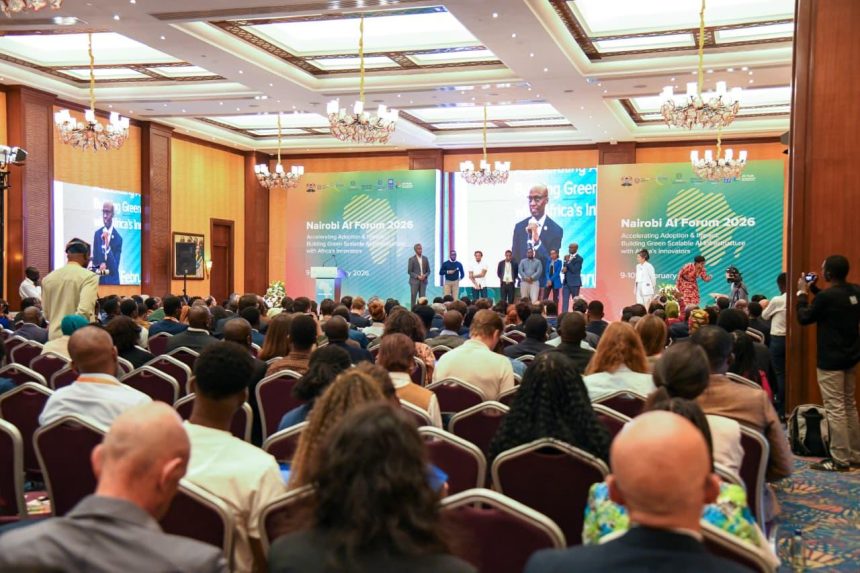
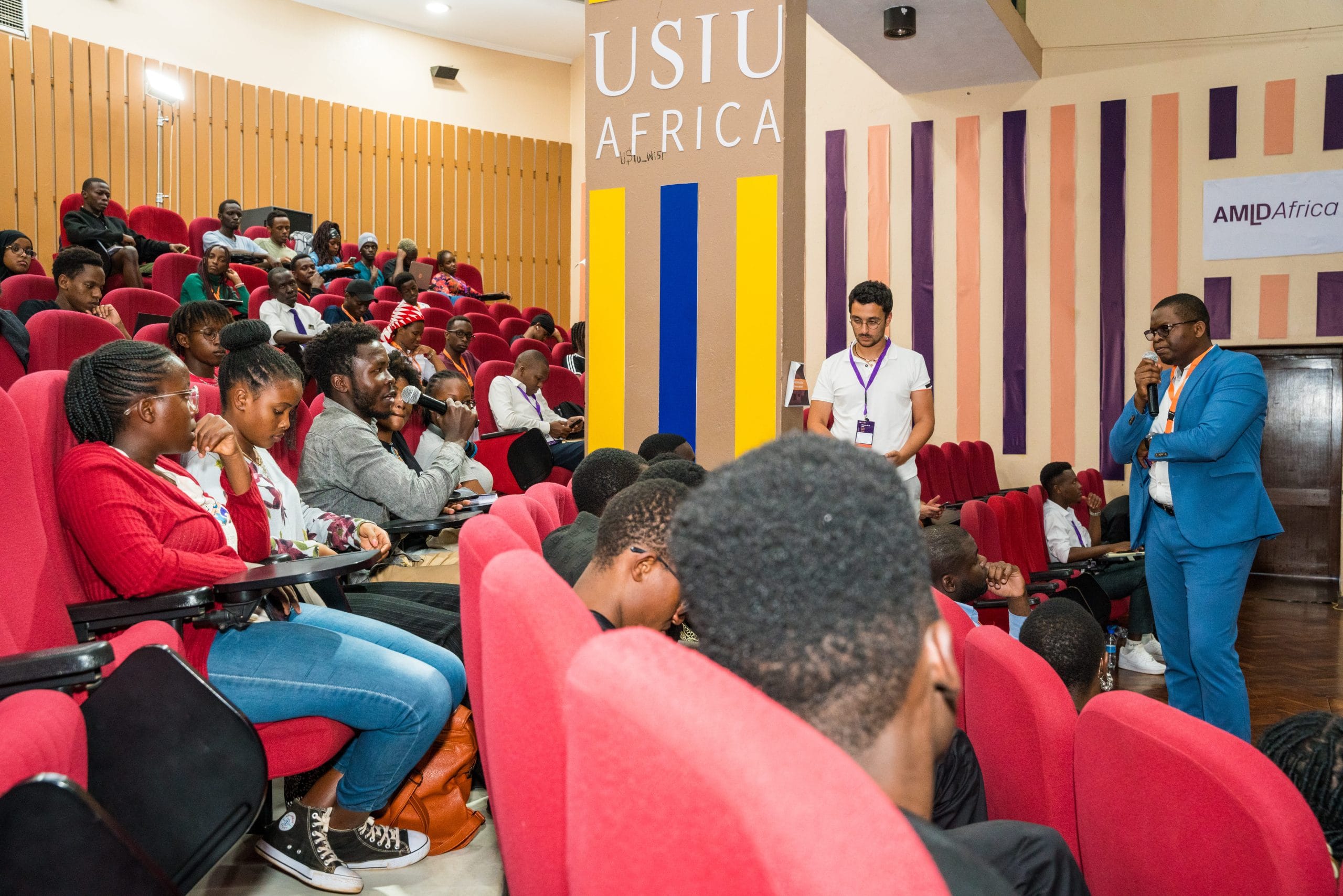
JOHANNESBURG — In the soaring auditorium of Wits University’s Science Stadium, over 3,200 participants from 52 African countries gathered last week for what has become one of the continent’s most significant artificial intelligence gatherings. The Applied Machine Learning Days (AMLD) Africa 2026 conference, held January 26-29, marked a turning point in Africa’s technological narrative—one where the continent is no longer simply adopting AI from elsewhere, but building it for itself.
“Back in 2017, Wits University and others launched the Deep Learning Indaba and we were blown away by the interest in AI and ML in Africa,” Professor Benjamin Rosman, Director of Wits University’s Machine Intelligence and Neural Discovery (MIND) Institute, told attendees in his opening address. “Today, that and similar initiatives have catalysed so much excitement across the continent. We have moved from very small, isolated pockets of people just starting to dabble in AI to one of the strongest, most vibrant AI communities in the world.”
Rosman, who was named one of TIME’s 100 Most Influential People in AI in 2025, set the tone for a conference that defied the typical Western-dominated AI discourse. Instead, AMLD Africa 2026 focused squarely on Africa-led solutions to African challenges, emphasizing what organizers call “Ubuntu meets AI”—a philosophy where local realities inspire global solutions and the continent’s emerging talent takes the lead.
Six Tracks, One Vision
The conference’s structure reflected Africa’s multifaceted technological priorities, organizing content across six thematic tracks: Healthcare, Sustainability, Economic Empowerment, Cultural Preservation, Ethics and Governance, and Generative AI and Emerging Technologies.
In the healthcare track, Professor Nasreen Mahomed, Academic Head of the Division of Radiology at Wits, highlighted AI’s potential to transform diagnostics across the continent. She emphasized the critical need for clinically governed, ethically deployed AI systems supported by interoperable digital infrastructure, sovereign data, and robust privacy protections—concerns particularly relevant in regions where healthcare resources are limited but needs are acute.
The cultural preservation track tackled one of Africa’s most urgent challenges: linguistic diversity under threat. With approximately 2,000 languages spoken across the continent and roughly 10% facing extinction, speakers demonstrated how AI tools could preserve endangered languages and protect cultural heritage from art trafficking and loss.
Sustainability sessions explored how machine learning could address climate adaptation, energy transitions, and mining challenges. Presentations included turning watersheds into digital twins for risk assessment and mobility planning, as well as AI applications in circular economy initiatives and urban management.
A Movement Built on Inclusion
What distinguishes AMLD Africa from many international tech conferences is its commitment to accessibility. While similar events often charge upwards of $1,000 for attendance, AMLD Africa offered online participation for free, with on-site student tickets priced at just $5. The philosophy is simple: democratize AI knowledge to unlock the continent’s full potential.
“Research is important but we also need entrepreneurship and people to believe in themselves and be backed by the right investors,” said Khalil Aouani Cherif, President of AMLD Africa. “In these kinds of events and gatherings, a lot of ideas and opportunities emerge, and we hope to capitalise on that.”
The conference kicked off with “Day 0: Startups & Communities,” spotlighting local innovators and grassroots AI initiatives from across Africa. This opening day embodied the conference’s ground-up approach, ensuring that Africa’s AI ecosystem grows from its own communities rather than being imposed from above.
Building Infrastructure for Long-Term Impact
Beyond the four days in Johannesburg, AMLD Africa has been building lasting infrastructure to support AI development continent-wide. The “Node by AMLD” initiative has established student-led AI clubs across African universities, with active chapters already operating in Zimbabwe, Benin, Nigeria, and Madagascar.
The AMLD Africa Ambassador Program, now spanning over 20 countries, enabled live broadcasts of the conference to more than 20 universities, engaging over 500 participants in satellite hubs. This network approach ensures that the conference’s impact extends far beyond those who could physically attend in South Africa.
Ethics at the Forefront
In a field often criticized for moving too fast to consider consequences, AMLD Africa placed ethics and governance front and center. Dr. Martin Bekker, computational social scientist and AI ethics researcher at Wits, delivered a talk that challenged fundamental assumptions about how values are defined, measured, and encoded into AI systems.
His presentation reframed the conversation from abstract philosophy to concrete metrics, proposing more robust approaches to the interface between human ethics and machine outputs—a particularly vital consideration for a continent where AI deployment could amplify existing inequalities if not carefully governed.
Dr. Samuel Segun, Senior Researcher at the Global Center on AI Governance and Research Fellow at the African Observatory on Responsible AI, brought additional expertise on technical AI safety, data ethics, and responsible deployment in governance contexts.
A Sovereign Technological Future
The conference also featured high-profile speakers addressing AI’s role in sustainable development and inclusive growth. Professor Tshilidzi Marwala, Rector of the United Nations University and UN Under-Secretary-General, shared insights on how AI and human ingenuity can create a more equitable future, drawing on his experience championing technology-driven education strategies when he served as Vice Chancellor of the University of Johannesburg.
The entrepreneurship focus connected founders with investors through dedicated startup forums, exhibitions, and structured networking sessions. Panels featuring representatives from impact funds, angel investors, and incubators explored the realities of building AI companies in African contexts.
Building on a Legacy
AMLD Africa has evolved significantly since its founding by African students and alumni from Switzerland’s École Polytechnique Fédérale de Lausanne (EPFL). Previous editions in Tunisia, Morocco, and Kenya reached thousands of participants and hosted luminaries including Yoshua Bengio, known as a “Godfather of AI,” and Karim Beguir, co-founder of InstaDeep.
The 2026 edition at Wits builds on this legacy while pushing the movement forward. As the conference concluded, participants left not just with new knowledge but with connections, collaborations, and a renewed sense that Africa’s AI future will be written by Africans.
“We have amazing people who are really trying to build things that can change the world,” Rosman emphasized. In a field too often dominated by Silicon Valley narratives, AMLD Africa 2026 demonstrated that some of the most important chapters of AI’s story will be written on the African continent—by African hands, addressing African challenges, and ultimately contributing solutions that the entire world can learn from.
The AMLD Africa 2026 conference was supported by the Excellence in Africa (EXAF) lab at EPFL, with participation from over 60 speakers and representatives from academia, industry, healthcare, policy-making, and investment sectors across the continent and beyond.