
A landmark National AI Strategy promises to reshape agriculture, healthcare, education, and security — but the road from ambition to execution is rarely straightforward
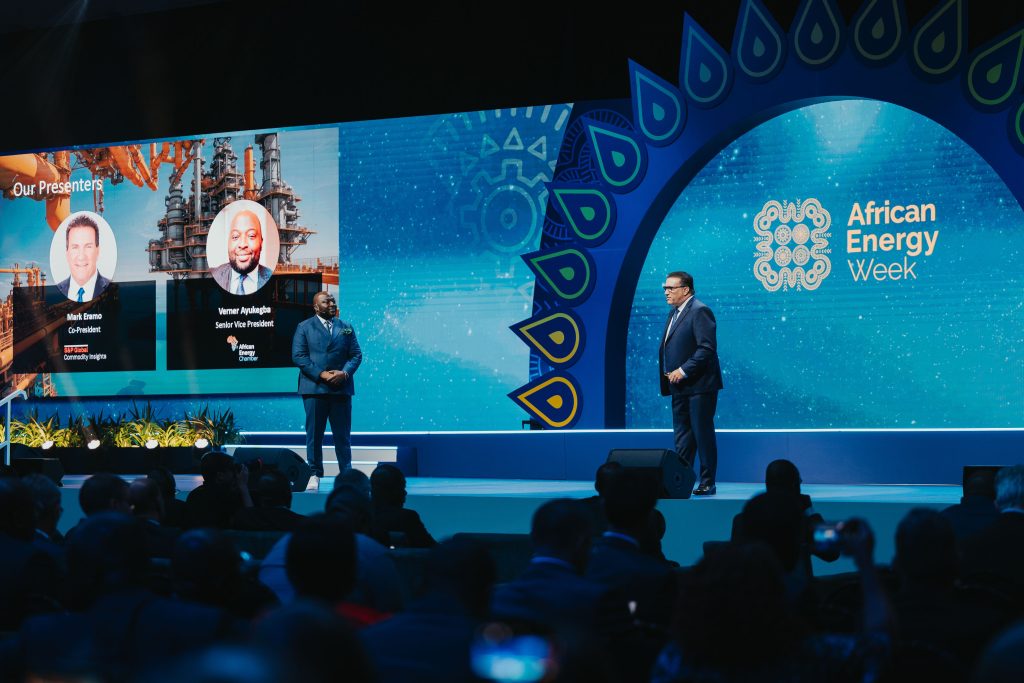
ON A HUMID MONDAY MORNING in Accra, government ministers, technology executives, civil society leaders, and international observers crowded into a conference hall with a shared sense of historic occasion. On March 2, 2026, Ghana officially unveiled its National Artificial Intelligence Strategy — a sweeping, ambitious blueprint that its architects say will define the country’s economic trajectory for decades to come.
The announcement, made during a high-profile stakeholder forum, positions Ghana as a frontrunner in Africa’s rapidly intensifying race to harness artificial intelligence. With a stated goal of becoming the continent’s premier AI hub, Accra is signalling that it intends to compete not merely on labour costs or natural resources, but on brainpower, data infrastructure, and the quality of its governance frameworks.
“Data is the new oil — and Ghana intends to be its own refinery.”
— Minister Samuel Nartey George, Ministry of Communications & Digitalisation
A Strategy Built on Five Pillars
At its core, Ghana’s AI strategy is sector-focused. Rather than pursuing artificial intelligence as an abstract technological project, officials have anchored the plan in the most pressing challenges facing ordinary Ghanaians. Five sectors sit at the heart of the roadmap: agriculture, healthcare, education, transportation, and security.
In agriculture — a sector employing roughly half of Ghana’s workforce — the strategy envisions AI-driven tools for crop disease detection, climate-adaptive planting calendars, and precision irrigation systems tailored to the country’s varying ecological zones. In healthcare, the plan targets diagnostic support in under-resourced rural clinics, predictive models for disease outbreak surveillance, and AI-assisted triaging at overburdened urban hospitals.
Education stands as perhaps the most politically resonant pillar. Ghana’s school system, still grappling with teacher shortages and uneven learning outcomes between urban and rural communities, could theoretically benefit enormously from personalised AI-powered tutoring platforms and administrative tools that free educators from paperwork. Transportation and security round out the strategy, with references to intelligent traffic systems for congested Accra and AI-enhanced tools for public safety and border management.
Data as a National Resource
Perhaps the most striking framing to emerge from the forum came from Minister Samuel Nartey George, who oversees the Ministry of Communications and Digitalisation. George made a pointed argument that Ghanaians have, for too long, generated data that enriches foreign technology companies without capturing proportionate value themselves.
“Data is a national resource,” George told the assembled forum, drawing a parallel that has become a rallying cry across the African technology policy community. The minister went further, insisting that Ghana’s digital economy ambitions would remain hollow unless the country developed robust data governance frameworks, local data infrastructure, and the institutional capacity to translate raw data into economic value.
This framing is neither accidental nor unique to Ghana. Across the African continent, policymakers are increasingly uncomfortable with what critics describe as “data colonialism” — the extraction of enormous volumes of African consumer and agricultural data by foreign platforms, with little reinvestment in local AI capability or infrastructure. Ghana’s strategy explicitly seeks to invert this dynamic.
Ethics at the Centre
In an era when global debates about AI governance have grown increasingly heated — from the European Union’s landmark AI Act to ongoing disputes in Washington and Beijing — Ghana’s strategy has deliberately placed ethics and transparency at its centre, not as an afterthought. Officials describe the approach as “human-centred,” a phrase that appeared repeatedly in the forum’s proceedings.
The emphasis on ethical AI is both principled and strategic. Ghana’s government appears acutely aware that international development finance, foreign direct investment, and technology partnerships increasingly flow toward jurisdictions that can demonstrate credible governance frameworks. An AI strategy built on transparency and accountability is, in this light, also a foreign investment pitch.
Civil society representatives at the forum welcomed the ethical commitments in principle, while urging the government to enshrine them in binding regulation rather than voluntary guidelines. “Commitments to ethical AI are only as strong as the institutions that enforce them,” said one digital rights advocate, who noted that Ghana’s existing data protection framework would need significant strengthening to underpin the strategy’s ambitions.
The Continental Race
Ghana does not enter this race alone, nor without competition. Kenya, Nigeria, South Africa, Rwanda, and Egypt have all published national AI strategies or significant digital economy roadmaps in recent years. Each country brings distinct advantages: Nigeria has sheer market scale and a formidable startup ecosystem; Kenya boasts a mature mobile money infrastructure and a regional technology hub in Nairobi; South Africa offers established research universities and deep capital markets; Rwanda has staked its claim on forward-leaning governance and ease of doing business.
What Ghana can offer, its proponents argue, is a combination of political stability, an English-speaking professional workforce, improving digital infrastructure, and a government that has demonstrated sustained commitment to technology-led development across successive administrations. The country’s relatively strong institutional environment — it ranks consistently among West Africa’s most stable democracies — may prove decisive in attracting the kind of long-term investment that AI infrastructure requires.
The Gap Between Vision and Execution
Sceptics, and there are always sceptics at such launches, offered a familiar caution: Africa has no shortage of ambitious technology strategies that have withered between the launch press release and meaningful implementation. The continent’s graveyard of unfulfilled digital economy plans is well-documented.
The challenges Ghana faces are not trivial. Reliable, affordable broadband connectivity remains patchy outside major urban centres. The country’s technology talent pipeline, while growing, cannot yet supply the volume of machine learning engineers, data scientists, and AI policy specialists that an ambitious national strategy demands. Financing remains a perennial concern: world-class AI infrastructure is expensive, and Ghana’s fiscal space is constrained after years of economic turbulence.
Government officials are aware of these vulnerabilities. At the forum, there was explicit acknowledgment that the strategy’s success would depend on sustained public investment, effective public-private partnerships, and international cooperation — including with multilateral institutions, diaspora networks, and friendly governments willing to share expertise and resources.
A Defining Bet
Ghana’s National AI Strategy is, at its most fundamental, a bet — a wager that a middle-income West African nation with the right governance instincts, the right human capital investments, and the right international partnerships can leapfrog decades of technological dependency and write itself into the emerging map of global artificial intelligence.
It is not an implausible bet. History offers precedents: South Korea’s semiconductor gamble, Finland’s education-led knowledge economy pivot, and Estonia’s audacious transformation into a digital state all began as documents and declarations before they became realities. What they shared was political will sustained across government cycles, institutional capacity built over time, and a citizenry ultimately persuaded that the transformation was worth the disruption.
Whether Ghana has those ingredients in sufficient measure remains an open question. What March 2, 2026 demonstrated, at minimum, is that the country is now formally in the game — and that its government understands, at last, that data, algorithms, and artificial intelligence are not merely tools for the wealthy world’s technology firms, but resources that developing nations can and must claim for themselves.
Additional reporting contributed from Accra. This article reflects publicly available information as of March 5, 2026.