A Profile on Wahab Idris and the Awibi Health Revolution
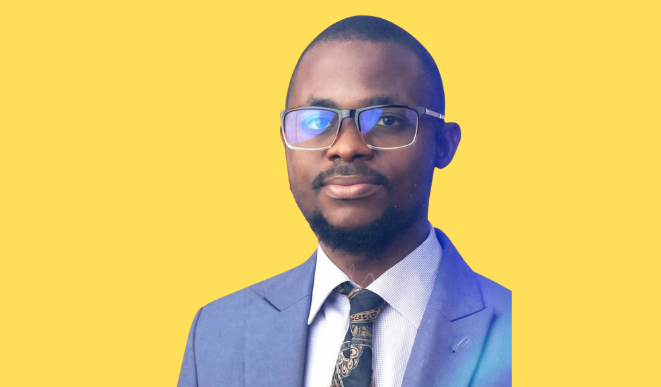
In a cramped university library in Nigeria, a medical student is rewriting the rules of healthcare technology. Wahab Idris, currently in his 600th level of Medicine and Surgery at the University of Ilorin, isn’t just learning to heal patients—he’s building the AI systems that will transform how millions across Africa access medical care.
His journey began in an unlikely place: a free Python programming class at a community library. “After my WAEC, I was naturally curious to read Engineering Mathematics,” Idris recalls. “A friend introduced me to that Python class, and everything changed.” What started as teenage curiosity has evolved into Awibi LTD, a health technology enterprise that’s catching the attention of global accelerators and transforming healthcare education across 30+ countries.
The Birth of a Movement
In 2023, Idris co-founded Meditechy Africa, a pan-African open community ecosystem for health technology. The vision was bold: to democratize health tech education across the continent. Within months, their flagship project, Medchain, secured a spot in Harvard’s H2A Accelerator Africa program.
“That was the turning point,” Idris explains. “We started having real insights into health technology strategy.” The momentum didn’t stop. By late 2024, Medchain—now rebranded as Awibi EHR—was accepted into Mastercard Foundation’s Fast program, a validation that reshaped the entire enterprise. Meditechy Africa became Awibi LTD, splitting into a for-profit technology company and a social ecosystem called Awibi Medtech.
Solving Africa’s Healthcare Data Crisis
The problem Awibi tackles is deceptively simple yet profoundly complex: healthcare data in Africa is drowning in paper. “Healthcare data doesn’t just get lost in paper—it dies there,” Idris says with stark clarity. “Without digitization, there’s no analysis, no metrics, no epidemiological insights, no advancement.”
Enter Awibi EHR, a multimodal electronic health record system that’s reimagining how African healthcare facilities capture patient data. Unlike traditional EHR systems that burden already-overwhelmed clinicians with more typing, Awibi offers voice-to-text, image handwriting recognition, and questionnaire-based inputs. “We’re not adding to their workload,” Idris emphasizes. “We’re meeting professionals where they are, with the high patient-to-provider ratios they face every day.”
The AI Mathematics Gambit
But Idris isn’t content with building tools—he’s building builders. His most ambitious project to date is “Bedrock Artificial Intelligence Mathematics,” a comprehensive textbook born from a deeply personal frustration.
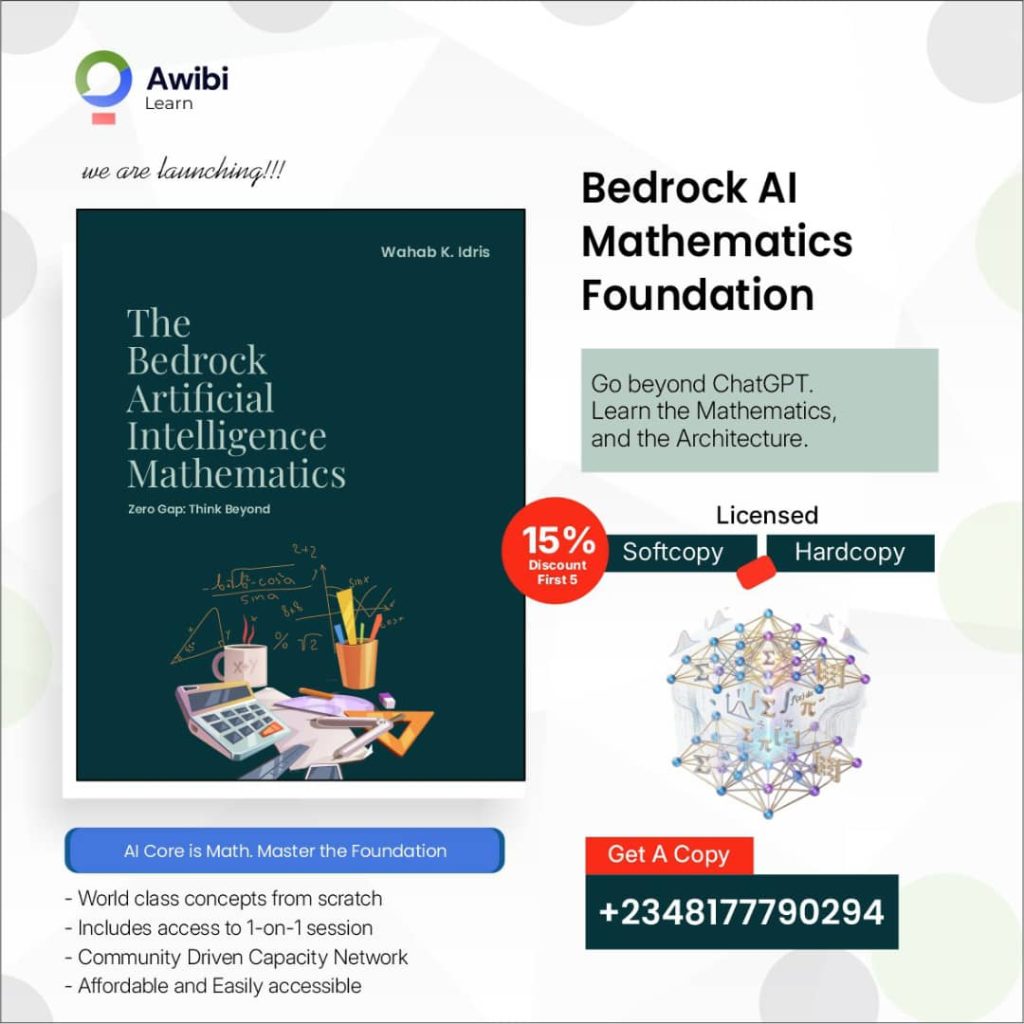
“I had left mathematics for eight years,” he admits. “When I dove into AI, every resource assumed substantial math knowledge. I thought: can I create the book I wish I had? Something that takes you from absolute scratch to mastery, where you never need to leave the book no matter your level?”
The result is a year-long labor of love that teaches not just AI mathematics, but the logic of real-world implementations. “It’s not about prompting AI,” Idris clarifies. “It’s about creating systems, building AI from first principles, leading teams that develop solutions for companies, schools, healthcare, Africa.”
Education as Infrastructure
While Awibi LTD builds commercial products, the Awibi Medtech social ecosystem is cultivating Africa’s next generation of health tech innovators. With active chapters in Tanzania, South Africa, and the University of Ilorin, the initiative offers specialized programs ranging from AI Code for Health to Medical Device Building.
“Our platform has reached students and professionals in 34+ countries,” Idris notes with quiet pride. The ecosystem hosts transformative sessions, an annual Health Ignite Summit, and community health technology projects—all designed to build not just technical skills but a shared vision for healthcare transformation.
The Balancing Act
Juggling medical school, running a tech company, writing textbooks, and leading a continental education movement would break most people. How does Idris manage? “Consistency, diligence, and prioritizing,” he says simply. “I give percentages to different priorities depending on context, but I never leave anything entirely. Just the concentration span shifts.”
It’s a philosophy forged in adversity. The early days of building Awibi were marked by “clarity issues, revenue difficulties, and technical team challenges,” he admits. External contractors cared about projects, not vision. “But we didn’t stop. We knew these challenges would build our experience running this big corporation.”
The Future of African Healthcare
Ask Idris about AI’s role in Africa’s healthcare future, and his answer is unequivocal: “Coexistence.” He envisions AI not replacing healthcare professionals but accelerating their operations, making treatments faster, procedures more convenient, and costs lower.
“People will appreciate seeking treatment more when it’s not difficult on any aspect of healthcare involvement,” he predicts. It’s a vision grounded in practical realities—the handwriting-to-text and voice-to-structured-text AI models Awibi is currently developing will help medium and small health facilities digitize manual consultations, preserving data that would otherwise be lost to deteriorating paper records.
Looking ahead five to ten years, Idris sees Awibi Health’s ecosystem offering software, AI tools, and medical devices that benefit Africa and the global health community. The social empowerment arm? Reaching 50,000+ lives with expanded branches in more than 15 countries and institutions.
A Different Kind of Doctor
Wahab Idris represents a new breed of healthcare professional—one who understands that healing communities requires more than clinical expertise. It demands technological innovation, educational infrastructure, and the audacity to believe that Africa doesn’t need to wait for healthcare transformation; it can build it.
“My passion is to transform healthcare and not wait for governments,” he declares. “We need to play our parts.” From a community library in Nigeria to accelerators at Harvard and Mastercard Foundation, from teaching secondary school students AI to authoring comprehensive mathematics textbooks, Idris is playing his part at a scale that defies his age and circumstances.
In the intersection of medicine and machine learning, of clinical practice and code, Wahab Idris is proving that Africa’s healthcare future won’t just be transformed by technology—it will be built by Africans, for Africa.