
RABAT — Morocco took a decisive step toward establishing itself as a regional artificial intelligence hub on January 12, launching an ambitious national initiative that aims to transform the kingdom’s digital economy while asserting technological independence.
The “AI Made in Morocco” event, held in the capital and presided over by Minister Amal El Fallah Seghrouchni, marked the official unveiling of the Morocco AI 2030 roadmap alongside the inauguration of the JAZARI ROOT Institute, the cornerstone of a planned nationwide network of AI centers of excellence.
Ambitious Economic Targets
The strategy sets bold targets for the next five years: contributing 100 billion dirhams (approximately $10 billion) to GDP, creating 50,000 AI-related jobs, and training 200,000 graduates in AI-related skills by 2030. These objectives position artificial intelligence not merely as a technological upgrade but as a fundamental pillar of Morocco’s economic future.
The initiative represents a culmination of work begun at the National Artificial Intelligence Conference held in July 2025 under the patronage of King Mohammed VI, translating those discussions into an operational framework that emphasizes what officials call “technological sovereignty.”
The JAZARI Network: Decentralized Excellence
At the heart of Morocco’s approach lies the JAZARI Institutes network, a decentralized architecture designed to bridge the gap between academic research, technological innovation, and practical applications across public administration and the private sector. The JAZARI ROOT Institute in Rabat will serve as the central coordinating hub, functioning as a public-interest entity that pools research capabilities and aligns innovation with the operational needs of government services and territorial authorities.
The network’s distributed design deliberately promotes regional equity by establishing specialized centers across Morocco’s 12 regions, each aligned with local economic priorities and academic strengths. The first regional institute was established in the Guelmim-Oued Noun region in southern Morocco, with additional centers confirmed for Nador in the northeast and Dakhla in the south, where the focus will be on AI applications for energy transition and intelligent energy-management solutions.
This territorial approach reflects a conscious effort to bring digital transformation to historically underserved areas, ensuring that AI development benefits the entire country rather than concentrating solely in major urban centers.
Strategic Partnerships and International Cooperation
The January 12 event witnessed the signing of multiple cooperation agreements between the Ministry of Digital Transition and Administration Reform and various national and international partners. A notable announcement was the establishment of a joint research and development laboratory with Mistral AI, a French leader in generative artificial intelligence, signaling Morocco’s intention to engage with global technology leaders while maintaining national oversight.
The founding agreement for JAZARI ROOT brought together twelve ministerial departments alongside five strategic actors from the digital sector, territorial development, and private enterprise, underscoring a whole-of-government approach to AI governance.
According to officials, these partnerships aim to strengthen coordination, promote interoperability, and accelerate implementation of the Morocco AI 2030 strategy while supporting objectives in digital research, innovation, and technology development.
Building Blocks of Digital Sovereignty
Morocco’s AI strategy rests on several key infrastructure components designed to reduce dependence on external technological systems. These include a National Data Factory to structure and govern public-sector data, a National Software Forge to pool algorithms and government-developed AI components, and sovereign cloud infrastructure to ensure data remains under national control.
The approach reflects what Minister Seghrouchni has characterized as positioning at the intersection of economic, technological, and security challenges. The strategy places strong emphasis not only on technological capability but also on ethical frameworks, with officials noting alignment with UNESCO recommendations and the European AI Act in developing risk-assessment mechanisms.
Regional Ambitions and South-South Cooperation
Beyond domestic objectives, Morocco positions its AI initiative as a vehicle for regional influence, particularly across Africa. Officials describe artificial intelligence as a lever for solidarity, expertise sharing, and co-development around high-value digital projects, with the kingdom aspiring to become a leading partner in supporting AI strategies across the continent.
This approach aligns with broader patterns emerging across the MENA region, where countries including Saudi Arabia, the UAE, and Egypt are pursuing nationally coordinated AI strategies in competition for talent, investment, and research capacity. Morocco’s structured institutional approach and emphasis on public-private collaboration mirrors these efforts while adding a distinctive focus on territorial inclusion and South-South cooperation.
Implementation Challenges Ahead
The JAZARI Institutes are tasked with four primary functions: training, applied research, experimentation, and incubation. They will serve as hubs bringing together universities, researchers, startups, and project leaders under a national framework, with a mandate to support technology company growth, encourage AI adoption by small and medium-sized enterprises, and strengthen national skills development.
The success of this ambitious vision will depend on Morocco’s ability to translate strategic planning into operational reality, developing genuine AI capabilities rather than simply adopting foreign technologies. The emphasis on regional distribution, ethical governance, and international partnerships suggests an attempt to chart a distinctive path that balances sovereignty concerns with practical engagement in global technology ecosystems.
As the Morocco AI 2030 roadmap enters its implementation phase, the initiative signals the kingdom’s determination to position itself not merely as a consumer of artificial intelligence but as a producer and regional leader in a technology increasingly central to economic competitiveness and state capacity.
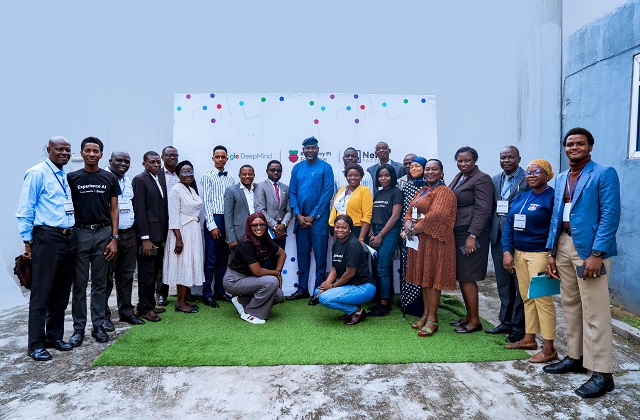
The AI Made in Morocco launch event brought together government officials, institutional stakeholders, private sector representatives, and members of the academic and research communities in a show of national alignment around the artificial intelligence agenda.