
A new G20-backed report reveals how artificial intelligence could reshape Africa’s economic landscape by 2035, with early action critical to success
The African Development Bank has unveiled an ambitious vision for the continent’s digital future, estimating that artificial intelligence could inject up to $1 trillion into Africa’s economy by 2035—representing nearly one-third of the continent’s current GDP.
The comprehensive study, titled “Africa’s AI Productivity Gain: Pathways to Labour Efficiency, Economic Growth and Inclusive Transformation,” was developed under the G20 Digital Transformation Working Group and conducted by consulting firm Bazara Tech. It provides a strategic blueprint for harnessing AI’s transformative potential across Africa’s diverse economies.
Concentrated Impact Across Key Sectors
Rather than spreading benefits thinly across all industries, the report identifies AI’s economic impact will be concentrated in a limited number of high-impact sectors. Five priority areas are projected to account for 58% of total AI-driven gains, amounting to approximately $580 billion by 2035:
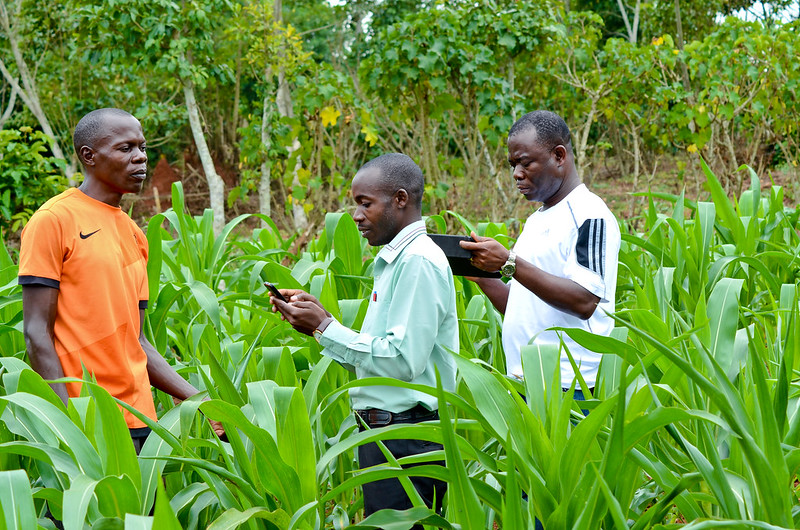
- Agriculture (20%): AI applications in precision farming, crop monitoring, and supply chain optimization could revolutionize food production
- Wholesale and Retail (14%): Enhanced inventory management, customer analytics, and logistics
- Manufacturing and Industry 4.0 (9%): Smart factories and automated production systems
- Finance and Financial Inclusion (8%): Expanded access to banking services and risk assessment
- Health and Life Sciences (7%): Improved diagnostics, treatment planning, and healthcare delivery
The concentration in these sectors reflects where AI can deliver the most immediate and measurable productivity improvements, according to the report’s findings.
Five Critical Enablers
The report identifies Africa’s ability to realize these gains depends on five interconnected enablers: data, compute infrastructure, skills, trust and capital.
Data forms the foundation for AI insights, requiring reliable and interoperable information systems. Compute infrastructure must scale to deploy AI solutions efficiently across the continent’s varied geography. A skilled workforce capable of developing and maintaining AI systems is essential, while trust—supported by robust governance and regulatory frameworks—will determine adoption rates. Finally, adequate capital investment is needed to reduce risks and accelerate innovation.
These enablers are expected to create what the report calls a self-reinforcing cycle of AI-driven growth, where each component strengthens the others.
A Three-Phase Roadmap
The report proposes a carefully sequenced implementation strategy spanning the next decade:
Ignition Phase (2025-2027): Establishing foundational infrastructure, regulatory frameworks, and initial pilot projects
Consolidation Phase (2028-2031): Expanding successful initiatives and building institutional capacity
Scale Phase (2032-2035): Widespread deployment and optimization of AI systems across priority sectors
“Achieving early milestones by 2026 will set Africa’s AI flywheel in motion,” said Ousmane Fall, director of industrial and trade development at the bank. The emphasis on early action underscores that delays could significantly impact the continent’s ability to capture AI’s full economic potential.
Investment and Implementation
Nicholas Williams, manager of the ICT Operations Division at the African Development Bank, emphasized the institution’s readiness to support the transformation. The bank has positioned itself to release investment supporting these strategic actions, with expectations that private sector and government partners will leverage this funding to achieve the identified productivity gains while creating quality employment opportunities.
Fall noted that “Africa’s challenge is no longer what to do. It is doing it on time.” This statement captures the urgency embedded in the report’s recommendations—the pathways are clear, but execution speed will determine outcomes.
Context and Significance
The report’s release comes at a pivotal moment for Africa’s digital transformation. The study attributes the $1 trillion potential to Africa’s expanding digital capacity, favorable demographics and ongoing reforms across key sectors.
With the world’s youngest population and rapid urbanization, Africa possesses unique advantages for AI adoption. However, the continent also faces significant infrastructure gaps, skills shortages, and financing constraints that the report acknowledges must be addressed systematically.
The G20 backing signals international recognition of Africa’s strategic importance in the global AI ecosystem. As developed economies grapple with aging populations and saturated markets, Africa’s demographic dividend and underserved sectors present opportunities for innovative AI applications that could leapfrog traditional development stages.
Challenges Ahead
While the report paints an optimistic picture, realizing the $1 trillion opportunity will require coordinated action across multiple stakeholders. Governments must establish supportive regulatory environments without stifling innovation. Private sector investment needs to flow to infrastructure and skills development. International partners must provide technical assistance and knowledge transfer.
The concentration of projected benefits in specific sectors also raises questions about inclusive growth. How will gains be distributed across different regions, income levels, and demographic groups? The report’s emphasis on “inclusive transformation” suggests awareness of these equity concerns, though implementation details will prove critical.
Looking Forward
As Africa stands at this technological crossroads, the African Development Bank’s report provides both a roadmap and a rallying call. The $1 trillion prize is substantial, but achieving it will require unprecedented collaboration, sustained investment, and—crucially—speed of execution.
The next two years will be decisive. By 2026, the continent must demonstrate tangible progress on the early milestones that will set the AI flywheel in motion. Success will not only transform individual economies but could position Africa as a significant player in the global AI landscape, moving from technology consumer to active innovator and implementer.
For policymakers, business leaders, and development practitioners across Africa, the message is clear: the time to act is now. The opportunity is quantified, the pathways are mapped, and the countdown has begun.