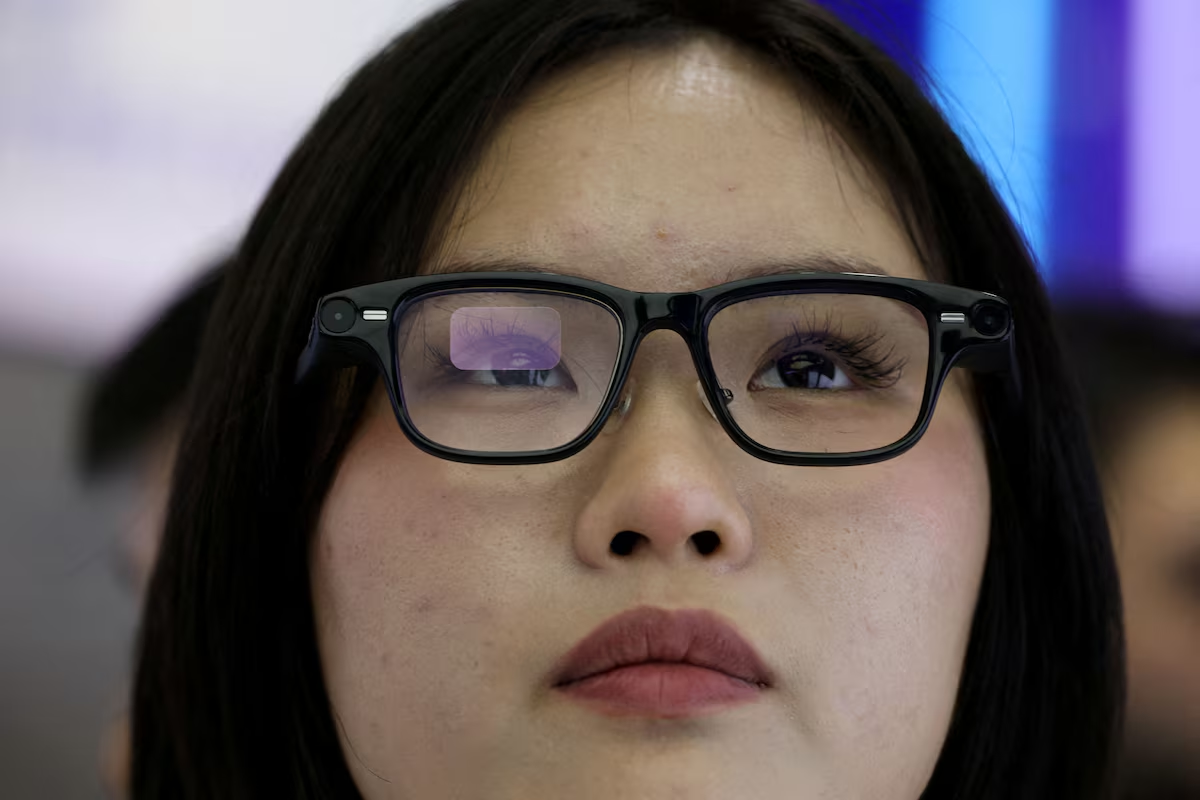
In a bold push into consumer hardware, Alibaba has officially launched its much-anticipated AI-enabled “smart glasses” — the Quark AI Glasses — opening sales in China this week and signalling its ambition to challenge established players in the wearables space.
What the Quark Glasses Offer
The Quark lineup consists of two models: the flagship S1 and a lighter, more affordable G1.
- The S1 — with dual Micro-LED displays embedded in the lenses — delivers a heads-up display over the user’s field of view, overlaying digital information such as translations, navigation, or contextual data.
- Both S1 and G1 carry cameras, bone-conduction microphones, and are powered by audio/AI chips designed for augmented-reality wearables.
- According to specifications, S1 frames support prescription lenses and are lightweight (around 51 g), while offering wireless connectivity (Bluetooth 5.4, Wi-Fi 6), battery-swapping for extended use, and video/photo capture capabilities — including 3K video and 4032×3024 still photos.
Alibaba promotes the Quark glasses not simply as a high-end gadget, but as a “lifelong AI assistant” — useful for everyday tasks like real-time translation, navigation, shopping and price-checking, video/photo capture, and seamless integration with its sprawling ecosystem (payment, e-commerce, navigation, messaging).
Pricing, Availability & Market Strategy
The G1 model begins at 1,899 yuan (≈ US $268), while the S1 starts at 3,799 yuan (≈ US $537). The glasses are already available on major Chinese platforms such as Tmall, JD.com, Douyin — and even in over 600 retail stores across 82 cities within China.
However, Alibaba has not yet confirmed whether the Quark glasses will be sold outside of China. For now, availability remains strictly domestic.
Why It Matters: Alibaba’s Big Bet on Hardware
For Alibaba — historically known for e-commerce, cloud computing, and payments — this marks a rare step into consumer hardware. The Quark glasses are part of its broader strategy to transition into an “AI-first” company, leveraging its existing services (shopping, payments, navigation, etc.) and bundling them into a wearable, always-on form factor.
Industry watchers note the move could reshape how consumers interact with AI: not just through phones or laptops, but through devices integrated into daily life. “AI glasses are the intelligent devices that truly usher in a revolution in human-computer interaction in the AI era,” said Alibaba vice-president Wu Jia at the launch.
This comes at a time when other major global players — including Meta, and several Chinese tech firms — are doubling down on wearable AI and AR devices. The competition is intensifying, and with the Quark rollout, Alibaba has thrown its hat firmly into the ring.
Caveats & What to Watch
- The display-equipped S1 is notably pricier than the G1 — and as of now the G1 doesn’t include the display.
- The product is currently available only in China. There is no official confirmation about when or even if Alibaba will ship the glasses internationally.
- Real-world consumer adoption will be key. Wearable AI glasses face longstanding challenges: balancing comfort, battery life, functionality, privacy concerns, and integration beyond niche use-cases — factors that previously slowed devices like earlier AR glasses.
What It Means Globally — and for Markets Like Nigeria
For global markets (including Africa), the arrival of Quark signals a broader shift: AI is no longer confined to servers or smartphones — it’s wearing us. If Alibaba eventually ships these glasses internationally, they could lower the barrier to immersive AI and AR for everyday users, especially in regions where smartphone penetration is high but devices remain the main computing interface.
For regions like Nigeria, this could open doors for:
- Real-time translation tools for multilingual use (local languages ↔ global languages),
- Navigation and location-based services via a hands-free wearable,
- Access to e-commerce and payment ecosystems through voice or glance.
But several questions remain: Will Alibaba adjust pricing for global markets? Will internet connectivity, language support, and after-sales services meet local demands? And, crucially — will consumers embrace wearable AI over traditional smartphones?
Final Verdict
Alibaba’s Quark AI Glasses are real, and they’re on sale — at ~US $537 for the premier model. The device represents a meaningful step by Alibaba to translate its AI ambitions into consumer hardware and to challenge incumbents like Meta in a fast-evolving wearables market.
That said, its current availability is limited to China, and whether the Quark glasses will find global success — especially beyond launch hype — remains to be seen.