A battle for the continent’s 1.4 billion minds has begun — and the stakes have never been higher
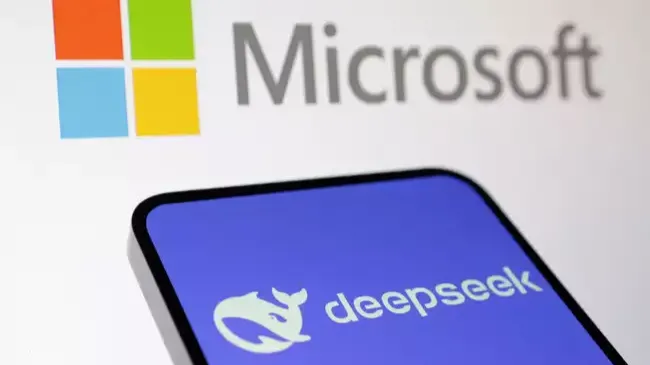
A new front in the global artificial intelligence race is quietly opening up — not in Silicon Valley or Shenzhen, but across the sprawling cities, universities, and mobile networks of Africa. And the two combatants squaring off for dominance are as telling as the battlefield itself: Microsoft, the American tech giant, and DeepSeek, China’s fast-rising open-source AI platform.
Microsoft is making a push for more Africans to adopt its artificial-intelligence tools as the US tech giant competes with China’s DeepSeek for customers from the world’s youngest and fastest-growing population. The contest, still in its early rounds, may well determine which AI ecosystem shapes the digital habits of billions of people for decades to come.
DeepSeek’s Silent Advance
While Microsoft was announcing partnerships and press releases, DeepSeek was already quietly winning over users on the ground.
DeepSeek accounts for roughly 11% to 14% of chatbot use across several African countries. In Ethiopia and Zimbabwe, that figure reaches as high as 20%, following a strategic push by Beijing and its companies to build digital infrastructure, expand telecom networks, and roll out AI services to fast-growing markets.
The reasons for DeepSeek’s traction are structural, not accidental. DeepSeek is generally far cheaper for developers to use than Microsoft’s Azure and Copilot offerings. In price-sensitive markets where startups and developers operate on thin margins, affordability is not a minor advantage — it is everything.
Then there is the hardware dimension. China’s dominance of Africa’s handset market gives DeepSeek a pre-installed advantage that Microsoft’s training programmes cannot easily overcome. A user whose first smartphone has DeepSeek pre-integrated faces no activation cost. Switching to a Microsoft alternative requires deliberate action.
Microsoft Swings Back — Hard
Microsoft is not sitting idle. Its response is a two-pronged offensive combining mass skills training and a landmark distribution deal.
The initiative, called Microsoft Elevate, will run through partnerships with schools, universities, and public institutions across South Africa, Kenya, Nigeria, and Morocco. The goal: train 3 million Africans on AI tools in 2026. Naim Yazbeck, Microsoft’s Middle East and Africa President, framed it in direct terms: “Chinese technology is active in Africa and our job is to compete.”
On distribution, Microsoft has partnered with MTN Group, bundling Microsoft 365 and Copilot into MTN’s consumer and enterprise offerings. MTN serves roughly 300 million subscribers across Africa, giving Microsoft a large potential channel for its AI software. The rollout began in selected MTN markets in early 2026. MTN CEO Ralph Mupita described the deal as opening “new pathways for innovation and opportunity that will define the continent’s next phase of progress.”
Infrastructure investment is also accelerating. In South Africa, Microsoft plans to invest 5.4 billion rand — about $330 million — to expand its cloud and AI capacity by the end of next year, while it is also exploring plans for a geothermal-powered data centre in Kenya.
Boots on the Ground: Early Corporate Wins
Microsoft is pointing to early enterprise adoption as proof of momentum. South African grocer Spar Group is using Copilot to save more than 700 employee hours a year, while Nigeria’s Access Holdings has embedded AI into daily workflows. These are modest wins, but in a market still finding its AI footing, they serve as important reference points for the broader corporate sector.
The $136 Billion Prize
The scale of what is at stake puts the competition in sharp relief. Africa’s AI market generated $4.92 billion in revenue in 2025, a figure expected to surge to $16.5 billion by 2030 — a compound annual growth rate of 27%, driven by demand in finance, health, and agrotechnology.
Whoever captures the default AI habits of Africa’s population — projected at 2.5 billion by 2050 — will likely hold those relationships for decades. This is not just a commercial calculation. It is a generational bet.
A Geopolitical Game, Not Just a Tech Race
Analysts are careful to note that the Microsoft-DeepSeek contest is inseparable from the wider US-China rivalry.
The US has sought to counter China’s digital push with its own strategic investments across the continent as part of a long-term bid for customers, soft power, and troves of data that will shape the future of AI.
But researchers caution against viewing Africa purely as a passive arena for great-power competition. African governments are participants with real leverage — leverage that requires coordinated action. The concentration of compute, cloud, and capital in a small number of US and Chinese firms means any African AI strategy built on foreign platforms carries sovereign risk regardless of which flag flies over the data centre.
Yazbeck himself urged African governments to take ownership: countries that had made AI a national priority — such as the UAE, Singapore, and Saudi Arabia — were already starting to see the returns, and African nations “have to look at it as an enabler of future economic development.”
The Bottom Line
The AI scramble for Africa is not merely the latest chapter in Big Tech rivalry. It is a contest over who will power the education, healthcare, finance, and government services of the world’s fastest-growing population. Microsoft is fighting with dollars, distribution deals, and developer incentives. DeepSeek is fighting with price, openness, and structural pre-installation.
For Africa’s developers, students, startups, and policymakers, the outcome of this contest will shape not just which apps they use — but who ultimately profits from their data, their labour, and their future.
The scramble has begun. Africa, this time, has a seat at the table.
Sources: Bloomberg, Nigerian Communications Week, Techloy, Winbuzzer, Financial Gazette — March 2026