A Report from MDC 2025’s AI Summit in Abuja, Nigeria.
The 2025 edition of the Media and Development Conference (MDC), hosted by the Centre for Journalism Innovation and Development (CJID), opened this week in Abuja with a bold and urgent theme: “Reimagining Democracy, Development and Data for the Next Decade.” The gathering brought together journalists, policymakers, researchers, development practitioners and technology leaders to examine the shifting dynamics of governance, media sustainability, civic engagement and technological disruption across Africa.
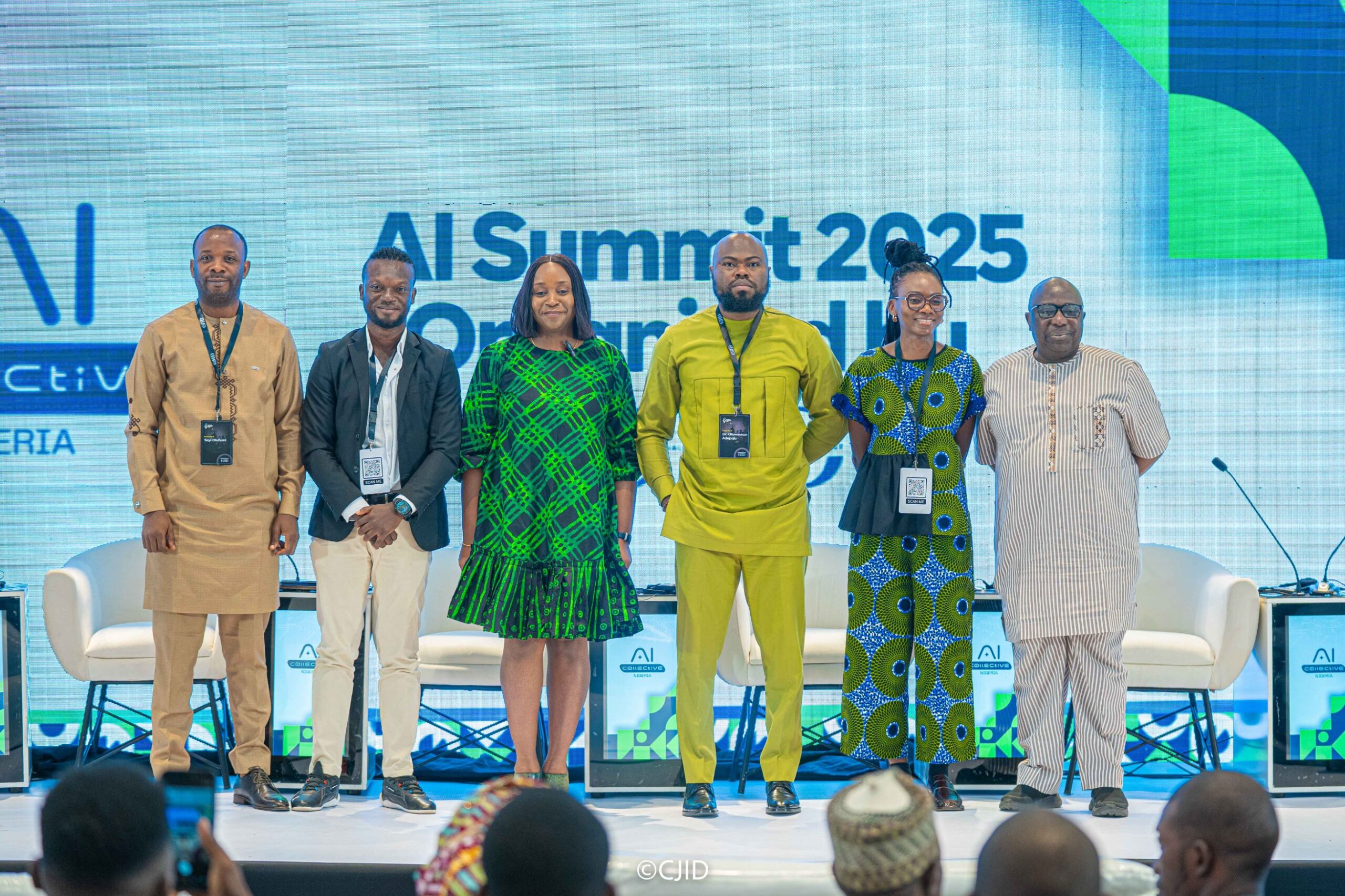
While the conference unfolded across multiple tracks and sessions, it was the AI Summit 2025, hosted by the Nigeria AI Collective on Wednesday, 26 November 2025, that captured the most attention — especially a panel discussion that confronted one of the continent’s most contested issues in the AI age:
Who owns Africa’s data, and who gets paid for it?

The Panel That Stopped the Room: “Who Owns the Data? Fair Compensation in the AI Age”
Moderated with the intensity of a courtroom debate, the session titled “Who owns the data (Fair compensation in the AI age?)” brought together leading voices from Nigeria’s AI, media, civic-tech and academic ecosystems. The conversation quickly moved from the technical to the deeply historical, and from the philosophical to the political.
One of the panelists delivered what many participants later described as the most provocative analogy of the entire conference. Reflecting on Africa’s long history of extraction, he said:
“In the slave era, the idea of exchanging enslaved Africans for mirrors or insignificant items is now happening again. This time, it is our data being taken for nothing — or for pennies. The same logic of exploitation that defined the past is reappearing in the AI age.”
The comparison landed heavily in the room. For many in the audience — journalists, technologists, policymakers — it struck a chord. The panelist continued:
“Just like slave raiders once took human beings in exchange for cheap goods, modern AI systems are collecting the digital footprints of millions of Africans. They are extracting enormous value from our data, and we get nothing in return. Not even awareness.”
The analogy set the tone for the remainder of the discussion: blunt, uncomfortable and necessary.
Africa’s Data as the New Frontier of Extraction
Across several African countries, billions of data points — from social media posts, phone logs and biometric records to browsing patterns, consumer behaviour and location trails — are harvested daily. Much of this data trains AI systems built by foreign companies, creating products worth billions of dollars.
Yet, as the panelists repeatedly emphasized, Africans remain largely excluded from the economic benefits their data generates.
The irony, they noted, is painful:
- Africans are among the world’s fastest-growing internet users.
- Nigeria alone has over 120 million internet subscribers.
- African languages, cultures, and communication patterns enrich global AI datasets.
- African users generate vast content without compensation.
- AI companies profit from this data, but Africans rarely see returns.
This imbalance mirrors broader inequities in the global digital economy — what some scholars describe as “data colonialism.”

Why Africa Still Cannot Charge for Its Data
Despite the passionate conversation about the need for compensation, the panel ultimately converged on a sobering conclusion:
Africa lacks the infrastructure required to enforce, track or monetize its data in any meaningful way.
Multiple structural challenges were highlighted:
1. Data Centers Dominated by Foreign Corporations
One of the key issues is that almost all major data centers used by Africans are owned or managed by U.S.-based tech giants.
This means:
- African data is processed offshore or through foreign-managed infrastructures.
- The continent has minimal control over how its data is stored or monetized.
- Negotiating data compensation becomes nearly impossible when infrastructure is outsourced.
Panelists noted that while a handful of local data centers exist, they are small, under-resourced and unable to compete at scale.
2. Lack of Power Infrastructure
The conversation repeatedly returned to the issue of power — especially in Nigeria.
The energy crisis affects everything:
- Data centers require uninterrupted electricity.
- AI compute infrastructure demands enormous power.
- Most African countries face unstable grids, making large-scale data infrastructure costly and unreliable.
As one panelist remarked:
“How can Africa claim ownership of data when we cannot even power our own servers?”
3. Absence of Regulatory Frameworks
Another fundamental challenge is the regulatory gap:
- Few countries have data protection laws with enforceable penalties.
- Many of the existing laws do not address AI-specific concerns.
- Countries lack the institutional capacity to monitor data flows or negotiate value.
4. Weak Bargaining Power in Global Tech Ecosystems
The panel noted that Africa is largely a consumer, not a producer, of AI technologies.
This weakens the continent’s leverage in demanding compensation or negotiating favourable terms with global tech companies.
The Emotional and Political Weight of the “Mirror for Slaves” Analogy
The comparison to the slave trade was controversial, but it illuminated a recurring historical pattern: Africa contributing immense value with minimal returns.
The panelist argued that today’s digital exchange mirrors the exploitative relationships of the past:
- Western companies collect African data (the new “raw material”).
- Africans receive minimal value in return — often free services whose real cost is hidden.
- The data is later used to build products Africans must pay for.
Some in the room pushed back, suggesting that the analogy oversimplifies modern digital realities. But the broader sentiment held firm: the continent is entering the AI future at a disadvantage, unless something changes quickly.

The Hard Truth: Africa Is Not Ready for Data Compensation
After more than an hour of dialogue and audience engagement, the panelists reached an unavoidable consensus:
Africa is not yet structurally prepared to demand compensation for the data its citizens generate.
Their reasons included:
- Lack of sovereign data infrastructure
- Insufficient computing capacity
- Dependency on foreign-owned platforms
- Poor policy enforcement
- Low awareness among the population
- Minimal investment in data governance
One panelist concluded:
“We cannot talk about fair compensation without first talking about power, servers, governance and investment. Compensation is not philosophical — it is infrastructural.”
So What Must Change? Key Takeaways from the Summit
Despite the challenges, the panel ended on a forward-looking note, outlining several recommendations:
1. Invest in African-Owned Data Infrastructure
African governments and private sector players must:
- Build local data centers.
- Improve power supply.
- Invest in cloud and compute infrastructure.
- Encourage homegrown AI research labs.
2. Strengthen Data Governance and Policy
Countries need:
- Modern data protection laws.
- AI-specific regulations.
- Enforcement bodies with funding and authority.
- Regional standards through AU and ECOWAS.
3. Public Awareness Campaigns
Citizens must understand:
- How their data is used.
- What rights they have.
- How to demand transparency.
4. Create Regional Data Markets
Africa should explore:
- Shared data exchanges.
- Joint compute investments.
- Harmonized regulation across borders.
5. Empower Local AI Ecosystems
Universities, civil society, media and startups all have a role:
- To build African AI expertise.
- To innovate locally.
- To challenge exploitative patterns.
MDC 2025: Shaping Africa’s Digital Future
CJID’s Media and Development Conference has long been a critical space for shaping media discourse and development policy across the continent. But this year’s AI-focused discussions carried a special urgency.
In a world where data fuels economies, determines political power, and trains the AI that will shape future societies, Africa faces a defining question:
Will it control its digital destiny, or will history repeat itself in new forms?
The panel on data ownership did not offer easy answers.
But it sparked the kind of uncomfortable conversation that Africa must confront if it is to secure its place in the global AI future.
And in Abuja, at MDC 2025, that conversation began with a stark reminder from history — and a call to action for the next decade.
This report is based on discussions at the Nigeria AI Collective AI Summit 2025, held on November 26, 2025, as part of the Centre for Journalism Innovation and Development Africa’s Media and Development Conference in Abuja.