A Guinness World Record That Fits in Your Pocket
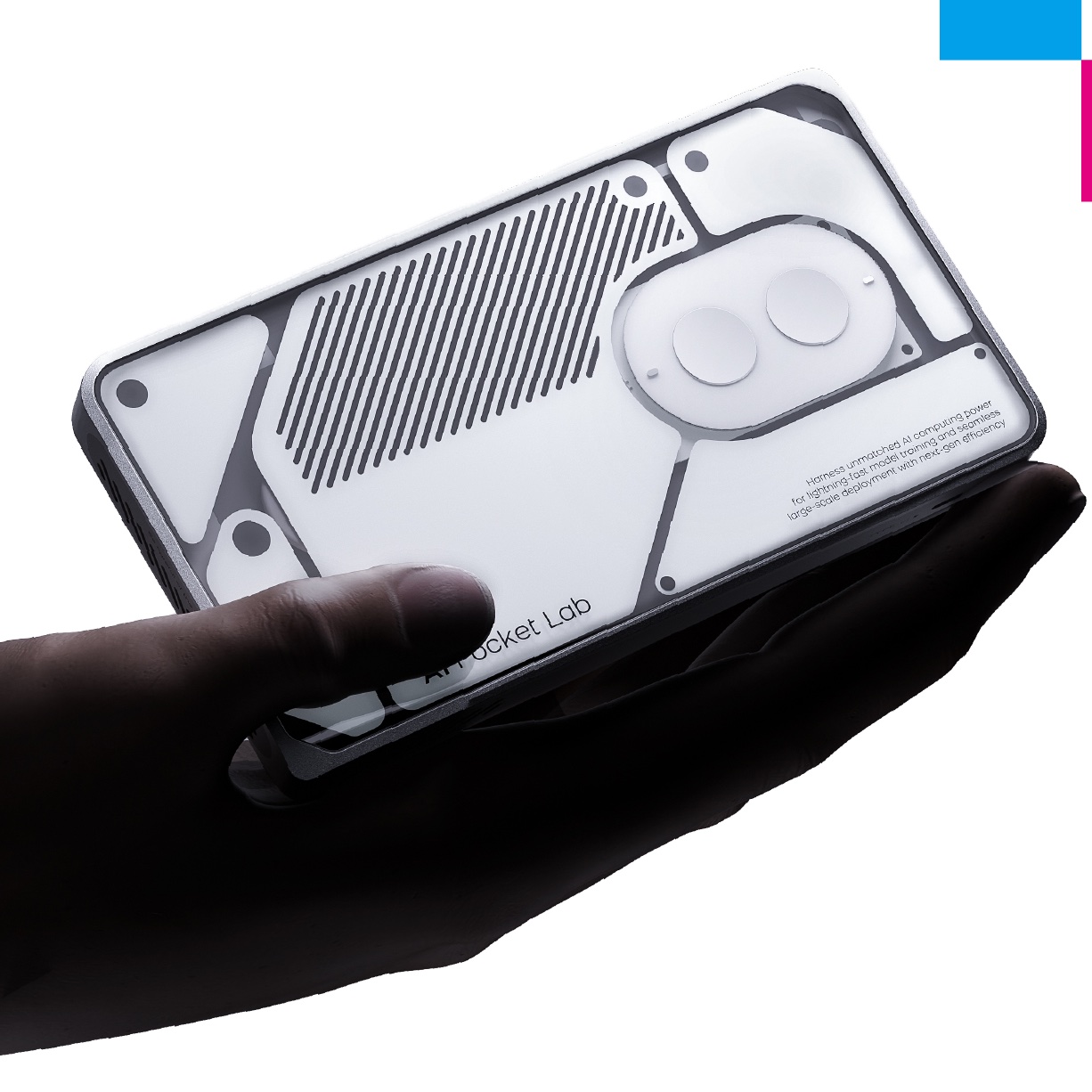
In a development that challenges conventional wisdom about AI computing requirements, US deep-tech startup Tiiny AI has unveiled the Tiiny AI Pocket Lab, officially verified by Guinness World Records as the world’s smallest personal AI supercomputer. The device’s achievement is remarkable not just for its size, but for what it represents in the ongoing debate about where artificial intelligence should live—in massive data centers or in the hands of individual users.
Measuring just 14.2 by 8 by 2.53 centimeters and weighing 300 grams, the Pocket Lab resembles a portable power bank more than a computing powerhouse. Yet this diminutive device claims capabilities that typically require professional GPU systems costing thousands of dollars. For the first time in AI supercomputing, a pocket-sized device is capable of running up to a full 120-billion-parameter large language model entirely on-device—without cloud connectivity, servers, or high-end GPUs.
The Technical Innovation Behind the Tiny Package
The Pocket Lab’s ability to punch above its weight class stems from both hardware design and sophisticated software optimization. The device features a 12-core ARMv9.2 CPU paired with a custom-designed NPU, achieving approximately 190 TOPS of AI compute performance, with 80GB of LPDDR5X memory and a 1TB SSD. To put this in perspective, most consumer AI-capable laptops deliver between 40 and 50 TOPS.
But raw computational power alone doesn’t explain how such a compact device runs models that typically require multiple high-end GPUs. The real innovation lies in two proprietary technologies developed by Tiiny AI. TurboSparse, a neuron-level sparse activation technique, significantly improves inference efficiency while maintaining full model intelligence, while PowerInfer, an open-source heterogeneous inference engine, accelerates heavy LLM workloads by dynamically distributing computation across CPU and NPU.
TurboSparse works by activating only the specific neurons relevant to each query, drastically reducing the computation required per token. Rather than processing every parameter for every request, the system intelligently identifies which parts of the neural network are actually needed. This selective activation allows the Pocket Lab to deliver what would normally require several kilowatts of power within a modest 65-watt envelope.
A Response to Growing Concerns About Cloud AI
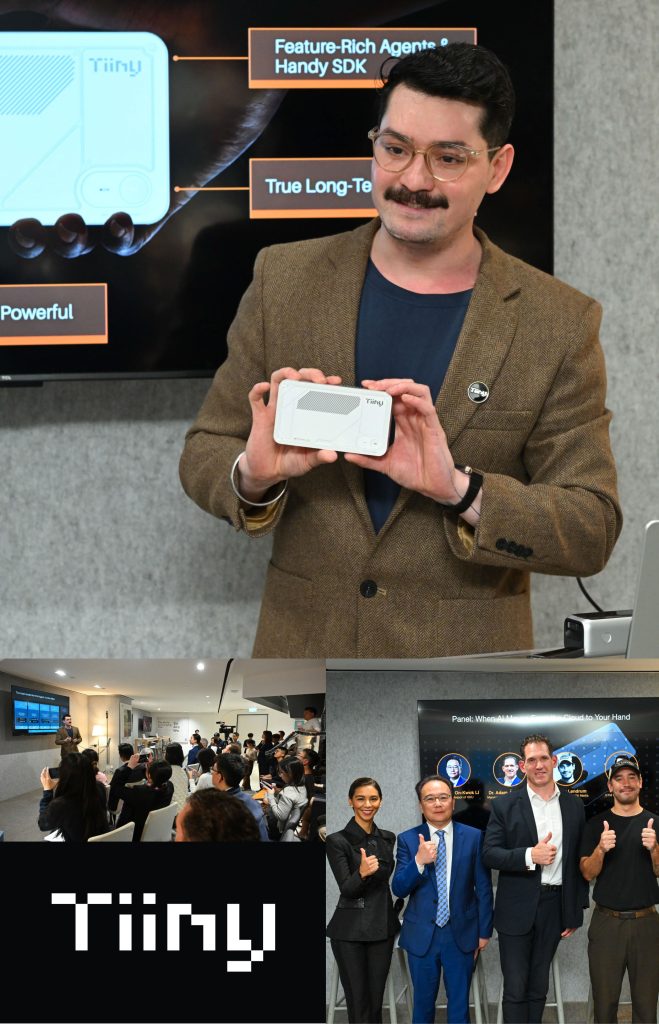
Tiiny AI’s approach emerges from a growing recognition of the limitations and vulnerabilities of cloud-based artificial intelligence. As cloud-based AI increasingly struggles with sustainability concerns, rising energy costs, global outages, the prohibitive costs of long-context processing, and growing privacy risks, Tiiny AI introduces an alternative model centered on personal, portable, and fully private intelligence.
The startup’s founding team, drawn from MIT, Stanford, HKUST, SJTU, Intel, and Meta, argues that the AI industry has reached an inflection point. According to company representatives, the real bottleneck in today’s AI ecosystem is not computing power—it is dependence on the cloud. Samar Bhoj, GTM Director of Tiiny AI, articulated this vision clearly in the product announcement, emphasizing that intelligence should belong to individuals rather than data centers.
This philosophy translates into practical advantages for users concerned about privacy and data sovereignty. The device provides true long-term personal memory by storing user data, preferences, and documents locally with bank-level encryption, offering a level of privacy and persistence that cloud-based AI systems cannot provide.
Practical Applications and the “Golden Zone” of Personal AI
Tiiny AI positions the Pocket Lab within what it calls the “golden zone” of personal artificial intelligence. The device operates primarily in the 10B to 100B parameter range, which satisfies over 80% of real-world needs, while supporting models scaling up to 120B parameters for tasks requiring GPT-4o-level intelligence.
The applications span professional, creative, and research domains. The system can handle multi-step reasoning, deep context understanding, agent workflows, content generation, and secure processing of sensitive information—all without internet access. For developers and researchers, this means the ability to iterate and test locally without the latency or costs associated with cloud API calls.
The Pocket Lab supports one-click deployment of several open-source LLMs and agent frameworks, including GPT-OSS, Llama, Mistral, DeepSeek, Qwen, and Phi, along with automation tools like ComfyUI, SillyTavern, and Flowise. This comprehensive ecosystem aims to eliminate what developers often describe as the “setup tax”—the friction of configuring Python environments, managing CUDA drivers, and troubleshooting quantization parameters.
Market Context and Competitive Positioning
The Pocket Lab enters a market where miniaturization and accessibility are increasingly valued, but where existing solutions remain out of reach for many potential users. Other small supercomputers such as NVIDIA’s Project Digits, priced around $3,000, and the DGX Spark, which comes for $4,000, sit at price points that put them out of reach for most everyday users.
While Tiiny AI has not yet disclosed pricing details, the device is expected to be available after CES for $455, according to one industry analysis. If accurate, this would represent a significant price advantage over competitors, potentially opening personal AI supercomputing to a much broader audience of students, researchers, independent developers, and small teams.
However, questions remain about real-world performance. Some technical observers have noted that even with aggressive 4-bit quantization, running a 120-billion-parameter model on a system with 80GB of total memory represents an engineering challenge. The company plans to demonstrate the device at CES 2026, where independent testing will provide clarity on whether the Pocket Lab can deliver on its ambitious promises.
The Bigger Picture: Democratizing AI or Niche Tool?
The Tiiny AI Pocket Lab represents more than just a clever feat of engineering miniaturization. It embodies a competing vision for the future of artificial intelligence—one where computational power is distributed to individuals rather than concentrated in massive data centers controlled by a handful of companies.
This vision resonates with growing concerns about data privacy, surveillance capitalism, and the environmental impact of large-scale AI infrastructure. By keeping inference entirely local, the Pocket Lab offers users complete control over their data and eliminates the subscription costs that have become standard in the AI industry.
Yet significant questions remain. Can a 300-gram device truly deliver performance comparable to server-grade systems? Will the open-source ecosystem around the platform develop robust enough tooling for mainstream adoption? And perhaps most importantly, will average users be willing to manage local AI infrastructure rather than simply paying for cloud services?
The device targets what Tiiny AI calls the practical range of personal AI needs—the everyday tasks that don’t require the absolute cutting edge of model capability. For researchers working with sensitive data, developers building privacy-focused applications, or professionals who need AI tools in environments without reliable internet connectivity, the value proposition is clear.
For others, the convenience of cloud-based services—no hardware to manage, automatic updates, and access from any device—may outweigh the privacy and cost advantages of local processing. The Pocket Lab may carve out a substantial niche without displacing cloud AI for most users.
Looking Ahead
As the AI industry continues its rapid expansion, innovations like the Tiiny AI Pocket Lab highlight an important tension between centralization and decentralization. The startup’s Guinness World Record certification provides third-party validation of its engineering achievement, but market success will depend on delivering consistent performance at an accessible price point.
The demonstration at CES 2026 will be a critical moment for Tiiny AI. If the Pocket Lab performs as advertised, it could accelerate a trend toward personal AI computing that combines the convenience of modern AI tools with the privacy and autonomy that many users increasingly demand. If it falls short of expectations, it will serve as a reminder that some aspects of computing still benefit from the economies of scale that only large data centers can provide.
Either way, the Pocket Lab represents an important data point in the ongoing evolution of artificial intelligence infrastructure. It demonstrates that the technical barriers to local AI deployment are falling, even if practical and economic barriers remain. For an industry often criticized for concentrating power in the hands of a few large companies, that’s a development worth watching closely.