How a groundbreaking dialogue in Paris is shaping the agenda for India’s historic AI Impact Summit
New Delhi — When global AI policymakers and experts gathered in Paris this January for a pivotal discussion on inclusive artificial intelligence, they weren’t just exchanging ideas about technology. They were laying the groundwork for what could become a fundamental shift in how the world approaches AI development—one that prioritizes equity from inception rather than as an afterthought.
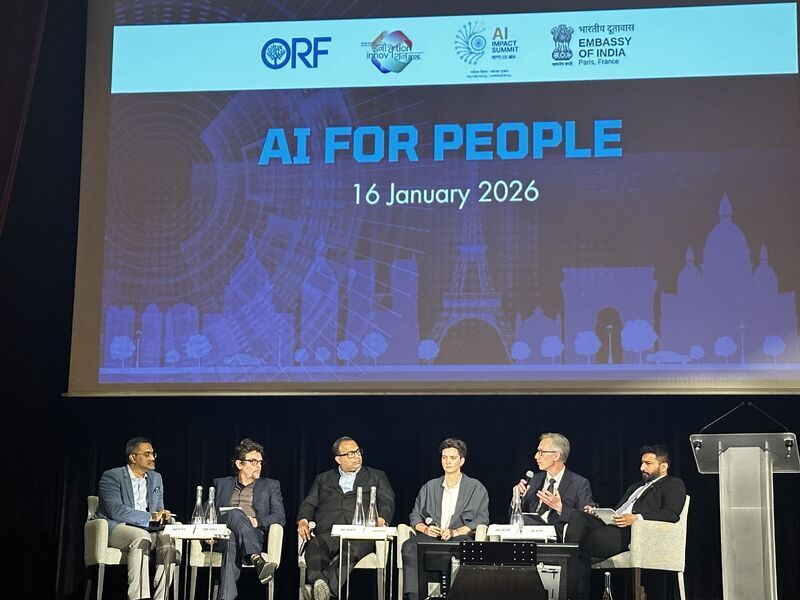
The “AI for People” event, co-hosted by the Observer Research Foundation (ORF) and the Embassy of India in France, served as an important precursor to India’s landmark AI Impact Summit scheduled for February 19-20, 2026, in New Delhi. At the heart of the Paris gathering was a session titled “Inclusion by Design,” featuring panelists including Anil Antony, Henri Verdier (France’s Ambassador for Digital Affairs), Sarah Nicole, Sunu Engineer, and Jerry Sheehan, Director for Science, Technology and Innovation at the OECD.
The Core Message: Inclusion Cannot Be an Afterthought
The central thesis emerging from the Paris discussion was deceptively simple yet profound: inclusive AI doesn’t happen by accident. As emphasized throughout the session, if inclusion isn’t embedded across every layer of the AI technology stack from the very beginning, it simply won’t materialize later in the development process.
This approach requires sustained investment in fundamental building blocks including connectivity, multilingual data, affordable compute resources, skills development, and access to finance, all supported by practical governance frameworks that maintain AI’s human-centric and trustworthy nature.
The Paris event came on the heels of the larger AI Action Summit held February 10-11, 2025, at the Grand Palais, which drew over 1,000 participants from more than 100 countries. Co-chaired by French President Emmanuel Macron and Indian Prime Minister Narendra Modi, the summit resulted in 58 countries signing a joint declaration focusing on inclusive and sustainable artificial intelligence. Notably, the United States and United Kingdom did not sign the declaration.
From Vision to Action: India’s Strategic Position
India’s upcoming AI Impact Summit represents a historic moment: it will mark the first-ever global AI summit to be held in the Global South. This positioning is intentional and strategic, reflecting India’s unique ability to bridge discussions between advanced economies and developing nations.
During its G20 Presidency in 2023, India championed Digital Public Infrastructure (DPI) as a global public good to accelerate progress on the Sustainable Development Goals, and as co-chair of the Paris AI Action Summit in February 2025, India advanced the global dialogue on responsible AI governance.
The summit’s framework revolves around three core principles, or “Sutras”: People, Planet, and Progress. These are operationalized through seven thematic “Chakras” covering Human Capital, Inclusion, Safe & Trusted AI, Resilience, Science, Democratizing AI Resources, and Social Good.
India’s approach to AI is grounded in its experience with digital public infrastructure, which has demonstrated how inclusive, interoperable and low-cost technology can transform governance at a population scale, with platforms like Aadhaar and the unified payments interface expanding access to public services, finance and identity for more than 1.4 billion Indians.
The Infrastructure Challenge
One of the key insights from the Paris discussions centers on the fundamental infrastructure requirements for truly inclusive AI. This goes beyond simply building data centers or deploying algorithms. It encompasses:
- Linguistic diversity: India’s multilingual environment offers an unparalleled testing ground for developing AI systems that can serve diverse populations. The country’s linguistic variety mirrors the challenge facing much of the Global South.
- Compute accessibility: As of October 2025, India’s AI infrastructure is supported by an INR 10,300 crore investment under the IndiaAI Mission, which aims to deploy 38,000 Graphics Processing Units (GPUs) and establish 600 AI Data Labs to boost innovation.
- Skills and capacity building: The IndiaAI Mission has launched 30 Data and AI Labs across the country, with plans for a 570-lab network to provide foundational training in data annotation, curation, and AI development.
A Strategic Evolution in Global AI Governance
The shift from Paris to New Delhi reflects a broader evolution in international AI discussions. According to professional services firm Crowell, the summit “looks to shift the AI conversation from the AI ‘Safety’ and ‘Action’ themes of the earlier summits to one focused on ‘Impact’, representing a strategic evolution from previous convenings to move beyond governance and safety-focused dialogues, to one that drives implementation and measurable outcomes, particularly for deployment across the Global South.”
This evolution wasn’t without controversy. At the Paris summit, many AI safety experts expressed concern that risk mitigation was being deprioritized. However, advocates for the Global South perspective argue that abstract safety discussions can overshadow the immediate practical needs of developing nations seeking to deploy AI for economic development and social benefit.
India aims to distribute the benefits of AI equitably amongst its population, while advocating for the AI needs of the wider Global South. This positioning creates what some analysts describe as “a third way” between the U.S. focus on innovation and China’s state-driven approach, and Europe’s stringent regulatory framework.
Practical Governance Frameworks
A key theme from the Paris “Inclusion by Design” session was the need for governance frameworks that are both practical and human-centric. This represents a delicate balance: regulations must be robust enough to ensure safety and equity, yet flexible enough not to stifle innovation, particularly in emerging economies.
France adheres to the EU AI Act, which uses a risk-based approach to AI systems and is the world’s most comprehensive and stringent legislation so far on AI regulation, while India is wary of over-regulation stifling its innovation ecosystem. Yet both nations have found common ground in their commitment to ethical AI deployment and the development of standardized frameworks.
The France-India AI Roadmap, launched during Prime Minister Modi’s visit to France, exemplifies this collaborative approach. The partnership focuses on several strategic outcomes including development of multilingual Large Language Models tailored for diverse linguistic populations, establishment of federated AI compute infrastructure to enhance accessibility, and strengthening cross-border collaboration on AI research, datasets, and regulatory frameworks.
Global Impact Challenges
Leading up to the New Delhi summit, India has launched three flagship challenges designed to identify and showcase AI solutions with real-world impact:
- AI for ALL: Global Impact Challenge — Identifying leading AI solutions across sectors that turn vision into measurable impact, with applications open to innovators worldwide.
- AI by HER: Global Impact Challenge — Promoting women-led AI solutions to enable social impact, addressing the significant gender gap in AI development and deployment.
- YUVAi: Global Youth Challenge — Engaging youth aged 13-21 to showcase innovation while fostering AI-enabled problem-solving for social good.
These initiatives collectively offer awards totaling up to INR 6 crores (approximately $720,000), alongside mentorship opportunities and global visibility at the summit.
Looking Ahead: From Principles to Practice
As the global AI community prepares to convene in New Delhi, the challenge articulated in Paris remains central: transforming principles into practice. The “Inclusion by Design” framework demands that every stakeholder—from governments and tech companies to researchers and civil society—actively commit to building AI systems that work for everyone, not just those in well-resourced markets.
India’s upcoming BRICS presidency and India-AI Impact Summit can function as platforms to channel collective intent into structured cooperation through joint investments, partnerships, and capacity-building initiatives.
The path from Paris to New Delhi isn’t just geographic—it represents a conceptual journey from articulating principles to demonstrating practical implementation. As one observer noted at the Paris event, the test of inclusive AI won’t be found in declarations or frameworks, but in whether a farmer in rural India, a student in sub-Saharan Africa, or a small business owner in Southeast Asia can access and benefit from AI technologies in their own language, addressing their specific needs.
The February summit in New Delhi will be watched closely to see whether this vision of truly inclusive AI can move from aspiration to reality. The stakes are high: as AI increasingly shapes economic opportunity, social services, and governance worldwide, ensuring that these systems serve all of humanity—not just the privileged few—may be one of the defining challenges of our time.
The India-AI Impact Summit 2026 will take place February 19-20, 2026, at Bharat Mandapam in New Delhi, with participation expected from heads of state, global leaders, policymakers, researchers, and industry experts from around the world.