Continental strategy gains momentum as Nigeria leads regulatory push and experts champion energy-efficient solutions
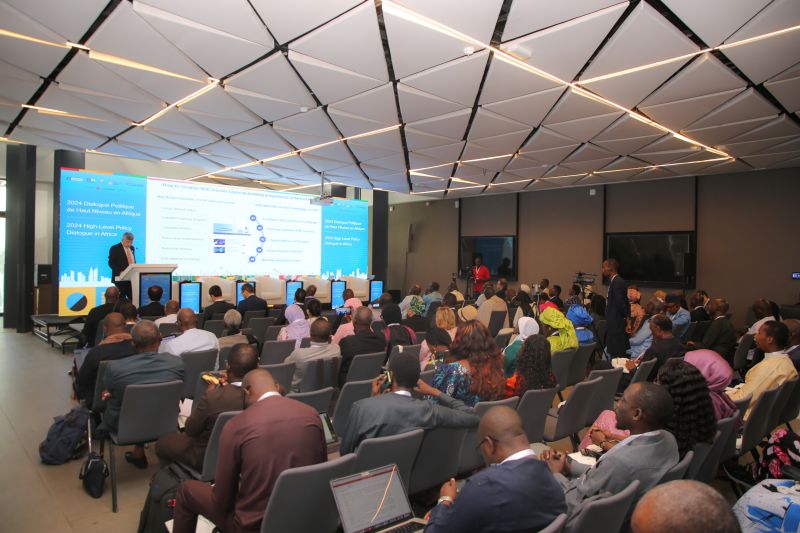
CONAKRY, GUINEA — In a pivotal gathering that signals Africa’s determination to shape its artificial intelligence destiny, ICT policymakers from across the continent convened in Guinea’s capital last November to tackle a challenge that has long been overlooked in the global AI race: sustainability.
The workshop, jointly organized by UNESCO and the World Bank during the 7th Transform Africa Summit, focused on “Green AI” strategies—an approach that examines both how to make AI systems more resource-efficient and how to deploy AI to advance environmental goals. For a continent where only 5% of AI talent has access to adequate computing power, the stakes couldn’t be higher.
The Energy Equation
UNESCO presented findings from its recent report showing that model-compression techniques such as quantization can reduce energy consumption by up to 44%. The research, developed in collaboration with University College London, offers a roadmap particularly relevant for resource-constrained African nations.
The report advocates for a pivot toward more compact models, with measures that can reduce energy consumption by up to 90% when used together. These include deploying smaller, task-specific language models rather than relying on large general-purpose systems, and optimizing prompt lengths—changes that could prove transformative for countries struggling with limited electricity access and connectivity.
The environmental implications are stark. Generative AI tools, now used by over a billion people daily, consume approximately 0.34 watt-hours per prompt. This adds up to 310 gigawatt-hours per year, equivalent to the annual electricity use of over 3 million people in a low-income African country.
“Generative AI’s annual energy footprint is already equivalent to that of a low-income country, and it is growing exponentially,” said Tawfik Jelassi, UNESCO’s Assistant Director-General for Communication and Information. “To make AI more sustainable, we need a paradigm shift in how we use it.”
Continental Strategy Takes Shape
The Guinea workshop builds on the African Union’s Continental AI Strategy, endorsed by the Executive Council during its 45th Ordinary Session in Accra, Ghana, on July 18-19, 2024. The strategy represents a comprehensive framework to guide Africa’s AI development through 2030, with an intensive implementation phase already underway from 2025 to 2026.
Phase 1 of implementation focuses on establishing governance structures, creating national AI strategies, and mobilizing resources through developing strategic documents, organizing forums and workshops, and setting up AI advisory boards and centers of excellence. A review in 2027 will assess progress before Phase 2 concentrates on executing the core projects.
The strategy’s ambition is clear: position Africa not merely as a consumer of AI technology developed elsewhere, but as an active participant in shaping the technology’s future. It emphasizes five focus areas—harnessing AI’s benefits, building capabilities, minimizing risks, stimulating investment, and fostering cooperation—while placing ethical frameworks and data sovereignty at the forefront.
However, implementation faces significant hurdles. Analysis of the first 18 months reveals geographic concentration of resources, with 83% of AI startup funding in the first quarter of 2025 flowing to just four countries: Kenya, Nigeria, South Africa, and Egypt. Private sector mobilization remains minimal relative to the continent’s estimated $500 billion infrastructure needs.
Nigeria’s Regulatory Leadership
While the continental strategy provides the overarching vision, Nigeria is taking concrete steps to translate principles into enforceable law. Lawmakers are expected to approve the National Digital Economy and E-Governance Bill by March 2026, which would grant the National Information Technology Development Agency formal authority over algorithms, data governance and digital platforms.
The proposed legislation introduces a risk-based regulatory approach, with heightened scrutiny for AI systems deployed in public administration, finance, automated decision-making, and surveillance. The legislation would empower regulators to impose penalties for non-compliance, including fines of up to 10 million naira, approximately $7,000, or up to 2 percent of an AI provider’s annual gross revenue.
Developers would be required to obtain licensing before deployment and submit annual impact assessments outlining risk mitigation strategies. Regulators would gain authority to demand information, issue enforcement directives, or suspend systems deemed unsafe.
“You cannot be ahead of innovation, but regulation is not just about giving commands,” explained Kashifu Abdullahi, director general of NITDA. “It’s about influencing market, economic and societal behaviour so people can build AI for good.”
Importantly, the bill balances oversight with innovation by including provisions for controlled testing environments—regulatory sandboxes where startups can experiment under supervision without facing immediate compliance burdens.
If enacted, Nigeria would become one of the first African countries to establish a comprehensive, economy-wide AI regulatory framework embedded in law rather than policy guidance. This contrasts with approaches in Mauritius, Egypt, and Kenya, which have focused more on enabling innovation through research hubs and capacity building.
South Africa’s Human-Centric Vision
Further south, South Africa is charting its own course with a National AI Policy Framework released in 2024 that emphasizes human-centered AI development. The South African vision focuses on risk management for human-centered AI, meaning that AI technologies be designed to complement human decision-making and enhance human capabilities, rather than replace them.
The framework comprises several strategic pillars, including professional responsibility, promotion of cultural and human values, safety and security, as well as human control of technology. The framework mandates specific thresholds for human intervention in AI systems, particularly in generative AI applications, and preserves the option for users to engage with real humans rather than automated systems.
The framework was scheduled for official evaluation through a gazetted process in April 2025, following extensive stakeholder consultations. Officials have emphasized that the approach deliberately involves all stakeholders rather than allowing political figures to dictate technical decisions unilaterally.
South Africa’s leadership of the G20 Presidency in 2025 has elevated AI on the global agenda, with the government establishing an AI Action Taskforce to drive continental perspectives into international discussions. This builds on Brazil’s G20 presidency in 2024, which highlighted transparency, accountability, and human oversight as AI governance priorities.
Bridging the Infrastructure Gap
Despite the momentum in policy development, the fundamental challenge remains Africa’s digital infrastructure deficit. Most AI infrastructure is concentrated in high-income countries, leaving African innovators at a severe disadvantage. Limited electricity access, inadequate broadband connectivity, and scarce data center capacity constrain what’s technically feasible.
This reality makes the UNESCO findings on resource-efficient AI particularly relevant. Small language models optimized for specific tasks require dramatically less computational power than large general-purpose models. They can operate effectively in environments with limited connectivity—precisely the conditions that define much of Africa.
The policy frameworks being developed recognize these constraints. Rather than attempting to replicate the resource-intensive AI development model of wealthy nations, African policymakers are exploring pathways that work within existing limitations while building toward more robust infrastructure.
Data sovereignty emerges as another critical dimension. Much of Africa’s data currently resides in data centers outside the continent, raising concerns about who controls this valuable resource and how it might be used. Rwanda has designated much of its open data, including public records and financial data, as a national asset under its Vision 2025 strategy—an approach other nations may emulate.
The Path Forward
The confluence of the Continental AI Strategy’s implementation phase, Nigeria’s impending AI legislation, and South Africa’s policy framework development suggests 2025-2026 will be a defining period for AI governance in Africa. Success will require navigating complex tensions between fostering innovation and managing risks, attracting investment while ensuring local ownership, and pursuing ambitious goals despite severe resource constraints.
The green AI approaches discussed in Guinea offer one promising pathway—demonstrating that constraints can drive innovation rather than simply limiting possibilities. By necessity, Africa may pioneer more sustainable AI development models that eventually inform global best practices.
“Africa’s digital future will be built by Africans, on African soil, for the benefit of African citizens,” declared Guinea’s President Mamadi Doumbouya at the Transform Africa Summit’s opening ceremony. Whether this vision materializes will depend on translating high-level frameworks into concrete implementation—including the technical capacity, financial resources, and political will to make them work.
As lawmakers in Abuja prepare to vote on AI legislation and officials in Pretoria refine their policy framework, the choices being made will reverberate far beyond national borders. They will help determine whether Africa becomes a leader in responsible, sustainable AI development—or remains dependent on technologies designed elsewhere, for other contexts, pursuing other priorities.
This article draws on reporting from the 7th Transform Africa Summit in Conakry, Guinea, and analysis of policy documents from the African Union, UNESCO, and national governments across the continent.