Lagos, Nigeria — As Nigeria enters 2026, the country stands at the threshold of a technological transformation that could redefine its position in the global digital economy. After years of planning and construction, Africa’s most populous nation is preparing to commission its first dedicated artificial intelligence data centers, backed by nearly $1 billion in investments from global and regional tech giants.
The ambitious infrastructure push positions Nigeria not just as a consumer of technology, but as a potential hub for AI-driven innovation across West Africa. Yet as gleaming facilities rise across Lagos and Abuja, a critical question lingers: can Nigeria’s notoriously unreliable power infrastructure support its digital ambitions?
The Race to Power Africa’s AI Future
Multiple AI-focused facilities are nearing completion across Nigeria, with the Kasi Cloud campus in Lekki, Lagos, emerging as the frontrunner. As of January 2026, parts of the LOS1 facility are already operational, with the complete hyperscale development widely regarded as one of the continent’s most ambitious projects.
Airtel Africa’s Nxtra project represents another significant milestone. The $120 million Lagos facility, designed specifically for AI compute rather than traditional cloud storage, received early shipments of high-performance GPUs in late 2025 and is expected to go live by the first quarter of 2026. This marks a crucial shift from facilities that are merely “AI-ready” to those explicitly built for AI workload support.
“Over the next decade, I expect AI workloads to drive not just capacity expansion, but infrastructure diversification,” said Wole Abu, Managing Director for Equinix West Africa, which is investing $140 million to expand its Nigerian operations.
The data center investments come from a constellation of major players. Equinix is developing its third Lagos facility, LG3, with a $22 million first-phase investment. MTN Nigeria recently unveiled the $150 million Dabengwa Data Centre in Ikeja, West Africa’s largest prefabricated modular data facility. Meanwhile, 21st Century Technologies is constructing a massive 50MW hyperscale facility in Ikeja as part of a $240 million African expansion plan.
A Market Poised for Explosive Growth
The numbers tell a compelling story. Nigeria’s data center market was valued at approximately $1.4 billion in 2025 and is projected to reach $2.7 billion by 2035, according to a December 2025 report by Verraki. Installed capacity, which stood at just under 70MW in 2024, is forecast to reach between 330 and 340MW by 2026, representing a fivefold expansion in just two years.
This growth is being fueled by multiple factors: rising enterprise digitalization, increased cloud adoption, the explosive growth of fintech and e-commerce, and the emergence of AI-driven workloads. Nigeria’s cloud computing market alone is growing at a compound annual rate of 26 percent, with projections showing it could reach $3.28 billion by 2030, up from an estimated $1.03 billion in 2025.
The country’s demographics provide a powerful tailwind. With a population of nearly 240 million and a median age of 18, Nigeria’s digital consumption across gaming, video streaming, mobile internet, and remote work is generating unprecedented volumes of data. The government’s target of achieving 70 percent digital literacy by 2027, up from roughly 50 percent currently, promises to accelerate this trend even further.
“As Nigeria works toward its ambitious 70% digital literacy target by 2027, you’ll see exponentially more users generating data and requiring AI-enhanced services,” said Abideen Yusuf, General Manager for Microsoft Nigeria and Ghana.
The Infrastructure Challenge
Despite the optimism, significant obstacles remain. Chief among them is power supply. Although Nigeria has about 13,000 megawatts of installed power generation capacity, only around 5,800MW typically reach the grid due to transmission bottlenecks and aging infrastructure. This forces data center operators to build their own energy sources, significantly increasing capital and operational costs.
Most facilities currently depend on natural gas to power their operations, viewed as a more stable and cost-effective alternative to diesel while offering lower emissions. However, as Nigeria’s renewable sector matures, experts believe operators will increasingly integrate solar and other green energy sources into their power mix.
Dr. Krishnan Ranganath, Regional Executive for West Africa at Africa Data Centres, emphasizes that transmission remains one of the continent’s most pressing issues. “Building data centres is the easiest thing, but they must be connected,” he explains. “If facilities depend on substandard connectivity or if connectivity costs are high while power availability remains low, they essentially become concrete blocks and do not solve the problem.”
Beyond power, other challenges include complex regulatory approval processes, high operational costs, and infrastructure fragmentation. These barriers may explain why global hyperscalers like Amazon Web Services and Microsoft have yet to build their own dedicated facilities in Nigeria, preferring instead to partner with local colocation providers.
Lagos: The Digital Fortress
Nearly 70 percent of Nigeria’s existing and planned data center capacity is concentrated in Lagos, the nation’s commercial capital. The city’s deep ports, undersea cable connections, and large population make it a natural choice for clustering digital infrastructure. Lagos hosts 10 of Nigeria’s 11 active data centers, mirroring global hubs like Ashburn, Virginia, and Singapore’s Jurong district.
However, this overconcentration brings risks. Any major outage, flood, or grid failure in Lagos could disrupt services nationwide, raising questions about resilience and geographic diversification. Some facilities are emerging in other regions, including Galaxy Backbone’s Shared Services Centre in Abuja and Nigeria’s only Uptime Institute Tier IV-certified national data center in Kano, but Lagos remains overwhelmingly dominant.
Projects like the Itana Digital Zone in Lagos, modeled after Dubai Internet City, aim to create a complete ecosystem for AI and data startups through tax incentives and digital-friendly governance. National initiatives such as Project BRIDGE, which aims to lay 90,000 kilometers of fiber across the country, are working to expand connectivity beyond the commercial capital.
Building African AI Capabilities
Industry leaders emphasize that Nigeria’s data center boom is about more than just hosting capacity. The focus is increasingly on building African AI capabilities rather than simply importing Western solutions.
“The focus is on building African AI capabilities rather than importing Western solutions, models trained in local languages and designed to address local and regional challenges,” Abu noted.
This vision encompasses AI models trained in local languages like Yoruba, Igbo, and Hausa, and designed to address uniquely African challenges in agriculture, healthcare, education, and financial inclusion. The goal is to ensure that AI development reflects the continent’s diverse contexts rather than merely adapting tools built for Western markets.
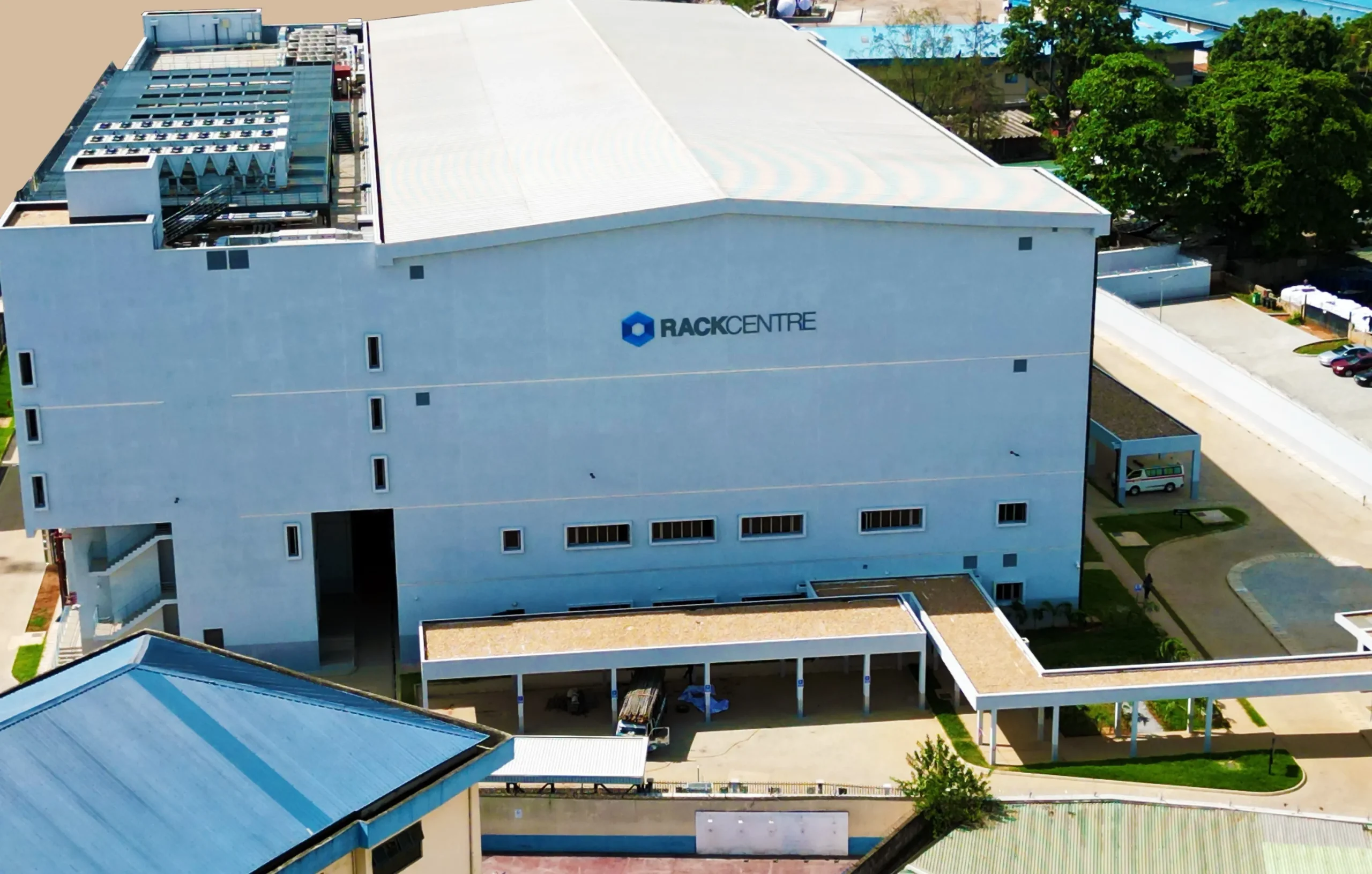
Mayowa Olugbile, CEO of Rack Centre, articulated the broader ambition: “With the right policy support, Nigeria can still become one of the world’s fastest-growing cloud markets. Affordability will be the critical hurdle.”
The Path Forward
As 2026 unfolds, Nigeria finds itself at a critical juncture. The infrastructure is being built, the investments are flowing, and the market demand is undeniable. Government policy is also beginning to align, with the National Digital Economy Policy and Strategy (NDEPS 2020-2030) aiming to localize data storage, promote renewable energy adoption, and build a resilient digital ecosystem.
The evidence suggests Nigeria is unlikely to achieve hyperscale AI dominance overnight. But with at least one AI-focused facility expected to go live by late 2026, the country is moving closer to realizing its ambition of becoming West Africa’s digital hub.
Whether Nigeria can overcome its infrastructure challenges and translate this investment into sustained technological leadership remains to be seen. For now, the data centers rising across Lagos represent more than just buildings filled with servers. They embody a vision of an African nation determined to claim its place in the AI-powered future of the global economy.
As one industry executive put it: “True economic growth will come from making this technology widely accessible across the country.” In that quest, 2026 may well be remembered as the year Nigeria took its first definitive steps toward becoming an AI infrastructure powerhouse.