
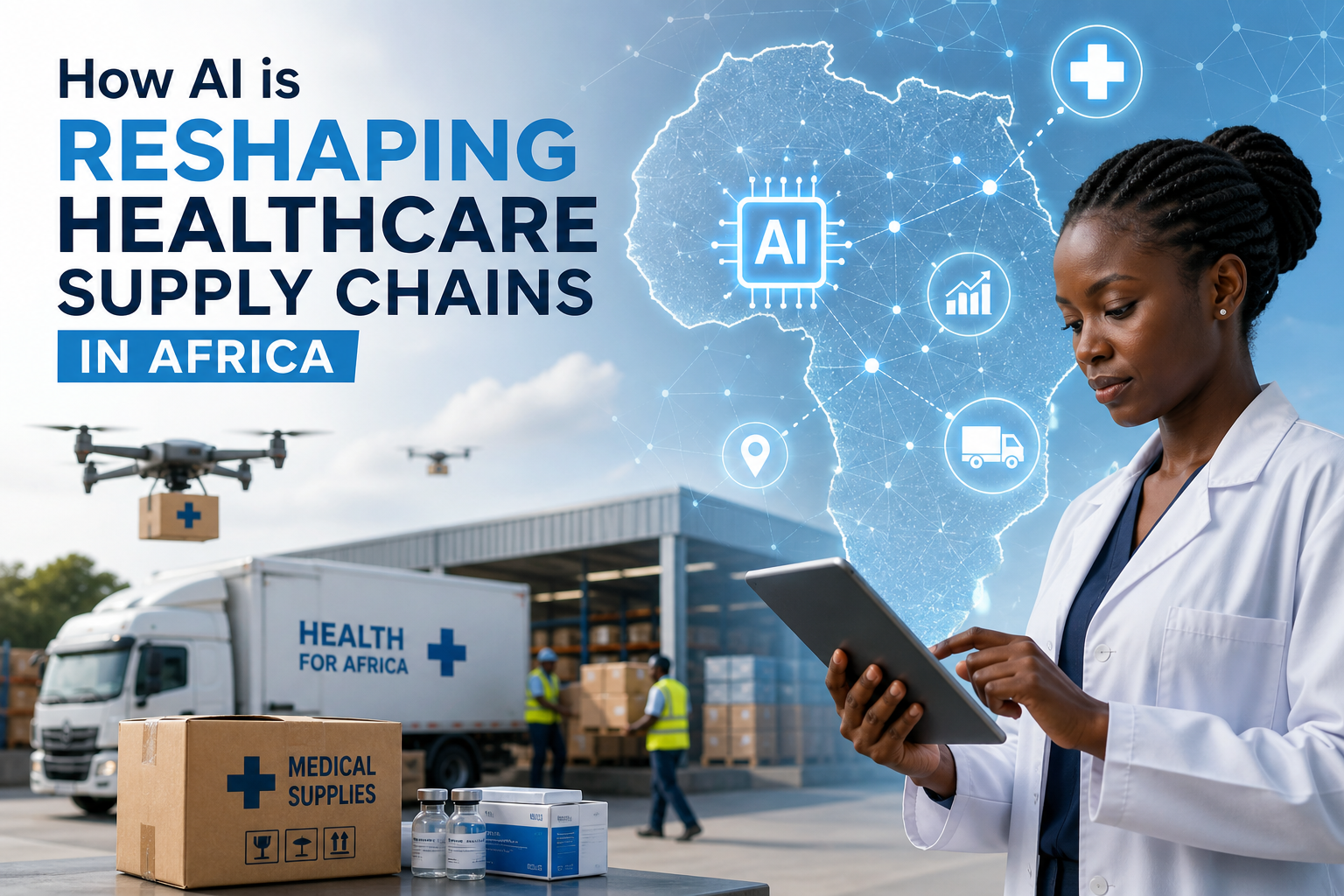
Healthcare systems across Africa carry a quiet burden that is often overlooked. It is not always the absence of skilled professionals or medical knowledge that leads to poor outcomes, but the simple fact that the right tools are not available when they are needed. A patient arrives in distress, a diagnosis is made, but treatment is delayed or impossible because oxygen is unavailable, essential drugs are out of stock, or diagnostic equipment cannot be accessed in time. These moments, repeated across different settings, reveal a deeper structural issue within healthcare delivery.
At the center of this problem is the supply chain. In many African countries, medical supply systems are still largely fragmented and reactive. Hospitals rely on manual inventory processes, delayed reporting, and isolated procurement decisions. There is often little visibility across the system, meaning one facility may have excess stock while another faces critical shortages. Suppliers operate in disconnected networks, logistics are unpredictable, and demand forecasting is often based on rough estimates rather than real data. The result is a cycle of stockouts, emergency purchases, inflated costs, and preventable harm.
Artificial intelligence is beginning to shift this pattern in a meaningful way. Rather than reacting to shortages after they occur, AI allows healthcare systems to anticipate demand and respond early. By analyzing historical usage data, patient trends, seasonal patterns, and external factors such as disease outbreaks or population movement, AI systems can predict what supplies will be needed ahead of time. This changes the entire approach to planning. Hospitals are no longer waiting for shelves to empty before taking action. They can prepare, adjust, and redistribute resources proactively.
One of the most immediate impacts of AI in this space is improved visibility. Real-time inventory systems, powered by digital platforms, allow health facilities to track stock levels continuously. When integrated across multiple facilities, these systems create a broader network view. A shortage in one hospital can be matched with surplus in another. This kind of coordination was previously difficult because data was either unavailable or outdated. Increasingly, a new generation of locally built platforms is quietly stitching these fragmented points together, creating proximity-aware networks where supply and demand can find each other with far less friction.
Logistics, another major challenge in African healthcare systems, is also being transformed. Delivering medical supplies is not simply about moving goods from one place to another. It involves navigating poor road networks, security concerns, fuel costs, and unpredictable delays. AI can optimize delivery routes by considering these variables in real time, helping ensure that supplies reach facilities faster and more reliably. In emergency situations, this difference can be life-saving. In some emerging models, this coordination happens almost invisibly in the background, linking facilities to nearby verified suppliers in ways that feel less like procurement and more like intelligent matching.
Supplier networks also benefit from AI-driven systems. Many healthcare providers struggle with identifying reliable suppliers, verifying product quality, and managing procurement risks. AI can support supplier mapping, performance tracking, and verification processes. Over time, this builds a more transparent and trustworthy ecosystem where facilities are connected to vetted suppliers, reducing the chances of counterfeit or substandard products entering the system. What is becoming clear is that trust in the supply chain is no longer just institutional, it is increasingly data-driven.
Despite these advantages, it is important to approach AI with realism. Technology alone cannot fix deeply rooted systemic challenges. Data quality remains a major concern. If the data feeding these systems is incomplete or inaccurate, the outputs will be unreliable. Infrastructure limitations such as unstable electricity and internet connectivity can also affect implementation. There is also the human factor. Healthcare workers and administrators need to understand and trust these systems for them to be effective. Without proper training and engagement, even the most advanced platforms can remain underused.
Another critical issue is sustainability. Many digital health initiatives in Africa start as pilot projects but struggle to scale or maintain operations over time. For AI to truly reshape healthcare supply chains, solutions must be designed with long-term use in mind. This includes affordability, adaptability to local contexts, and integration with existing health systems rather than operating as standalone tools. The most promising approaches are those that embed themselves into everyday workflows, quietly improving decision-making without adding complexity.
What stands out clearly is that AI is not just introducing efficiency. It is changing the way healthcare supply chains are understood. The focus is shifting from isolated transactions to connected systems. From reactive decisions to predictive planning. From fragmented markets to coordinated networks. This transformation, if sustained, has the potential to significantly reduce preventable deaths linked to supply shortages.
Africa’s healthcare challenges are complex, but they are not without solutions. AI offers a pathway to build systems that are smarter, more responsive, and better aligned with the realities on the ground. The goal is not perfection, but progress. A system where fewer patients are turned away because something as basic as a drug, oxygen supply, or diagnostic service is missing.
In the end, reshaping healthcare supply chains is about restoring confidence in the system. It is about ensuring that when patients seek care, the system is ready to support the decisions clinicians make. AI, when thoughtfully applied and locally grounded, can help make that expectation a reality.