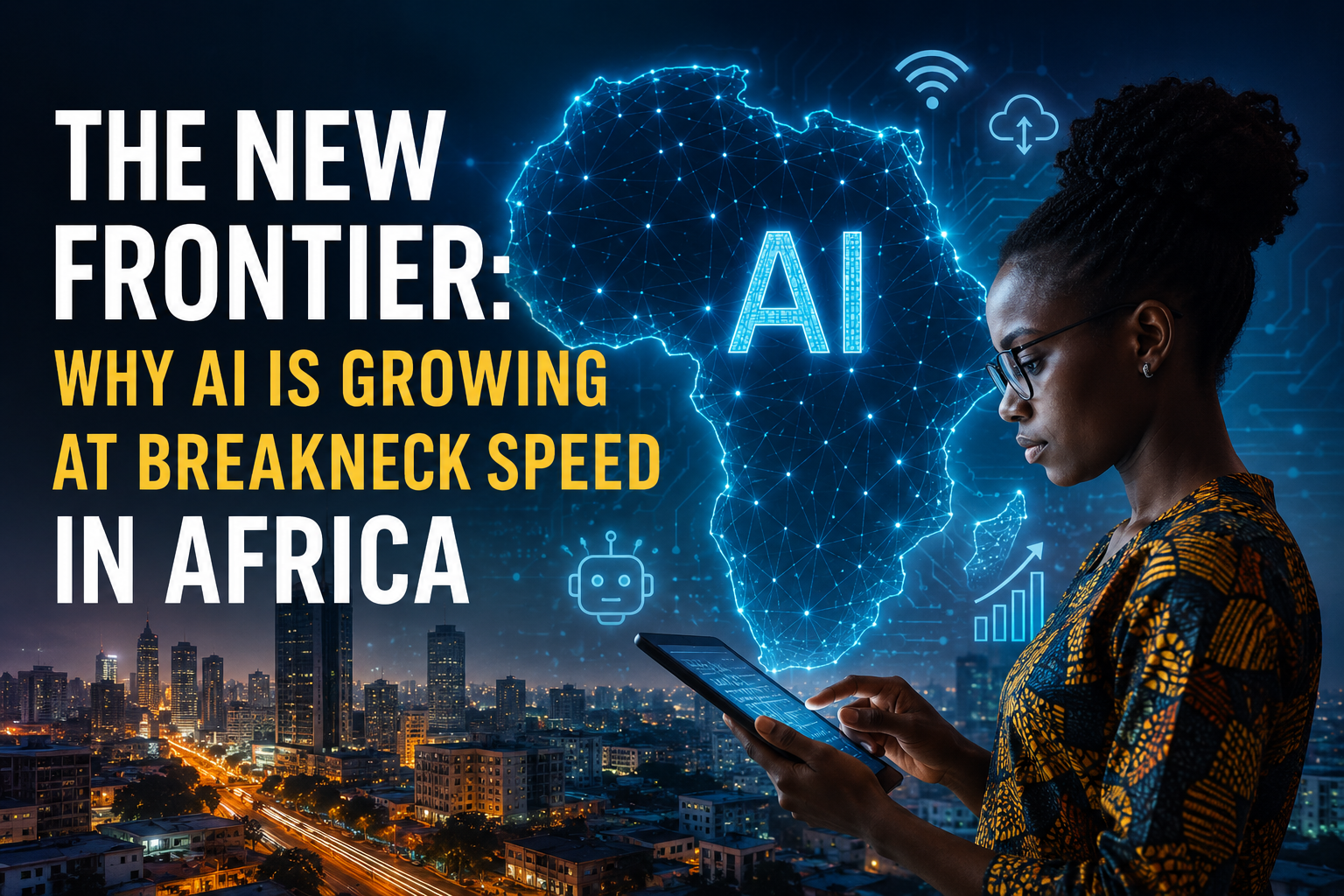
Across Africa, artificial intelligence is no longer just a futuristic concept discussed in tech conferences or Silicon Valley boardrooms. It is rapidly becoming a powerful economic tool reshaping industries, creating jobs, and opening entirely new business opportunities for entrepreneurs across the continent.
From agriculture and healthcare to education, logistics, media, and finance, AI is creating solutions to some of Africa’s biggest challenges while unlocking billion-dollar opportunities for startups willing to innovate.
As internet penetration grows, smartphone usage increases, and young Africans become more digitally connected, experts believe Africa could become one of the fastest-growing AI markets in the world over the next decade.
For entrepreneurs, students, developers, and business owners, this presents a major question:
What AI business opportunities can actually work in Africa?
Why AI Businesses Are Rising Fast in Africa
Several factors are fueling the AI boom across the continent.
First, Africa has one of the world’s youngest populations. Millions of young people are actively seeking digital skills, remote jobs, and technology-driven income opportunities.
Second, mobile technology has become deeply integrated into everyday life. In many African countries, smartphones are the primary gateway to banking, education, healthcare, and communication.
Third, businesses are under pressure to become more efficient. AI tools now allow small companies to automate tasks, reduce costs, improve customer service, and make better decisions using data.
Governments, investors, and global tech companies are also beginning to invest more heavily in African AI ecosystems, creating room for local startups to emerge.
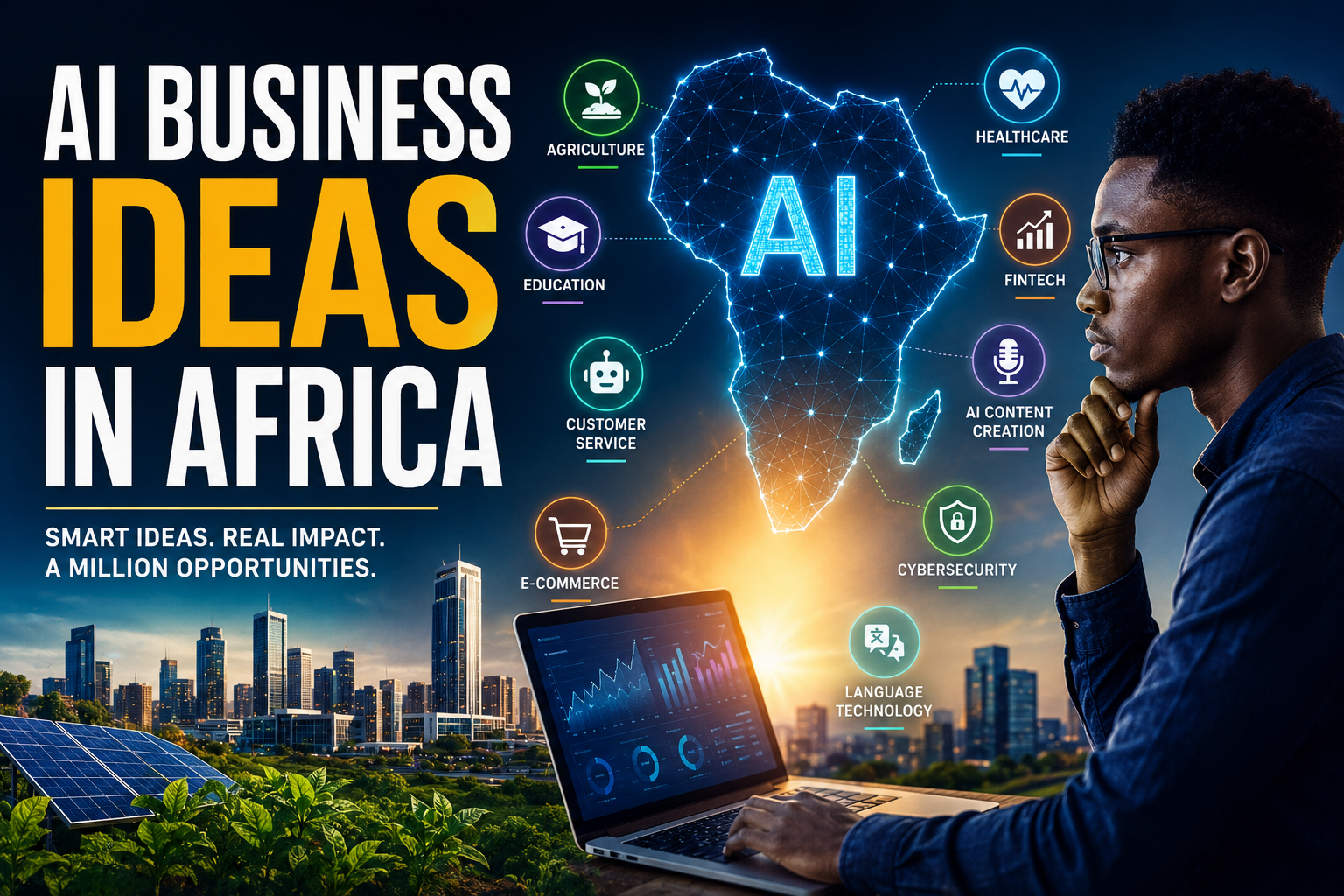
AI Content Creation Businesses
One of the fastest-growing opportunities in Africa is AI-powered content creation.
Businesses, politicians, brands, churches, schools, and influencers constantly need:
- social media content,
- graphics,
- videos,
- articles,
- voiceovers,
- and advertisements.
AI tools now allow creators to produce this content faster and cheaper.
Young entrepreneurs are already building businesses around:
- AI copywriting,
- AI video editing,
- AI graphic design,
- AI voice generation,
- and AI-powered marketing services.
Platforms like ChatGPT, Canva, and CapCut have lowered the barrier to entry for creators across Africa.
For many young Africans, this could become a gateway into freelancing and digital entrepreneurship.
AI in Agriculture
Agriculture remains one of Africa’s largest industries, employing millions of people. Yet farmers continue to face challenges such as poor weather prediction, crop diseases, low yields, and limited access to market information.
AI startups are beginning to tackle these problems through:
- smart farming tools,
- crop monitoring systems,
- AI-powered weather forecasting,
- and disease detection apps.
Using drone technology and machine learning, farmers can now monitor soil health, identify pests early, and optimize irrigation.
This creates major opportunities for agritech startups focused on improving food production and reducing waste.
Countries like Kenya, Nigeria, and Ghana are already seeing increased investment in AI-driven agriculture.
AI-Powered Education Platforms
Education is another sector where AI could have enormous impact.
Millions of African students still struggle with limited access to teachers, learning materials, and quality education. AI tools can help bridge that gap through:
- personalized tutoring,
- exam preparation,
- language translation,
- and digital learning assistants.
WhatsApp-based AI learning tools are also becoming increasingly popular because they work well in low-bandwidth environments.
This is especially important in Africa, where many users rely heavily on messaging platforms for communication and learning.
Startups building AI education products for African students could become one of the continent’s next major success stories.
AI Healthcare Solutions
Healthcare systems across Africa continue to face shortages of doctors, specialists, and medical infrastructure.
AI is helping address some of these problems through:
- AI diagnostic systems,
- virtual healthcare assistants,
- medical chatbots,
- predictive health monitoring,
- and hospital management tools.
Startups are now developing solutions that help doctors analyze scans, monitor patients remotely, and improve healthcare access in underserved communities.
In countries where medical resources are stretched thin, AI could significantly improve efficiency and patient outcomes.
AI Customer Service Businesses
Many African businesses still struggle with customer support due to high staffing costs and slow response times.
AI chatbots and virtual assistants now allow businesses to automate customer interactions on:
- WhatsApp,
- websites,
- Instagram,
- Facebook Messenger,
- and Telegram.
This has created opportunities for entrepreneurs who can build AI chatbot services for:
- banks,
- schools,
- e-commerce stores,
- hospitals,
- and government agencies.
Small businesses are increasingly willing to pay for automated systems that save time and improve customer experience.
AI Translation and Local Language Technology
Africa is home to thousands of languages, yet many digital platforms still primarily support English and a few global languages.
This creates a huge opportunity for AI language startups focused on:
- translation,
- speech recognition,
- voice AI,
- subtitles,
- and local language assistants.
The demand for African language datasets is also growing as global technology companies attempt to make AI more inclusive.
Developers working on Yoruba, Hausa, Swahili, Amharic, Zulu, Igbo, and other African language AI systems could play a major role in the future of the continent’s digital economy.
AI for Media and Journalism
Media organizations are increasingly turning to AI for:
- research,
- transcription,
- summarization,
- fact-checking,
- and content production.
African media startups now have opportunities to build:
- AI news platforms,
- AI-powered research tools,
- automated transcription services,
- and localized AI journalism products.
As misinformation grows online, AI verification and fact-checking services could also become critical businesses across Africa.
AI Cybersecurity Services
As African businesses digitize rapidly, cyber threats are also increasing.
AI-powered cybersecurity businesses can help organizations:
- detect fraud,
- identify suspicious activity,
- monitor networks,
- and prevent cyberattacks.
Banks, fintech companies, telecom firms, and government institutions are likely to become major customers for AI security solutions in the coming years.
AI Business Opportunities for Non-Tech Entrepreneurs
One important misconception is that AI businesses are only for software engineers.
In reality, many successful AI businesses are built by people who simply understand:
- a market problem,
- customer needs,
- and how to combine existing AI tools into useful services.
For example:
- a teacher can build an AI tutoring business,
- a marketer can run AI content services,
- a farmer can launch smart agriculture consulting,
- and a journalist can create AI-powered research products.
The biggest advantage often comes from understanding local African problems better than global competitors.
The Challenges Ahead
Despite the excitement, Africa’s AI ecosystem still faces significant challenges.
These include:
- unreliable electricity,
- expensive internet access,
- limited AI infrastructure,
- data privacy concerns,
- and a shortage of skilled AI professionals.
There are also growing concerns around:
- job displacement,
- misinformation,
- deepfake scams,
- and ethical AI use.
Experts argue that African governments, universities, and private companies must invest more heavily in AI education and digital infrastructure to ensure the continent benefits fully from the technology revolution.
Africa’s AI Future
The global AI race is accelerating, and Africa is beginning to carve out its place within it.
While the continent may still lag behind global powers in infrastructure and investment, it possesses one major advantage: a young, ambitious, and digitally connected population eager to innovate.
For entrepreneurs willing to experiment, adapt, and solve real problems, AI may represent one of the biggest business opportunities Africa has seen since the rise of mobile technology and fintech.
The next generation of African unicorns may not only come from fintech or e-commerce — they could emerge from artificial intelligence.
And for many young Africans, the AI revolution is no longer something happening elsewhere.
It is already here.