
In a vibrant celebration of homegrown innovation, Meta Platforms Inc. today announced the winners of its inaugural Llama Impact Accelerator Program for Sub-Saharan Africa. The initiative, which harnessed the power of Meta’s open-source Llama large language models, has crowned five standout startups from Nigeria, Kenya, and South Africa. These trailblazing teams are deploying AI to confront some of the continent’s most urgent challenges, from rural healthcare access to climate-resilient farming.
The announcement, made during a virtual summit attended by over 500 developers, investors, and policymakers, underscores Meta’s deepening commitment to Africa’s burgeoning tech ecosystem. “Africa isn’t just a market for AI, it’s a powerhouse of solutions,” said Nick Clegg, Meta’s President of Global Affairs, in his opening remarks. “These winners exemplify how open-source tools like Llama can empower local innovators to build for local needs, fostering inclusive growth across the continent.”
A New Era of AI-Driven Solutions
Launched earlier this year, the Llama Impact Accelerator invited African founders to develop applications using Llama 3.1, Meta’s latest multimodal AI model. Over 300 applications poured in from 25 countries, with finalists undergoing intensive mentorship from Meta engineers and partners like Google Cloud and the African Development Bank.
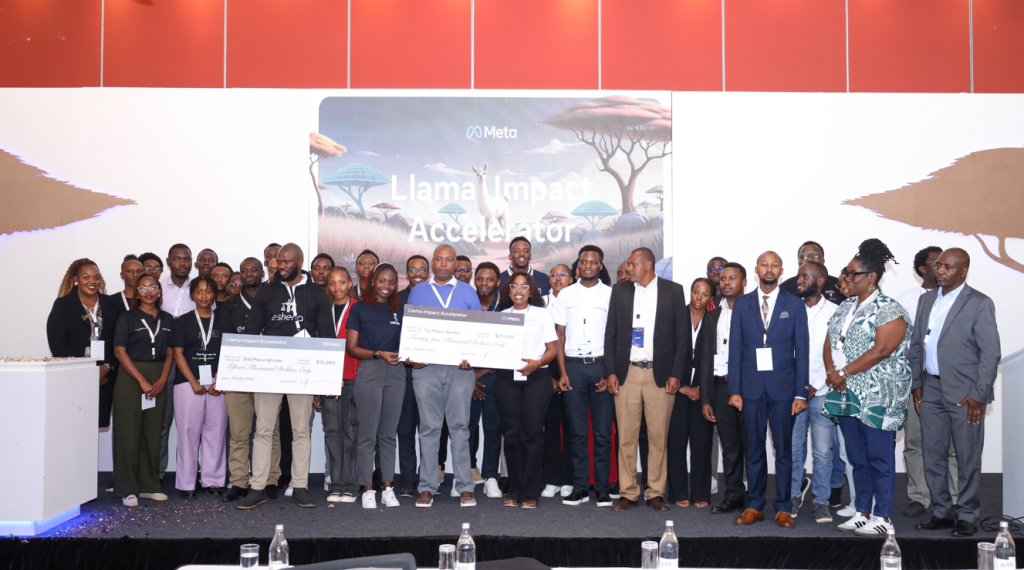
The five winning projects, each awarded $50,000 in seed funding, cloud credits, and six months of technical support, span critical sectors:
HealthAI Diagnostics (Nigeria): Founded by Dr. Aisha Bello, this startup uses Llama-powered image recognition to detect early signs of malaria and tuberculosis from smartphone photos. In pilot tests across Lagos slums, the tool achieved 92% accuracy, potentially saving thousands of lives by bridging diagnostic gaps in under-resourced clinics. “AI isn’t replacing doctors, it’s arming them with superpowers,” Bello said.
AgriChat Advisor (Kenya): Led by agronomist Juma Otieno, AgriChat delivers real-time, Swahili-language advice to smallholder farmers via WhatsApp bots. Drawing on Llama’s natural language processing, it analyzes soil data, weather patterns, and crop health to recommend sustainable practices. Early adopters in Rift Valley reported a 25% yield increase, a boon amid escalating climate threats.
EduVoice Tutor (South Africa): This edtech venture, spearheaded by educator Thabo Mthembu, creates personalized learning paths for underserved students in townships. By generating interactive lessons in local languages like isiZulu, EduVoice has boosted literacy rates by 40% in Johannesburg trials, addressing the post-pandemic education crisis.
EcoTrack Sentinel (Nigeria): Environmental engineer Fatima Yusuf’s project employs Llama for predictive analytics on deforestation and wildlife poaching. Integrated with satellite imagery, it alerts rangers in real-time, helping preserve biodiversity in the Niger Delta.
FinAccess Bridge (Kenya): Co-founded by fintech whiz Ken Omondi, this tool simplifies microloan approvals for informal traders using voice-based AI queries. It has already disbursed $200,000 in loans to women entrepreneurs in Nairobi’s markets, slashing approval times from weeks to minutes.
These projects not only showcase technical prowess but also prioritize ethical AI ensuring data privacy, bias mitigation, and community involvement in line with the African Union’s emerging AI governance framework.
Fueling Africa’s AI Renaissance
The timing couldn’t be more poignant. Just hours before Meta’s reveal, the African Union (AU) concluded a landmark dialogue in Addis Ababa, positioning AI as a “strategic continental priority.” AU Commissioner for Infrastructure and Energy, Dr. Amani Abou-Zeid, praised the accelerator as a model for equitable tech investment. “With 83% of 2025’s AI funding concentrated in four nations, initiatives like this democratize opportunity,” she noted.
Yet, amid the optimism, voices of caution echo. A trending op-ed in The Observer today warns that unchecked AI could exacerbate job losses in Africa’s informal sectors. “Innovation must pair with upskilling,” argued author Dr. Elena Nkosi, calling for policy interventions to harness AI’s job-creating potential.
Meta’s investment totaling $250,000 plus in-kind support aligns with its broader $1 billion pledge to African tech over the next five years. The company plans to expand the accelerator regionally next year, targeting North and East Africa.
Looking Ahead: A Continent in Code
As the sun sets over the savannas and skylines from Lagos to Cape Town, the Llama Impact winners signal a seismic shift. Africa’s AI narrative is evolving from consumer to creator, with open-source models like Llama lowering barriers for the next generation of builders.
For the selected founders, the road ahead is as daunting as it is exhilarating. “We’re not just coding apps; we’re rewriting futures,” Otieno of AgriChat reflected. With global eyes on Africa, today’s announcements could catalyze a wave of investment, policy reform, and collaboration proving that the continent’s hottest innovation isn’t just emerging; it’s igniting.