The Kenyan government has unveiled a major artificial intelligence initiative aimed at improving digital accessibility and empowering persons with disabilities through technology-driven solutions.
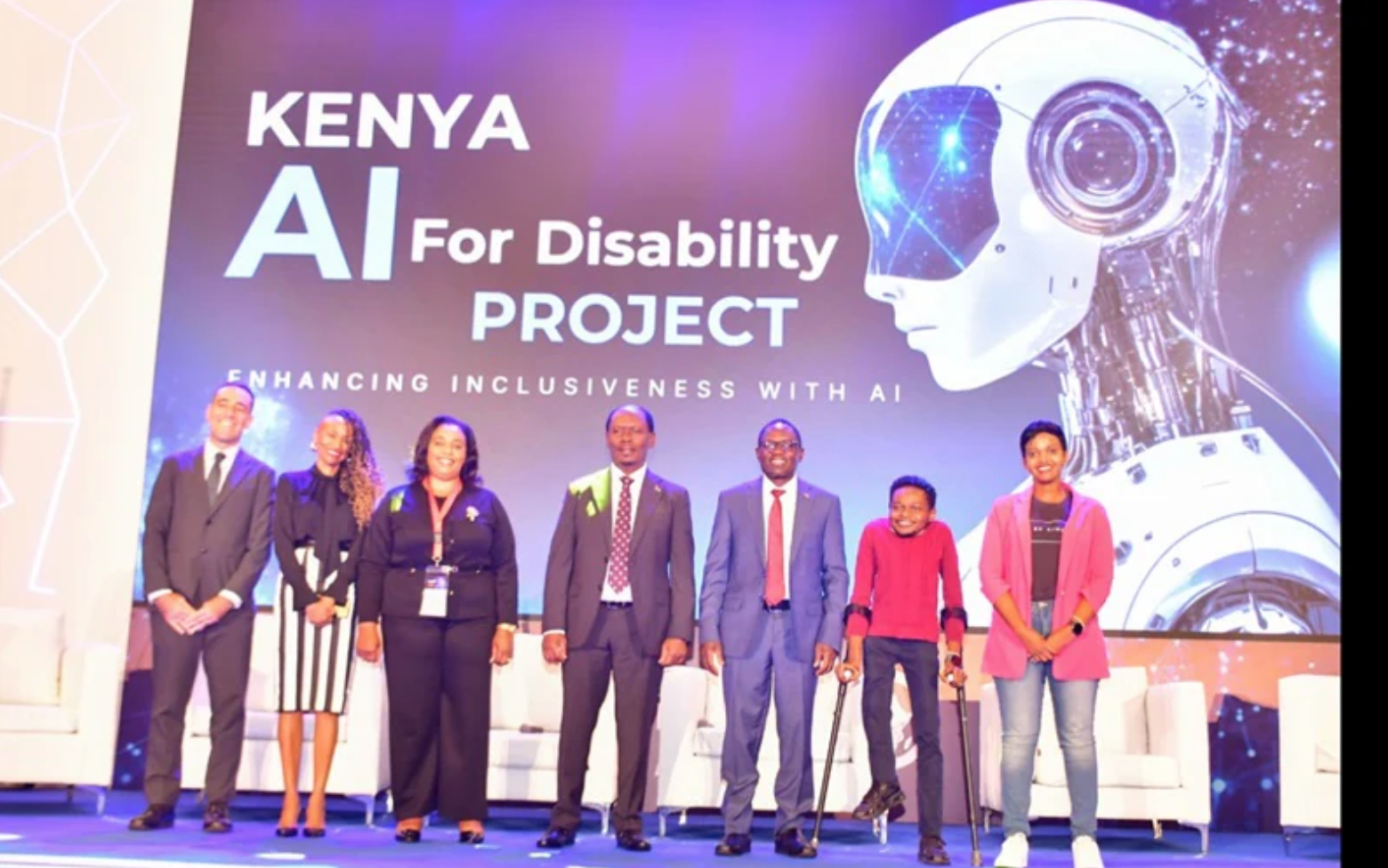
Launched during the 15th edition of the Connected Africa Summit 2026, the new “AI for Disability Project” brings together government agencies, technology firms, disability advocacy organizations, and education institutions to develop AI-powered hardware and software tailored for people living with disabilities.
The initiative is being spearheaded by Kenya’s Ministry of Information, Communications and the Digital Economy in partnership with Huawei, the Kenya Institute of Special Education (KISE), inABLE, Assistive Technologies for Disability Trust (AT4D), and local innovation company Qhala. The coalition says the project is designed to close the digital divide that continues to exclude many persons with disabilities from education, employment, entrepreneurship, and digital services.
The announcement was made during the closing ceremony of the summit in Nairobi, where African policymakers, technology leaders, innovators, and development organizations gathered to discuss the continent’s digital future. This year’s summit focused heavily on artificial intelligence, digital infrastructure, inclusive innovation, and workforce development.
According to Kenyan officials, the AI for Disability Project represents a shift from treating accessibility as an afterthought to embedding inclusion directly into technological design and digital infrastructure. The initiative aims to create practical assistive technologies powered by AI, including tools for communication, mobility, education support, and workplace accessibility.
Kenya’s Cabinet Secretary for Information, Communications and the Digital Economy, William Kabogo Gitau, said the initiative aligns with the country’s broader digital transformation agenda and its commitment to ensuring no citizen is excluded from the digital economy. According to officials, the project will help persons with disabilities participate more actively in innovation, entrepreneurship, education, and employment opportunities emerging in the AI era.
One of the project’s major goals is the development of locally designed and manufactured assistive technologies. Reports indicate that a dedicated manufacturing facility has already been established at the KISE headquarters in Nairobi to support the local production and distribution of accessibility tools. Supporters say local manufacturing could significantly reduce the cost of importing assistive devices while also strengthening Kenya’s growing innovation ecosystem.
The involvement of Huawei is also drawing attention because of the company’s expanding role in Africa’s digital infrastructure and AI ecosystem. The project is aligned with Huawei’s TECH4ALL initiative, a global digital inclusion program focused on using technology to support underserved communities. Through the partnership, Huawei is expected to contribute technical expertise, AI infrastructure support, and innovation resources to help scale the initiative.
The project also builds on momentum generated during the AI for Disability Hackathon 2024, where Kenyan students and innovators developed accessibility-focused AI solutions. Organizers at the summit recognized several of the participants, describing them as examples of how local innovation can address real societal challenges. Some of the prototypes developed during the hackathon are expected to be refined into scalable products under the new initiative.
Advocates for disability inclusion say the launch is particularly significant because persons with disabilities are often left behind during rapid technological transitions. While AI is increasingly transforming industries such as healthcare, education, finance, and public services, accessibility concerns are frequently overlooked during product development. Experts argue that if inclusion is not prioritized early, AI systems could deepen existing inequalities.
Across Africa, governments and technology companies are increasingly investing in AI as part of broader digital transformation strategies. However, concerns remain over unequal access to internet connectivity, digital skills, assistive devices, and affordable technologies. Kenya’s AI for Disability Project is being viewed by some analysts as one of the continent’s first major attempts to place accessibility and disability inclusion at the center of AI development rather than treating it as a secondary issue.
The initiative also reflects Kenya’s ambition to position itself as a regional technology hub. In recent years, the country has expanded investments in digital infrastructure, startup ecosystems, AI policy discussions, and technology education. The Connected Africa Summit itself has become one of the continent’s largest platforms for conversations around Africa’s digital future, attracting policymakers, telecom firms, global technology companies, startups, and development institutions.
Stakeholders behind the AI for Disability Project say success will depend on long-term collaboration between governments, innovators, educators, and private-sector technology companies. For many advocates, the initiative represents more than a technology project — it is a test of whether Africa’s AI future can truly be inclusive.
If successful, the program could provide a model for other African countries seeking to ensure that emerging technologies benefit all citizens, including communities that have historically faced barriers to education, employment, and digital participation.