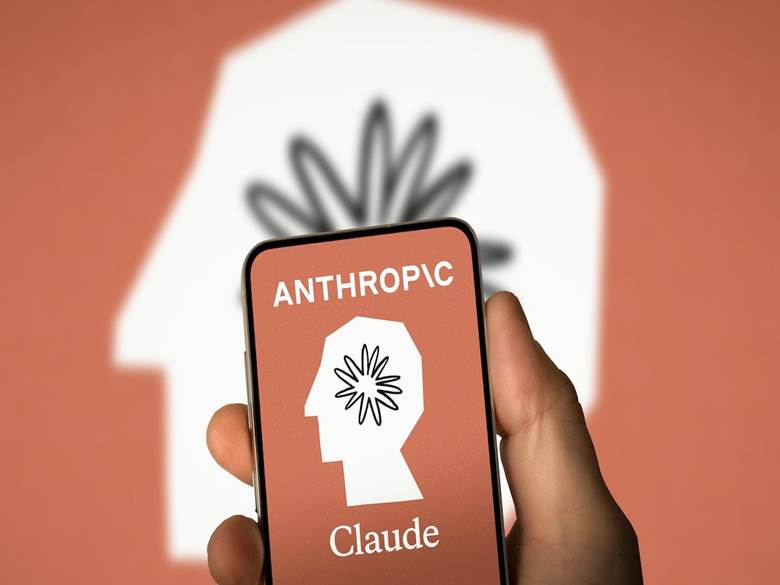
A landmark collaboration between Anthropic and the Bill & Melinda Gates Foundation aims to bring artificial intelligence to the world’s most pressing health and education challenges—with a special focus on African language accessibility
Jos, Nigeria — May 20, 2026
When billions of people lack access to essential health services and quality education, artificial intelligence companies have largely focused on commercial markets. Now, a groundbreaking $200 million partnership between AI firm Anthropic and the Bill & Melinda Gates Foundation is attempting to redirect that trajectory.
The four-year collaboration, announced last week, represents one of the most substantial indications yet that Anthropic intends to build a meaningful non-commercial operation alongside its enterprise business. The partnership dwarfs the $50 million agreement OpenAI struck with the same foundation earlier this year for African healthcare deployment.
Bridging the Language Divide
At the heart of the initiative lies a critical challenge: AI systems have performed poorly in writing and translating dozens of African languages. This digital language barrier has profound consequences for the approximately 1.4 billion people across the African continent who rely on over 2,000 distinct languages for daily communication.
“Language accessibility is one of our primary areas of focus,” said Janet Zhou, a Gates Foundation director, in an interview with Reuters. The partnership plans to support improved data collection and labeling that would be publicly released to help enhance AI models across the entire industry—not just Anthropic’s Claude system.
The language challenge is particularly acute in regions like Nigeria, where you can find speakers of Hausa, Yoruba, Igbo, and hundreds of other languages often struggling to access digital services designed primarily for English speakers. Current AI translation systems frequently fail to capture tonal nuances, dialectal variations, and cultural context essential to African languages.
Recent efforts by organizations like Nigeria’s NITDA, working with NKENNEAi, have demonstrated the complexity of this work. Building tonally sensitive AI models requires specialized data collection pipelines, linguistic annotation systems, and community-driven validation—infrastructure that has been largely absent for most African languages.
Healthcare Where Markets Won’t Go
The largest portion of the partnership will focus on improving health outcomes in low- and middle-income countries, where around 4.6 billion people lack access to essential health services.
The collaboration will deploy Claude AI to accelerate vaccine and therapy development for diseases that receive little commercial attention. Initial targets include polio, human papillomavirus (HPV), and eclampsia/preeclampsia. HPV causes roughly 350,000 deaths annually, of which 90% are in low- and middle-income countries.
“We’re exploring how AI can make it faster and easier for scientists to screen potential vaccine candidates computationally before moving into pre-clinical development,” Anthropic explained in its announcement. This computational screening could significantly shorten early-stage development timelines for vaccines protecting against overlooked diseases.
Beyond drug discovery, the partnership will work with the Institute for Disease Modeling, a Gates Foundation research group, to improve epidemiological forecasting. The goal is to make complex disease models accessible to frontline healthcare workers and policymakers who aren’t modeling specialists, helping them respond more quickly to outbreaks and manage healthcare systems more effectively.
The initiative will also create public connectors, benchmarks, and evaluation frameworks allowing researchers and governments worldwide to assess how AI systems perform on healthcare-related tasks. This open approach contrasts sharply with the proprietary models dominating commercial AI development.
Education and Economic Mobility
The education component of the partnership will fund AI-powered tutoring tools for K-12 students in the United States, alongside literacy and numeracy applications for children in sub-Saharan Africa and India. These tools will be developed through the Global AI for Learning Alliance (GAILA), a coalition being built by Anthropic and the Gates Foundation with other partners.
For education initiatives to succeed in regions like northern Nigeria or rural India, they must overcome significant infrastructure constraints—limited internet connectivity, unreliable electricity, and devices with minimal processing power. The partnership’s commitment to creating knowledge graphs and public datasets specifically tailored for teachers in these regions acknowledges these real-world constraints.
Economic mobility programs will support the nearly two billion people whose incomes depend on smallholder farming. Anthropic will make agriculture-specific improvements to Claude, develop datasets of local crops, and create benchmarks to evaluate model performance in agricultural applications before releasing these tools as public goods.
In the United States, the partnership will focus on portable skills records, career guidance for job market entrants and workers retraining, and tools linking training programs to employment outcomes to measure which interventions actually improve wages and job prospects.
The Public Goods Question
Perhaps the most structurally significant element of this partnership is the commitment to releasing benchmarks, datasets, and evaluation tools as genuine public goods. If these resources remain truly open and accessible, they could improve the performance of every AI system applied to global health and education—not just Claude.
This raises a critical question about the technology industry’s relationship with philanthropy. Too often, corporate charitable initiatives function primarily as branding exercises, generating positive press while maintaining proprietary control over the underlying technology and data.
Elizabeth Kelly, who leads Anthropic’s beneficial deployments team, emphasized that “this announcement is really core to who we are as a company.” Whether the company maintains this commitment as it approaches a reported $900 billion valuation, or whether commercial pressures eventually narrow the scope of its public interest work, remains to be seen.
Challenges and Skepticism
The partnership faces formidable obstacles. Deploying sophisticated AI tools in environments with limited infrastructure, connectivity, and institutional capacity differs fundamentally from serving enterprise clients in developed markets. The Gates Foundation’s decades of field experience implementing health and education interventions becomes crucial here—Anthropic’s technical capabilities alone cannot navigate these challenges.
There’s also the fundamental question of whether AI represents an appropriate solution to problems rooted in infrastructure deficits, political instability, and historical underinvestment. Critics have long argued that the technology sector’s enthusiasm for AI-driven solutions sometimes overshadows more mundane but essential interventions—building roads, training healthcare workers, constructing schools.
Bill Gates himself has acknowledged these tensions. While recently stating that AI might soon eliminate chronic shortages of doctors and teachers, he also compared the current AI investment boom to the early internet era rather than speculative bubbles, arguing that AI’s transformative potential in healthcare, education, and drug discovery justifies massive spending despite concerns about market excess.
A Test Case for AI’s Social Promise
The Anthropic-Gates partnership arrives at a pivotal moment for artificial intelligence. As concerns mount about AI displacing jobs, widening inequality, and concentrating power among a handful of companies, the industry faces growing pressure to demonstrate tangible benefits for communities that can’t afford enterprise software licenses.
For people in Jos, Lagos, Nairobi, or rural Indian villages, the promise of AI improving their lives has often seemed distant and abstract. This partnership represents a concrete test: Can cutting-edge AI technology be adapted, deployed, and sustained in contexts far removed from Silicon Valley boardrooms?
The answer will depend not just on Anthropic’s engineering capabilities or the Gates Foundation’s grant-making expertise, but on whether the partnership can genuinely listen to and empower the communities it aims to serve. African language speakers don’t need Western technologists to tell them what they need—they need tools and resources that respect their linguistic heritage and cultural knowledge.
Over the next four years, the success of this initiative will be measured not in research papers published or datasets created, but in tangible outcomes: vaccines developed for neglected diseases, students achieving literacy in their mother tongues, farmers accessing practical agricultural guidance, and communities gaining digital access in languages that reflect their identities.
Whether this partnership becomes a model for how the AI industry can serve the global public interest—or another well-intentioned initiative that fails to deliver lasting change will reveal much about the technology’s true potential to benefit humanity beyond the bottom line.
The author is based in Jos, Plateau State, Nigeria, where multiple Nigerian languages are spoken alongside English in daily life.